 Morgan Johnson
Most homeowners spend weeks researching solar panels without ever thinking seriously about what’s underneath them. Then a contractor shows up, takes one look at the roof, and says something vague like “that might be tricky.” Suddenly you’re facing unexpected costs, structural questions, or a flat-out “we can’t do this job.” The roof type you have right now is one of the biggest factors determining how easy, how expensive, and how long-lasting your solar installation will be. Let’s get into the specifics.
Why Roof Material Matters More Than You’d Think
| Roof Type | Lifespan | Installation Complexity | Leak Risk | Cost Impact |
|---|---|---|---|---|
| Asphalt Shingles | 20-30 years | Low | Low (if code-approved flashing) | Baseline |
| Standing Seam Metal | 40-70 years | Low | None (clamp-based, no penetrations) | Baseline to lower |
| Corrugated Metal | 40-70 years | Medium | Low (requires specialty brackets) | Slightly higher |
| Concrete Tile | 40+ years | High | Medium (complex bracket installation) | $500-$1,000 more per labor day |
| Clay Tile | 40+ years | High | Medium (more fragile than concrete) | $500-$1,000 more per labor day |
| Flat/Low-Slope | Varies | Medium | Medium (ballasted systems reduce penetrations) | Varies |
Solar panels themselves are fairly standardized. The racking systems, wire management, and labor are where roof type really changes the equation.
Every solar panel needs to be anchored to your roof structure through a mounting system. That mounting system has to penetrate or clamp to your roofing material in a way that’s both structurally sound and weatherproof. Some materials make this simple. Others require specialty hardware, extra labor time, or careful technique to avoid cracking tiles or voiding warranties. And some materials genuinely complicate the install enough that you’ll pay a premium, or struggle to find a contractor willing to touch the job.
Beyond installation mechanics, you need to think about longevity. Solar panels are rated for 25 to 30 years. If your roof has 7 years of life left, you’re going to be removing and reinstalling that system right in the middle of its productive life. Removing and remounting solar panels costs $1,500 to $6,000 depending on system size and roof complexity. That’s real money you’ll spend just to replace shingles you should have replaced before the panels went up.
Asphalt Shingles: The Easy Install
Asphalt shingles are on roughly 70% of American homes, and there’s a reason installers love them. They’re the most forgiving material to work with.
The standard mounting process uses lag bolts driven into rafters, with flashed standoffs that sit under the shingle layer to create a watertight seal. It’s a proven system. When done correctly by a competent crew, it doesn’t leak, doesn’t void the shingle warranty if you use code-approved flashing, and doesn’t require any exotic tools. Most residential installs on asphalt shingle roofs move quickly, which keeps labor costs down.
The catch is age and condition. Asphalt shingles have a lifespan of 20 to 30 years depending on quality (3-tab shingles sit at the lower end, architectural shingles at the higher). I’ve walked roofs where the shingles were brittle enough to crack under foot pressure. You do not want to mount a solar system on a roof like that. A good installer will flag this during site assessment. If they don’t mention roof condition at all, that’s worth paying attention to. You can find more on contractor warning signs in this guide to red flags when hiring a solar installer.
If your asphalt shingle roof is within 5 years of needing replacement, re-roof first. It’s cheaper in the long run.
Metal Roofs: The Installer’s Favorite
Easy DIY Solar Panel Roof Installation · Everyday Solar on YouTube
Standing seam metal roofs are, genuinely, the best roof type for solar installation. I’ll say it plainly because it’s true.
The reason is the mounting system. Standing seam metal allows for clamp-based mounts that attach directly to the raised seams without any roof penetrations at all. No holes. No flashing. No leak risk. The clamps are UL-listed and engineered specifically for this, and they don’t affect the metal roof’s own warranty in most cases. Installation is faster than asphalt in many scenarios, and the roof itself will likely outlast the solar system by decades. Metal roofs routinely last 40 to 70 years.
Corrugated metal roofs (the kind you see on older agricultural buildings or some rural homes) require a different approach: butyl tape and specialty brackets that conform to the corrugation profile. It’s workable, but it requires more care and the right hardware. Make sure your installer has experience with this specific profile, not just standing seam.
Steel and aluminum are both common. If you have a bare steel roof without a protective coating, check for rust before installation. Rust around mounting points creates problems over time.
Tile Roofs: Beautiful but Demanding
Concrete tile and clay tile roofs are gorgeous. They’re also the material that causes the most installation headaches.
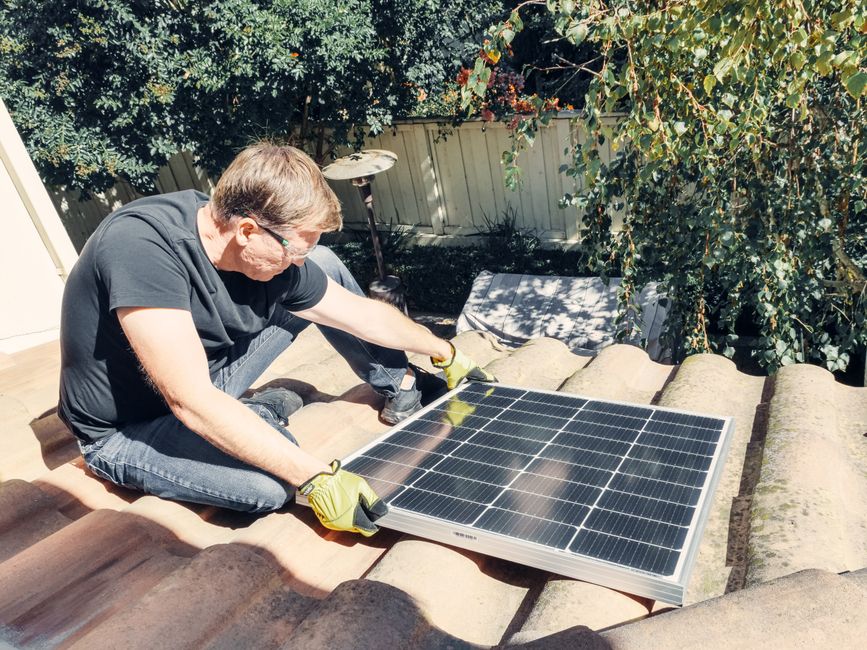
Tile is brittle. Walk the wrong way, apply pressure in the wrong spot, and you’re looking at cracked tiles. A competent solar crew knows how to walk a tile roof using foam pads and specific step placement. An inexperienced one will leave you with a repair bill before the job is even done.
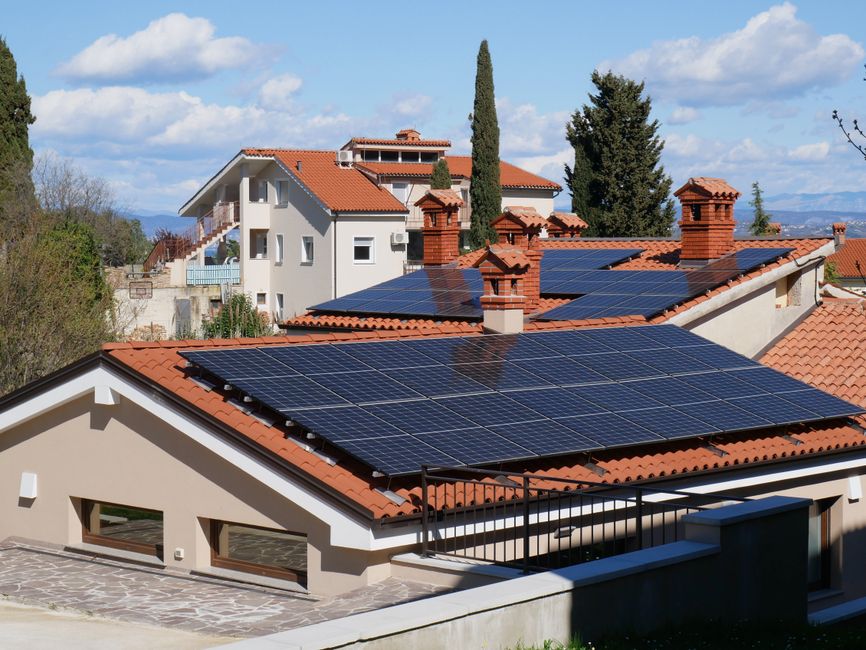
The mounting process typically involves removing individual tiles, installing a flashed bracket to the underlying roof deck, and then replacing the tile (or using a purpose-built tile replacement bracket). This takes more time per mount point, and tile roof installs generally run $500 to $1,000 more per labor day compared to asphalt shingle jobs. NREL research on installation cost components has consistently shown that roofing complexity is one of the primary drivers of soft cost variation across residential projects.
Spanish tile (the curved S-profile) adds another layer of complexity because of the air gap between the tile and the deck. You need longer standoffs and specific flashing profiles. Not every installer carries that hardware in their standard kit. Ask directly before you hire anyone.
Clay tile is also more fragile than concrete tile. Factor that in if you’re getting quotes.
Flat Roofs and Low-Slope Situations
Flat roofs are common on commercial buildings and some residential styles, particularly in the Southwest and on modern architecture. If you have one, the solar approach is fundamentally different from a pitched roof install.
On a flat or low-slope roof, panels are typically mounted on ballasted racking systems. These use concrete blocks as weight to hold the racking in place without roof penetrations. The panels are tilted to a 10 to 15 degree angle to shed water and optimize production. It’s a clean system when done well.
The tradeoffs: ballasted systems add significant weight. You need a structural assessment to confirm your roof deck and framing can handle the load. A standard residential flat roof isn’t always designed for that kind of distributed weight. Also, flat roofs (especially EPDM rubber or TPO membrane roofs) require careful work around any penetrations to preserve the membrane integrity.
For a deeper look at the specific considerations on these roofs, the site has a solid breakdown on solar for flat roof homes that covers ballasted versus penetration mounts in more detail.
Roof Type Comparison: At a Glance
Here’s a straightforward comparison to help you think through where your roof stands.
| Roof Type | Install Difficulty | Penetrations Required | Typical Added Cost vs. Asphalt | Lifespan Match with Solar |
|---|---|---|---|---|
| Asphalt Shingle | Low | Yes | Baseline | Good (if roof is newer) |
| Standing Seam Metal | Very Low | No | None to slight savings | Excellent |
| Corrugated Metal | Moderate | Sometimes | Moderate | Excellent |
| Concrete Tile | Moderate-High | Yes | $800 to $2,000+ | Good |
| Clay Tile | High | Yes | $1,500 to $3,000+ | Fair to Good |
| Flat/EPDM/TPO | Moderate | Sometimes | $500 to $1,500+ | Depends on condition |
| Wood Shake | High | Yes | $1,500 to $3,000+ | Poor (fire, age) |
| Slate | Very High | Yes | $3,000 to $5,000+ | Excellent but specialist required |
Wood shake deserves a special mention: it’s a fire hazard in many jurisdictions, and some installers won’t touch it. Many municipalities require a fire-resistant underlayment or full tear-off before solar can go on wood shake. If you have it, budget for a re-roof conversation.
Slate is the other extreme. It’s extremely durable, but it’s also extremely brittle and irreplaceable if broken. Natural slate installs require a specialist who has worked with it specifically. This is not the job for a crew that’s “pretty sure they can figure it out.” EnergySage’s market data on installation quotes regularly shows slate roof projects being declined or heavily marked up by installers who don’t have the right experience.
What to Do Before You Get Quotes
You can save yourself a lot of wasted time and awkward contractor conversations by doing some baseline homework first.
Step 1: Know your roof age and material. Pull your records, check with your HOA if applicable, or get a roofer to walk it for $100 to $150. You need to know the material, approximate age, and remaining useful life.
Step 2: Get a roof inspection if there’s any doubt. A solar installer doing a site survey is not the same as a roofing inspection. They’re looking at mounting points and rafter spacing, not granule loss and flashing integrity. Get a dedicated roofing inspection if your roof is over 15 years old.
Step 3: Ask every solar bidder how they handle your specific roof type. Ask what hardware system they use, whether it’s UL-listed, and whether it affects your roofing warranty. A contractor who can’t answer those questions specifically doesn’t have the experience for the job. The questions to ask solar companies resource on this site has a solid list of follow-up questions for exactly this kind of conversation.
Step 4: Request a detailed line item for roofing-related work. If there’s a premium for your roof type, it should appear as a specific line item, not buried in a lump sum.
Step 5: Compare multiple bids with roof complexity in mind. A low bid on a tile roof from a crew without tile experience is not a bargain. When you’re comparing solar bids, roof-specific experience and hardware specifics should factor heavily into your decision.
The roof under your panels is a long-term partnership with your solar system. Getting it right means honest assessment upfront, not optimism. If your roof is sound, the material is mostly a matter of cost and installer experience. If the roof is questionable, fix that first. The panels will still be there when you’re ready, and they’ll perform a lot better on a roof that’s not failing underneath them.
Sources
- installation cost components
- market data on installation quotes
- Emporia Vue 2 Home Energy Monitor
- P3 Kill A Watt Electricity Usage Monitor
- Solar Panel Cleaning Brush Kit with Extension Handle
Disclosure: As an Amazon Associate, we earn a small commission from qualifying purchases at no extra cost to you. We only recommend products that genuinely support the topics covered in this article.
- Renogy 200W Solar Starter Kit + 30A Charge Controller (~$169), Complete beginner solar kit, 200W monocrystalline panel, charge controller, and mounting hardware included.
- Renogy 2×100W Monocrystalline Solar Panels (~$99), Expandable 200W panel set from the most trusted DIY solar brand, used widely in off-grid and home backup systems.
Recommended Resources
Disclosure: As an Amazon Associate, we earn a small commission from qualifying purchases at no extra cost to you. We only recommend products that genuinely support the topics covered in this article.
- Renogy 200W Solar Starter Kit + 30A Charge Controller (~$169), Complete beginner solar kit, 200W monocrystalline panel, charge controller, and mounting hardware included.
- Renogy 2×100W Monocrystalline Solar Panels (~$99), Expandable 200W panel set from the most trusted DIY solar brand, used widely in off-grid and home backup systems.