 Tom Bradley
Your inverter will outlast most of the other decisions you make on your solar project, and most people spend about four minutes researching it. I’ve watched homeowners spend weeks agonizing over which panel brand to choose, then rubber-stamp whatever inverter the installer threw on the quote sheet. That’s backwards. Panels are commodities at this point. Inverters are where the real differences live.
Here’s what I mean. A decent 400W panel from Jinko or Canadian Solar will perform within a few percentage points of a premium panel from a tier-one manufacturer. But the gap between a well-engineered inverter and a cheap one shows up in monitoring quality, shade tolerance, grid interaction, and especially what happens five years from now when something needs diagnosing remotely. I’ve seen homeowners stuck with orphaned inverter brands whose apps stopped working, whose warranties were voided when the U.S. distributor went under, and whose installers had never actually seen one fail before.
So let’s talk about the brands that consistently hold up, and a few that I’d approach with real caution.
String Inverters: Where Most Homes Still Land
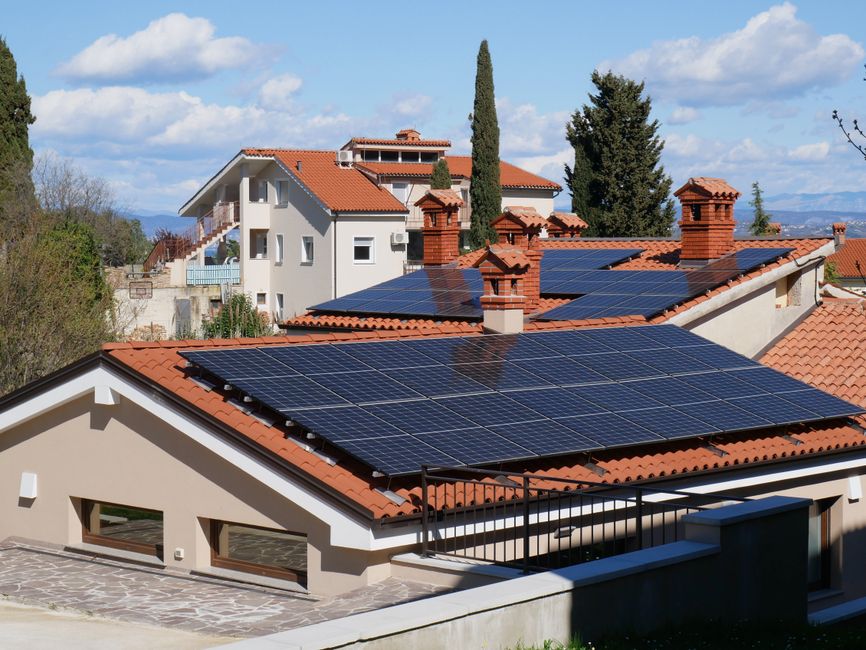
The majority of residential systems in the U.S. still use a single string inverter, and there’s nothing wrong with that on the right roof. Clean south-facing exposure, minimal shading, simple layout. A string inverter converts your panels’ combined DC output to AC at one central point. Fewer components, lower cost, easier to service.
SolarEdge is the dominant player here, and mostly for good reason. Their HD-Wave series, particularly the SE7600H and SE10000H, are workhorses. What separates SolarEdge from a basic string inverter is their DC power optimizer system, a small device mounted behind each panel that does per-panel MPPT (maximum power point tracking). So you get string inverter economics with something close to microinverter-level shade tolerance. Monitoring is genuinely excellent. Their monitoring portal shows panel-level production, which is the kind of data that helps you actually diagnose problems. Warranty is 12 years, extendable to 25.
The catch with SolarEdge: they’ve had some quality control issues in their US-market units over the past few years, specifically around capacitor failures in hotter climates. I’ve heard this from multiple installers in Arizona and Texas, not just internet forums. Their customer support has also gotten slower as they’ve scaled. Still a top recommendation, but go in with eyes open.
Fronius is the brand I’d probably put on my own house if I were doing a clean south-facing install with no shading complications. Austrian engineering, built extremely well, and their SnapINverter and Primo series have an almost cult-like following among quality-focused installers. The Fronius Primo 8.2kW runs around $1,800 to $2,200 depending on distributor. Warranty is 5 years standard, but most installs include the extended 10-year warranty, and Fronius actually honors it without a fight. I’ve never personally seen a Fronius warranty claim become an ugly dispute.
Their monitoring platform, Fronius Solar.web, is functional but less visually polished than SolarEdge. Some homeowners find it clunky. That’s a fair tradeoff.
SMA (Sunny Boy line) has been in this business longer than almost anyone else, and you’ll still see their older units running perfectly after 15 years. The Sunny Boy 7.7-US is reliable, no-drama. SMA is particularly strong if your utility has strict grid interconnection requirements, since their anti-islanding and grid compliance engineering is rock solid. They’re also one of the few brands where you can realistically find a local electrician who’s worked on them. That matters more than people think when you need service.
SMA’s monitoring lagged behind SolarEdge historically, but their newer units with the SMA Energy app have closed some of that gap.
Microinverters: Pay More, Worry Less (Usually)
| Inverter Brand | Type | Key Strength | Warranty | Notable Consideration |
|---|---|---|---|---|
| SolarEdge | String + Optimizers | Panel-level monitoring, shade tolerance | 12 years (extendable to 25) | Capacitor failures reported in hot climates |
| Fronius | String | Engineering quality, reliable support | 5 years standard (10 years extended) | Monitoring less polished than competitors |
| SMA | String | Grid compliance, long-term reliability | Varies by model | Monitoring recently improved |
| Enphase | Microinverter | Best-in-class monitoring, Sunlight Backup | Varies by model | $1,500-$2,500 premium over string systems |
Helpful resource: Emporia Vue 2 Home Energy Monitor is a top-rated option for this. (As an Amazon Associate this site earns from qualifying purchases.)
If your roof is complicated, if you’ve got multiple azimuths, trees that shade part of the array in the afternoon, or an HOA that forced you into a weird panel layout, microinverters deserve serious consideration. Each panel gets its own small inverter mounted on the racking. No single point of failure for the whole array. Panel-level monitoring standard. Better shade performance.
Enphase is the category leader and it’s not particularly close. The IQ8 series is the current standard, and the IQ8A (for 60-cell panels) and IQ8M (for larger panels) are what most quality installers are putting on new systems today. The IQ8 lineup brought something legitimately useful: limited off-grid capability without a battery, called Sunlight Backup. If the grid goes down during the day and you have an Enphase IQ8 system with their IQ System Controller, you can run loads directly from solar without a battery bank. That’s a real feature, not a marketing footnote.
Enphase’s Enlighten monitoring app is the best in class for homeowners. Intuitive, detailed, and it’ll push you alerts if a unit stops producing. The U.S. Department of Energy consistently points to microinverter systems as a strong option for shade-affected or complex roofs, and in my experience Enphase is the brand that actually delivers on that promise.
Cost is the real drawback. Expect to pay roughly $0.15 to $0.25 more per watt installed compared to a string inverter system. On a 10kW system that’s a $1,500 to $2,500 premium. For some homeowners the monitoring and reliability make that worth it. For a simple south-facing roof with no shading, you’re probably paying for peace of mind you didn’t need.
One thing to watch: Enphase microinverters are mounted on the roof under your panels. Replacing one means a service call with someone climbing up there. It’s covered under warranty (25 years, which is excellent), but logistics aren’t instant. I’ve seen warranty replacements take anywhere from one week to six weeks depending on the installer’s workload.
APsystems deserves a mention as the value alternative in the microinverter space. Their DS3 series is a dual-module microinverter (handles two panels per unit) which brings the cost closer to string inverter territory while keeping most of the microinverter advantages. They’re genuinely solid hardware, not just a cheap knockoff. Monitoring is competent. Warranty is 25 years. If an installer quotes you APsystems and it saves you $1,000 over Enphase on a straightforward install, I wouldn’t push back hard.
Hybrid Inverters: The Battery-Ready Play
If there’s any chance you’ll add battery storage in the next five years, it’s worth spending more now to get a hybrid inverter (also called a battery-ready or storage-ready inverter). These handle both your solar conversion and battery charge/discharge management in one box, which is cleaner and cheaper than retrofitting later.
SolarEdge StorEdge and the newer SolarEdge Energy Hub are the go-to here for homeowners on the fence about batteries. They pair cleanly with LG Chem RESU and SolarEdge’s own battery options. If you’re already sold on SolarEdge for the optimizer ecosystem, the Energy Hub is the logical next step.
Enphase IQ8 + IQ Battery is the microinverter path to storage. Their AC-coupled approach works differently but effectively. The IQ Battery 5P is a solid performer. I’d argue Enphase has the most coherent whole-home energy management story of any of these brands today.
Sol-Ark is a brand that’s gotten serious traction among the DIY and off-grid-adjacent crowd, particularly their 15K and 12K models. They’re made in the U.S. (assembled in Texas), have extremely capable hybrid functionality, and the Sol-Ark 15K is a beast for larger homes or those with EV charging demands. NREL research on grid-tied storage systems consistently shows that inverter quality significantly affects round-trip efficiency, and Sol-Ark’s numbers hold up well in third-party testing. The trade-off: they’re more common in custom and DIY installs than in standard contractor quotes. Finding a local installer comfortable with them takes a bit more legwork.
If you’re doing your own monitoring and want visibility into your whole system, a home energy monitor like the Emporia Vue (affiliate link, site may earn a commission) works well alongside most of these inverter platforms to give you circuit-level detail that even the best inverter apps don’t provide.
Brands I’d Avoid (Or Approach Very Carefully)
I’m not going to name every no-name brand, but there are a few situations to watch for. Any inverter with a warranty backed by a company you can’t independently verify has a U.S. presence deserves scrutiny. What most people don’t realize is that a “25-year warranty” from a brand with no domestic distributor is worth roughly nothing when they exit the market.
Growatt has become popular on the DIY import market and the hardware is often fine at the spec sheet level. But I’ve seen enough monitoring connectivity issues and enough confusion about how to actually make a warranty claim that I’d only recommend it to someone who’s technically comfortable troubleshooting independently. Same goes for some of the Solis units, which have solid hardware but historically weak U.S. support.
Sources
- Emporia Vue 2 Home Energy Monitor
- U.S. Department of Energy
- NREL
- home energy monitor like the Emporia Vue
- Jackery SolarSaga 100W Solar Panel
Disclosure: As an Amazon Associate, we earn a small commission from qualifying purchases at no extra cost to you. We only recommend products that genuinely support the topics covered in this article.
- Renogy 200W Solar Starter Kit + 30A Charge Controller (~$169), Complete beginner solar kit, 200W monocrystalline panel, charge controller, and mounting hardware included.
- Renogy 2×100W Monocrystalline Solar Panels (~$99), Expandable 200W panel set from the most trusted DIY solar brand, used widely in off-grid and home backup systems.
Recommended Resources
Disclosure: As an Amazon Associate, we earn a small commission from qualifying purchases at no extra cost to you. We only recommend products that genuinely support the topics covered in this article.
- Renogy 200W Solar Starter Kit + 30A Charge Controller (~$169), Complete beginner solar kit, 200W monocrystalline panel, charge controller, and mounting hardware included.
- Renogy 2×100W Monocrystalline Solar Panels (~$99), Expandable 200W panel set from the most trusted DIY solar brand, used widely in off-grid and home backup systems.