 Tom Bradley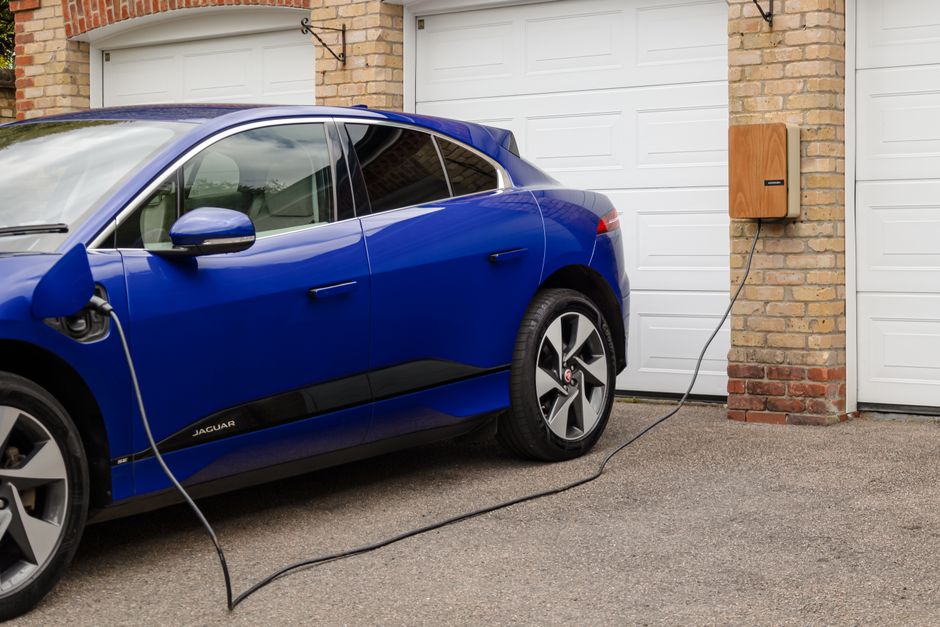
Most people come to this topic from one of two directions. Either they just bought an EV (or are about to), they already have solar panels on their roof, and they’ve heard something about “using your car as a battery.” Or they’ve been down a YouTube rabbit hole at 11pm and now they’re not sure what’s real and what’s a car manufacturer’s marketing department talking. Either way, you’re probably wondering if this is actually practical, what it costs, and whether it’ll work with the system you already have. Here’s what I tell people when they sit across from me with that exact look on their face: bidirectional EV charging is real, it works, but the details matter enormously and most installers won’t walk you through them.
Let me do that here.
What “Bidirectional” Actually Means
Your car charges from the grid. That’s one direction. Bidirectional means power can also flow the other way: out of your EV’s battery pack, back into your home or onto the grid. The battery in a modern EV is enormous compared to a home battery storage system. A Tesla Powerwall 3 holds about 13.5 kWh. A Ford F-150 Lightning’s extended-range battery holds 131 kWh. The math on that comparison is pretty striking.
There are three different flavors of this technology, and mixing them up will cost you time and money.
V2H (Vehicle-to-Home): Power flows from the car to your house, but not to the grid. It’s simpler to permit because the utility doesn’t get involved, but you typically need a transfer switch or a dedicated subpanel, and your home gets islanded from the grid while the car is supplying it.
V2G (Vehicle-to-Grid): Power flows from the car all the way back to the utility. This is where the real financial upside is, but it requires utility coordination, a special bidirectional meter, and a grid-interactive inverter setup. As of July 2026, V2G programs are still rolling out patchwork across the country. Some utilities in California, Michigan, and Texas have active pilot programs. Most don’t.
V2L (Vehicle-to-Load): Just plugging a standard outlet into your car and powering something directly. Not really a home integration play, but useful in a pinch. Think running a circular saw at a job site.
For a solar home setup, V2H is where most people end up. It’s practical today.
The Hardware Reality
Helpful resource: Jackery Explorer 300 Portable Power Station is a top-rated option for this. (As an Amazon Associate this site earns from qualifying purchases.)
Here’s something I got wrong for about a year when I started looking into this: I assumed any EV + any charger could do this. That’s completely false. Both the vehicle and the charging equipment have to support the bidirectional standard, and they have to match.
Currently, the vehicles with real, deployable V2H or V2G capability (not just a “coming soon” firmware update) include the Ford F-150 Lightning, Ford Escape Plug-In Hybrid (limited), Nissan Leaf (older CHAdeMO models only, which is increasingly awkward), Hyundai Ioniq 5 and 6, Kia EV6, and the Genesis GV60. The Rivian R1T and R1S have Camp & Kitchen mode but that’s V2L only. Tesla still doesn’t support V2H or V2G as of this writing, despite having the most popular home battery product on the market, which I find genuinely frustrating.
The charger side is equally specific. The Ford Charge Station Pro (made by Sunrun, sold through Ford dealers, around $1,310 installed) works with the F-150 Lightning. The Wallbox Quasar 2 supports CCS (the more common North American DC standard) and costs roughly $3,500 before installation. Fermata Energy’s FE-15 is another CCS option aimed more at commercial installs but showing up in residential projects. SolarEdge and Enphase are both working on bidirectional integration at the inverter level, though the Enphase IQ EV Charger Bidirectional is one to watch if you’re already on an Enphase system.
Installation cost for a proper V2H setup runs $3,000 to $8,000 total depending on whether you need a new electrical panel, transfer switch, and how far the charger is from your panel. I’ve seen quotes go higher in older homes with 100-amp services that need upgrading to 200-amp first.
Pairing It With Solar: Where It Gets Interesting
SOLAR POWER: The Ultimate Beginner's Guide / How To · LRN2DIY on YouTube
This is the combination that makes the economics actually work. Without solar, you’re drawing from the grid to fill your car, then drawing from your car to fill your house. You haven’t generated anything, you’ve just moved energy around and eaten some losses in the process (battery round-trip efficiency for most EVs runs 85 to 92%).
Add solar to the picture and the logic changes completely.
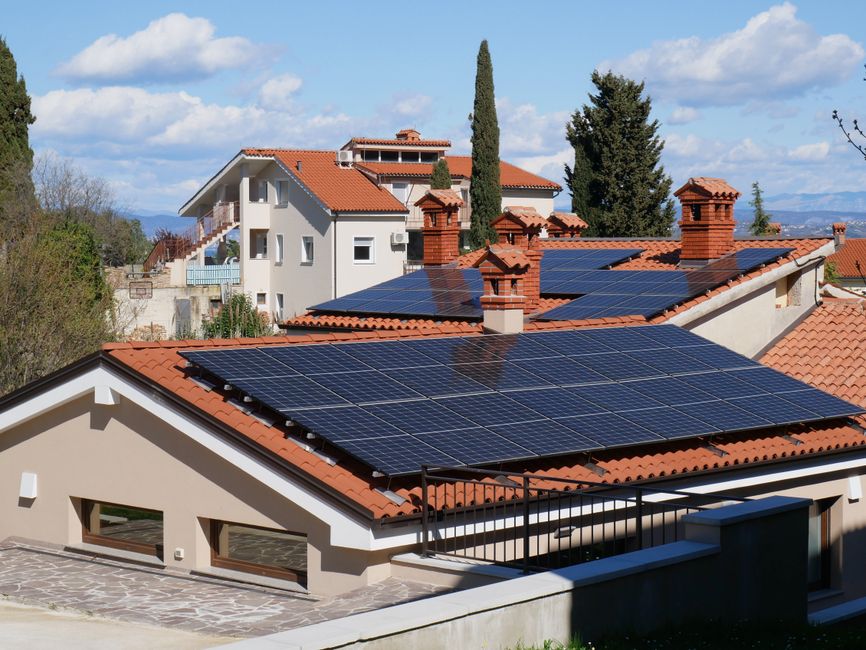
Your panels produce excess power during the day. Instead of exporting that at a low net metering rate (sometimes as low as $0.04/kWh in states that have moved to avoided-cost compensation), you store it in your EV battery. Then in the evening peak window, when grid electricity might cost $0.35/kWh or more in a time-of-use rate structure, you pull from the car. The U.S. Department of Energy has documented this kind of solar self-consumption strategy as one of the higher-return approaches for homeowners in states with unfavorable export rates.
The worked example from a real project I consulted on last spring in San Diego:
Single-family home, 9.6 kW solar array, SDG&E TOU-DR1 rate plan. Net metering export rate was $0.05/kWh. On-peak buy rate was $0.58/kWh in summer. Ford F-150 Lightning with Ford Charge Station Pro. Daily solar overage of approximately 18-22 kWh in June. Routing that overage into the Lightning instead of exporting it, then using V2H power from 4-9pm, saved roughly $8.50 to $11 per day during peak summer months. Over a 90-day summer: approximately $855 in avoided grid purchases at premium rates, versus about $27 they would have received exporting that same energy. The system paid for itself in about 4 years on the V2H equipment alone. That’s a real number, not a brochure estimate.
Costs and Payback by Setup Type
| Setup | Equipment Cost | Install Cost | Total Approx. | Payback Est. | Best For |
|---|---|---|---|---|---|
| V2L only (no install) | $0 to $400 (adapter) | $0 | $400 | Immediate | Emergency/job site use |
| V2H with Ford F-150 Lightning + Charge Station Pro | $1,310 charger | $500-$1,200 | $1,800-$2,500 | 2-5 years (with solar) | F-150 owners, solar homes |
| V2H with Wallbox Quasar 2 (CCS) | $3,500 charger | $1,000-$2,500 | $4,500-$6,000 | 4-7 years (with solar) | Ioniq 5, EV6, others |
| V2G with utility program enrollment | $4,000-$7,000 | $1,500-$3,000 | $5,500-$10,000 | 3-6 years | Areas with active V2G programs |
| Full solar + V2H integration (new install) | $18,000-$28,000 | Included | $18,000-$28,000 | 6-10 years | New construction or full upgrades |
Numbers are estimates as of July 2026 and vary by region, utility, and home configuration.
The Permit and Utility Side (Don’t Skip This)
I’ve seen homeowners buy the Quasar 2, hire an electrician, and get the whole thing installed before anyone talked to the utility. Two of those installs had to be partially redone because the utility required a specific disconnect configuration that wasn’t in the original plan.
For V2H, your local building department usually wants a permit for the charger installation (same as any hardwired EV charger) plus a permit for the transfer switch or automatic transfer relay. In most jurisdictions, that’s a standard electrical permit. Budget $150 to $500 in permit fees.
For V2G, you’re in interconnection agreement territory. That means utility notification, potentially a new bidirectional meter, and an inspection process that can run 60 to 120 days. The Solar Energy Industries Association (SEIA) tracks interconnection timelines by state, and the variation is significant. California’s Rule 21 has a defined process. A lot of states are still figuring it out.
One thing that catches people: some utility tariffs have clauses about exporting from “storage devices” that weren’t on the original interconnection agreement. Your EV battery might technically qualify. Worth one phone call to your utility’s interconnection department before you buy anything.
Battery Degradation: The Honest Part
You’re probably thinking: if I’m cycling my EV battery as a home storage device every day, won’t I wear it out faster? This is a fair concern and the answer is “somewhat, yes, but probably less than you fear.”
Modern lithium battery management systems are designed to handle partial state-of-charge cycling pretty well. The degradation culprit in EV batteries is primarily high temperatures, fast DC charging at high states of charge, and deep discharges. A well-designed V2H system keeps the battery operating in the 20 to 80% range, which is actually gentler on cells than a lot of regular driving charge patterns. Ford’s warranty language specifically covers the Lightning’s bidirectional use, which is telling.
I don’t have precise independent degradation data comparing identical vehicles used with and without V2H over a 10-year period, so I can’t give you a hard number. Honest answer: I’d expect marginal additional wear over a decade, probably under 3 to 5% extra capacity loss, but that’s an educated estimate, not a study result. The Ford and Hyundai engineering teams have both made public statements suggesting their cells are rated for this use case. I’ll take that with appropriate skepticism but also some comfort.
If this is a major concern for your situation, a dedicated home battery (LFP chemistry like a Powerwall or Franklin WH5000) has longer cycle life than most automotive NMC cells. Worth considering if you’re running a medical device or a critical load you absolutely can’t risk.
Sources
- U.S. Department of Energy, Office of Energy Efficiency & Renewable Energy: Homeowner’s guide to going solar, including self-consumption and storage strategies.
- Solar Energy Industries Association (SEIA): State-by-state interconnection data, V2G policy tracking, and residential solar market reports.
- Idaho National Laboratory, “Vehicle-to-Grid and Vehicle-to-Home Technology Assessment”: Technical analysis of V2G/V2H hardware performance, efficiency losses, and battery impacts.
- Ford Motor Company, F-150 Lightning Product Documentation (2025-2026): Official specs and warranty terms for bidirectional charging capability.
- Wallbox, Quasar 2 Technical Specifications: Installer and homeowner documentation for CCS bidirectional charger.
Recommended Resources
Disclosure: As an Amazon Associate, we earn a small commission from qualifying purchases at no extra cost to you. We only recommend products that genuinely support the topics covered in this article.
- Renogy 200W Solar Starter Kit + 30A Charge Controller (~$169), Complete beginner solar kit, 200W monocrystalline panel, charge controller, and mounting hardware included.
- Renogy 2×100W Monocrystalline Solar Panels (~$99), Expandable 200W panel set from the most trusted DIY solar brand, used widely in off-grid and home backup systems.