 Morgan Johnson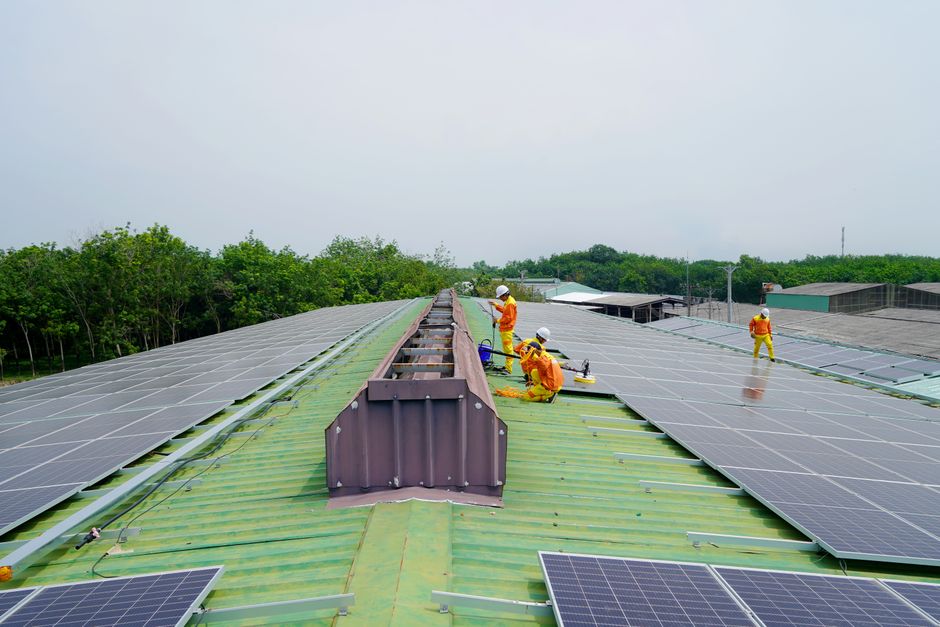
Bifacial panels are probably the most overhyped product in residential solar right now. That’s not a knock on the technology itself, which is genuinely good. It’s a knock on how they’re being sold: as a near-magical upgrade that justifies a 15-20% cost premium for almost every homeowner, regardless of their roof, their shading, or how their system is actually going to be mounted. Most of the marketing skips the part where bifacial gains are almost entirely dependent on installation conditions that the average residential roof doesn’t have.
Let me back that up with specifics, then help you figure out if they’re actually worth it for your situation.
How Bifacial Panels Actually Work
A standard monofacial panel captures light from one side: the front, which faces the sun. The back is covered with an opaque white backsheet. Bifacial panels replace that backsheet with either a transparent sheet or dual glass, so the rear cells can also collect light that bounces off surfaces below and around the panel.
That reflected light is called albedo. Snow, white roofing membrane, light-colored gravel, and concrete all reflect significant amounts of sunlight back up toward the underside of a panel. Dark asphalt shingles? Much less so. The difference is not subtle. A white TPO commercial roof might have an albedo coefficient of 0.65 or higher. Standard dark asphalt shingles sit around 0.05 to 0.10. That’s a ten-to-one difference in reflectivity.
So when a sales rep tells you bifacial panels will produce 10-25% more energy, ask them what albedo coefficient they used in that projection. If they stare at you blankly, the projection is marketing math, not engineering math.
The National Renewable Energy Laboratory (NREL) has done rigorous bifacial modeling, and their data shows real-world rear-side gains anywhere from 5% (poor conditions) to over 30% (ideal conditions). That’s a huge range. Where you fall in it depends almost entirely on your specific installation, not the panel spec sheet.
Where Bifacial Panels Win
| Installation Type | Typical Rear-Side Gain | Albedo Coefficient | Best For Bifacial? |
|---|---|---|---|
| Ground-mount (light gravel/soil, 18"+ clearance) | 15-30% | 0.40-0.65 | Yes |
| Flat commercial roof (white membrane) | 12-18% | 0.60-0.75 | Yes |
| Carport/pergola canopy | 15-25% | 0.50-0.70 | Yes |
| Pitched residential roof (dark shingles, 3-5" clearance) | 0-3% | 0.05-0.10 | No |
| East-west flat roof (low tilt, Europe) | 10-15% | 0.40-0.55 | Yes |
Helpful resource: Emporia Vue 2 Home Energy Monitor is a top-rated option for this. (As an Amazon Associate this site earns from qualifying purchases.)
Ground-mount systems. Full stop. If you’re installing on the ground with a light-colored gravel bed or bare soil, elevated at least 18 inches off the surface, oriented correctly, and with no shading on the rear, bifacial panels are the right call. The rear exposure is real, the albedo contribution is meaningful, and the incremental cost makes sense.
Flat commercial roofs also work well, especially with white membrane roofing and a ballasted racking system that tilts panels at 10-15 degrees and keeps them off the deck enough to let reflected light reach the rear cells. I’ve seen well-designed flat-roof commercial systems hit 12-18% rear-side gains consistently.
Carport canopies and pergola-style installations are another legitimate bifacial application. The underside of the panels is fully exposed, and you can use light-colored concrete or pavers below them to maximize albedo.
One more scenario worth mentioning: east-west flat-roof systems in Europe, which are increasingly common. Low tilt, both faces partially contributing at different times of day. The math works there. Not always so cleanly on a 25-degree pitched suburban roof in Ohio.
The Residential Roof Reality Check
Total Cost Breakdown of our Solar Power System & How Many Years to Pay for Itself. · Country View Acres (Formerly Smalltown442) on YouTube
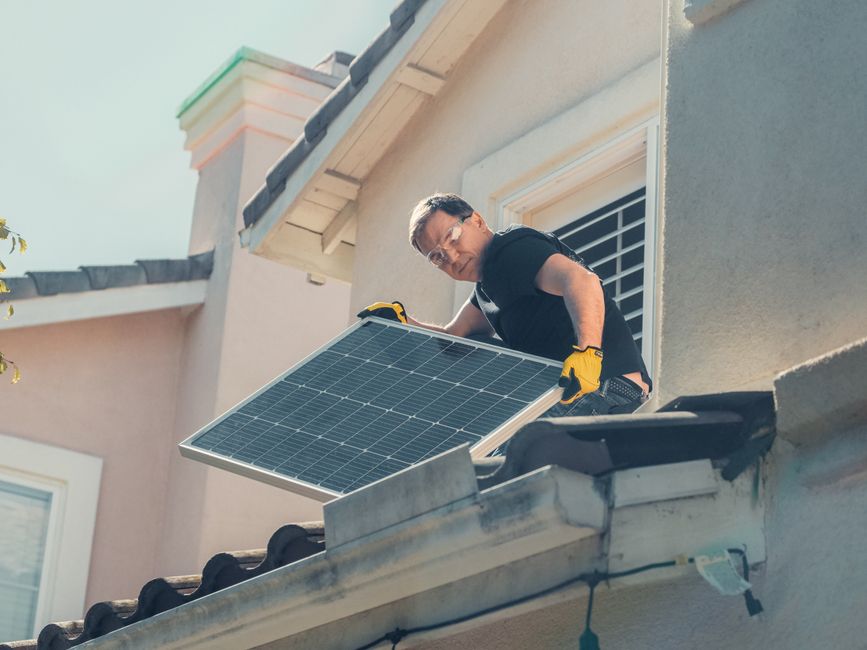
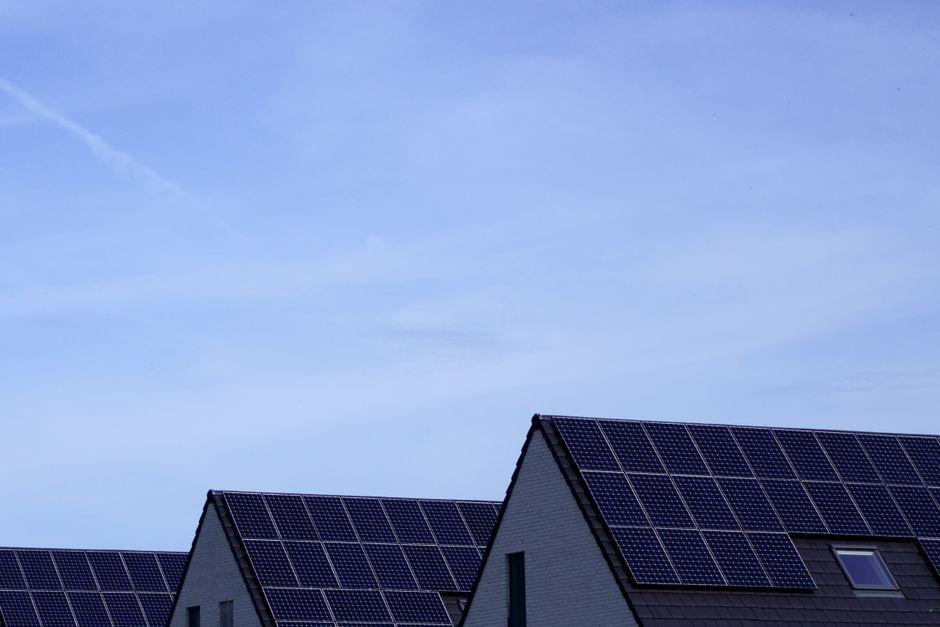
Here’s the honest answer most installers won’t give you: for a typical residential roof mount, bifacial panels deliver minimal rear-side gain. Most residential racking systems hold panels 3-5 inches above the roof deck. That gap is not enough for meaningful rear-side light. Dark shingles absorb rather than reflect. Rooftop obstructions create shading. The rear of the panel is essentially walled off from any useful irradiance.
In those conditions, you’re paying for bifacial technology and getting monofacial performance.
The panels themselves are still high quality. Most bifacial modules today use an N-type cell architecture (TOPCon or heterojunction) which carries real advantages: lower temperature coefficients, better low-light performance, longer useful cell life, and lower degradation rates (typically 0.25-0.4% per year versus 0.5-0.7% for older P-type panels). Those are legitimate reasons to buy certain bifacial panels. Just don’t pay the premium expecting ground-mount-level rear gain from a roof-mount application.
I’ve had homeowners come to me with quotes where the installer upsold bifacial panels for a flush-mount roof job at $0.40/W more per panel, with the rear-side gain baked into the projected savings. That’s not an honest calculation. Push back on it.
Dual Glass vs. Glass-Backsheet Bifacial
Worth knowing because it affects durability and weight. Many bifacial panels use a glass-glass construction: a tempered glass front and a tempered or heat-strengthened glass rear. Others use glass on front with a transparent polymer backsheet on the rear.
Glass-glass is more durable, more resistant to PID (potential induced degradation), and better at surviving hail and long-term UV exposure. It’s also heavier, typically 2-5 lbs more per panel than a comparable glass-backsheet module. On most residential roofs, that extra weight is manageable, but worth confirming with your structural assessment.
The Solar Energy Industries Association (SEIA) tracks bifacial module deployment and the trend is clearly toward glass-glass construction as costs have come down. If you’re choosing between two similarly-priced bifacial options, glass-glass is the better long-term call.
Inverter and Monitoring Considerations
A bifacial panel doesn’t need a special inverter. It feeds the same DC output into whatever string inverter or microinverter you’re using. Where it gets slightly more complicated: some bifacial panels in a ground-mount array can produce rear-side gains unevenly if partial shading affects the rear of some modules but not others. Microinverters or DC optimizers (like SolarEdge) handle that better than a plain string inverter. If you’re doing a ground-mount bifacial system, that’s worth factoring into your equipment choices.
For monitoring, a home energy monitor like the Emporia Vue (the site may earn a commission on purchases) lets you track actual production at the circuit level, which is useful for comparing your real-world output against projections. Not bifacial-specific, but relevant if you want to verify that bifacial premium is actually showing up in your numbers.
Sources
- National Renewable Energy Laboratory (NREL)
- Emporia Vue 2 Home Energy Monitor
- Solar Energy Industries Association (SEIA)
- Emporia Vue
- Emporia Smart Outlet with Energy Monitoring
Disclosure: As an Amazon Associate, we earn a small commission from qualifying purchases at no extra cost to you. We only recommend products that genuinely support the topics covered in this article.
- Renogy 200W Solar Starter Kit + 30A Charge Controller (~$169), Complete beginner solar kit, 200W monocrystalline panel, charge controller, and mounting hardware included.
- Renogy 2×100W Monocrystalline Solar Panels (~$99), Expandable 200W panel set from the most trusted DIY solar brand, used widely in off-grid and home backup systems.
Recommended Resources
Disclosure: As an Amazon Associate, we earn a small commission from qualifying purchases at no extra cost to you. We only recommend products that genuinely support the topics covered in this article.
- Renogy 200W Solar Starter Kit + 30A Charge Controller (~$169), Complete beginner solar kit, 200W monocrystalline panel, charge controller, and mounting hardware included.
- Renogy 2×100W Monocrystalline Solar Panels (~$99), Expandable 200W panel set from the most trusted DIY solar brand, used widely in off-grid and home backup systems.