 Morgan Johnson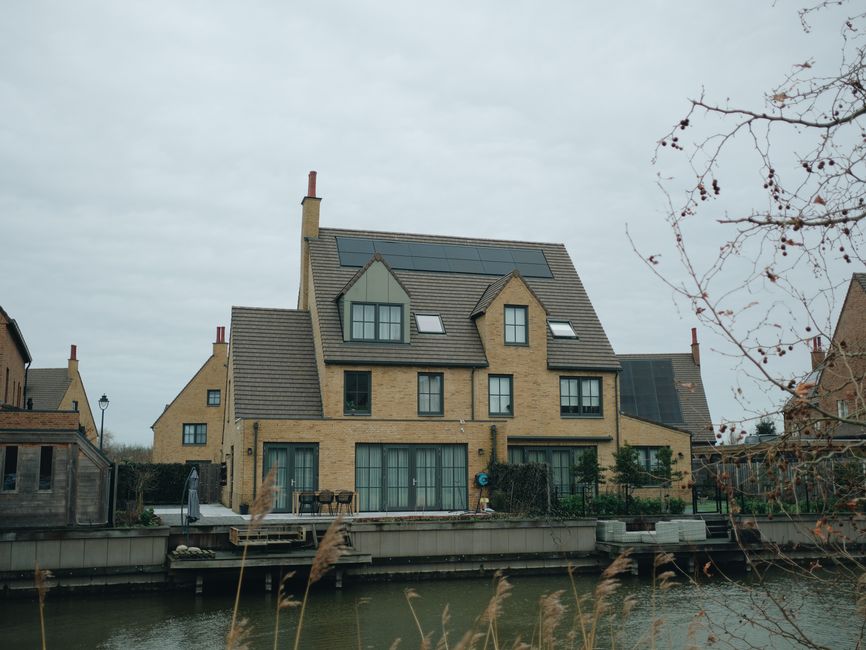
Most coverage of this question gives you the same non-answer: “It depends on your energy use and location.” Thanks. Really helpful. Let me actually give you the math, the real-world caveats, and the places where the standard advice falls flat.
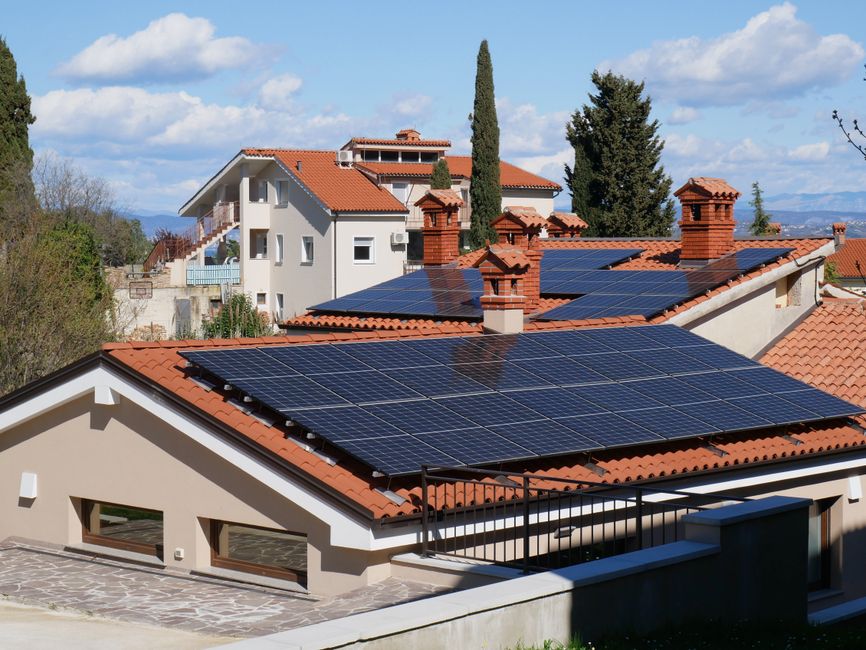
Yes, solar panels can power a whole house. In practice, whether they do depends on four variables most salespeople gloss over: your load profile, your roof geometry, your grid connection type, and whether you’ve got battery storage. Get those four right, and you’re looking at a genuine whole-home solar setup. Miss any one of them and you’ve got an expensive partial solution that still racks up a utility bill.
I’ve sized systems for everything from a 900-square-foot bungalow in Phoenix to a 3,400-square-foot house in western Washington with a heat pump, an EV, and a hot tub. The process is the same; the numbers are wildly different.
- A typical U.S. home uses 10,500 kWh/year; a properly sized system (8-12 kW) can offset 90-100% of that.
- Battery storage is what determines true whole-home coverage at night, not just panel count.
- Shading, roof orientation, and local utility rates change the math more than most installers admit.
- System cost runs $18,000-$35,000 installed before the 30% federal tax credit (current as of July 2026).
- Net metering policies vary by state and utility; in some markets they've gotten significantly worse since 2023.
What “powering a whole house” actually means
There’s an important distinction nobody explains up front: annual offset versus real-time coverage.
A system that covers 100% of your annual energy consumption still won’t power your house at 11pm on a cloudy December night without either battery storage or a grid connection. Most residential solar in the U.S. is grid-tied, meaning you pull from the grid when the sun’s not shining and you export excess to the grid during peak production. Net metering credits that export against your nighttime or winter draw. If your utility still offers full retail net metering, this works beautifully. If they’ve moved to a buyback rate (California’s NEM 3.0 dropped export credits by roughly 75% in 2023, for example), the math changes substantially.
So when I say a system can “power a whole house,” I mean it can offset 100% of annual consumption on a grid-tied setup with net metering, or cover real-time demand with adequate battery backup. Both are real, but they require different designs and budgets.
The sizing math, done honestly
Helpful resource: Renogy 100W 12V Flexible Solar Panel is a top-rated option for this. (As an Amazon Associate this site earns from qualifying purchases.)
The National Renewable Energy Laboratory (NREL) puts U.S. average household consumption at about 10,500 kWh per year. Divide that by your location’s peak sun hours (available in NREL’s PVWatts calculator, which I use on every single project), account for a 15-20% system efficiency loss from inverter conversion, wiring, and temperature derating, and you get your required panel wattage.
A rough formula: Annual kWh needed / (365 days × peak sun hours) × 1.2 efficiency factor = system size in kW.
For a house in Dallas (5.5 peak sun hours): 10,500 / (365 × 5.5) × 1.2 = roughly 6.3 kW. In Portland, Oregon (4.0 peak sun hours): 10,500 / (365 × 4.0) × 1.2 = roughly 8.6 kW. Same house, same usage, 37% more panel capacity required. That’s not a marginal difference.
Here’s what I got wrong early in my career: I used average annual sun hours instead of seasonal production curves. A system sized for Portland’s annual average will chronically underperform November through February, when cloud cover is persistent and days are short, and over-produce in July. If you’re on good net metering, that seasonal imbalance washes out over 12 months. If you’re not, you need either more panels or more batteries.
Real costs, right now
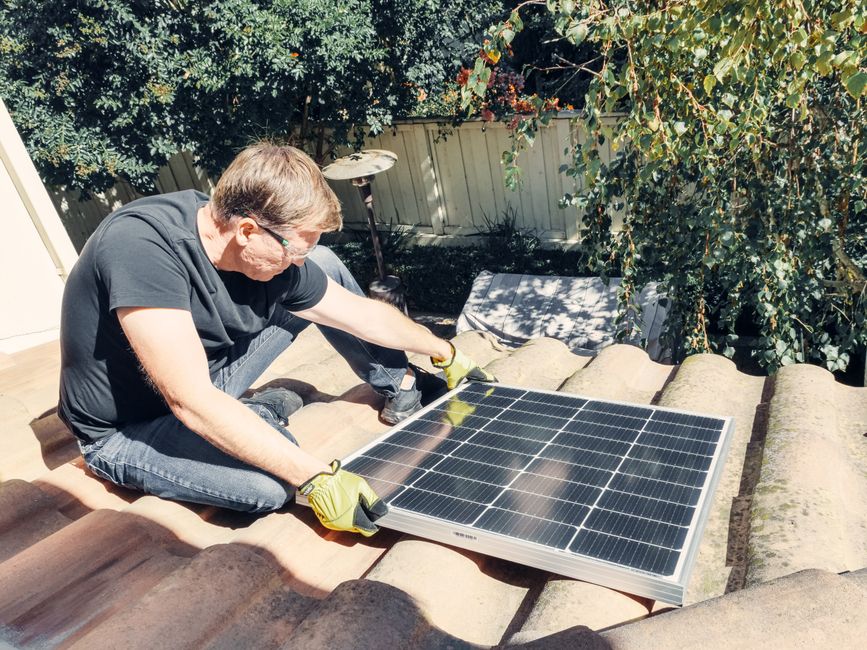
Do It Yourself Solar Power? - Easy DIY Solar Panel Installation! · JerryRigEverything on YouTube
As of July 2026, installed residential solar runs $2.50-$3.80 per watt depending on your region, panel brand, and installer margin. The federal Residential Clean Energy Credit sits at 30% of total system cost.
| System Size | Installed Cost (pre-credit) | After 30% Federal Credit | Estimated Annual Savings (avg. utility rate) |
|---|---|---|---|
| 6 kW | $15,000-$22,800 | $10,500-$15,960 | $1,100-$1,500 |
| 8 kW | $20,000-$30,400 | $14,000-$21,280 | $1,450-$2,000 |
| 10 kW | $25,000-$38,000 | $17,500-$26,600 | $1,800-$2,500 |
| 12 kW + battery (13.5 kWh) | $38,000-$55,000 | $26,600-$38,500 | $2,200-$3,000 |
Those savings figures assume you’re offsetting electricity at roughly $0.14-$0.17/kWh, which is close to the national average. If you’re in Massachusetts or California, your rate might be $0.28-$0.35/kWh, and the payback timeline compresses significantly. A reader emailed me last month from Connecticut with a $380/month summer electric bill, primarily from central AC. Her 10 kW system paid back in under 7 years after incentives.
Does your roof actually work?
Panel count is one thing. Whether your roof can physically and structurally host that panel count is another.
South-facing roof planes at 20-35 degree pitch are ideal in the northern hemisphere. East or west orientation costs you 10-20% production. North-facing is a last resort. Shading is the killer nobody talks about enough. A single pine branch throwing shadow across two panels for three hours a day can drop system output by 15-25% depending on whether you’re running string inverters or microinverters/power optimizers.
This is where microinverters (Enphase IQ8 series) or DC optimizers (SolarEdge) genuinely earn their cost premium over a simple string inverter setup. On a shading-free south-facing roof, a string inverter like a Fronius Primo or SMA Sunny Boy is perfectly fine and costs less. On a complex roof with dormers, chimneys, or nearby trees, panel-level electronics pay for themselves. I’ve seen systems with string inverters lose 40% production from shade that a microinverter system would have largely recovered.
The structural piece: most 2x6 rafter construction handles standard panel weight fine. Older 2x4 rafter systems, flat roofs, or roofs with existing damage need an engineer’s sign-off before you permit. Your installer should pull a permit and schedule an inspection. If they suggest skipping the permit to “save time,” walk away.
Battery storage: when you actually need it
Grid-tied solar without batteries is fine if your utility offers reasonable net metering and your area doesn’t have frequent outages. Batteries add $10,000-$20,000 to system cost depending on capacity, and for pure economics on a net metering grid, the payback rarely pencils out compared to staying grid-tied.
The calculation changes in three situations: your utility has gutted net metering export rates (looking at you, California, Nevada, and increasingly Florida); you live somewhere with grid reliability issues; or you want genuine energy independence. A single Tesla Powerwall 3 (13.5 kWh, around $12,000 installed) will run average evening loads and keep your lights on during a 6-8 hour outage. A whole-home backup covering HVAC, well pumps, and EV charging needs 2-3 units and a managed load setup.
A practical example: a 3-bedroom house in rural Vermont, no natural gas, all-electric with a heat pump. Annual consumption: 14,200 kWh. System installed: 11 kW with two Powerwall 3 units. Total cost before incentives: $51,000. After federal and Vermont state credits: roughly $31,000. The grid connection stays as backup for deep winter, but 11 months of the year the system runs the house. That’s a real whole-home setup.
Sources
- National Renewable Energy Laboratory (NREL): PVWatts Calculator and U.S. average residential energy consumption data, accessed July 2026
- Solar Energy Industries Association (SEIA): U.S. solar market insight reports, 2025-2026 residential installation cost benchmarks
- Lawrence Berkeley National Laboratory, Tracking the Sun report: Annual data on installed system prices and configurations
- California Public Utilities Commission, NEM 3.0 Decision: Net Energy Metering tariff structure change, effective April 2023
- U.S. Department of Energy, Homeowner’s Guide to the Federal Tax Credit for Solar: Current credit rate and eligible expenses, 2026
Photo: Melike B via Pexels
Recommended Resources
Disclosure: As an Amazon Associate, we earn a small commission from qualifying purchases at no extra cost to you. We only recommend products that genuinely support the topics covered in this article.
- Renogy 200W Solar Starter Kit + 30A Charge Controller (~$169), Complete beginner solar kit, 200W monocrystalline panel, charge controller, and mounting hardware included.
- Renogy 2×100W Monocrystalline Solar Panels (~$99), Expandable 200W panel set from the most trusted DIY solar brand, used widely in off-grid and home backup systems.