 Stephanie Walsh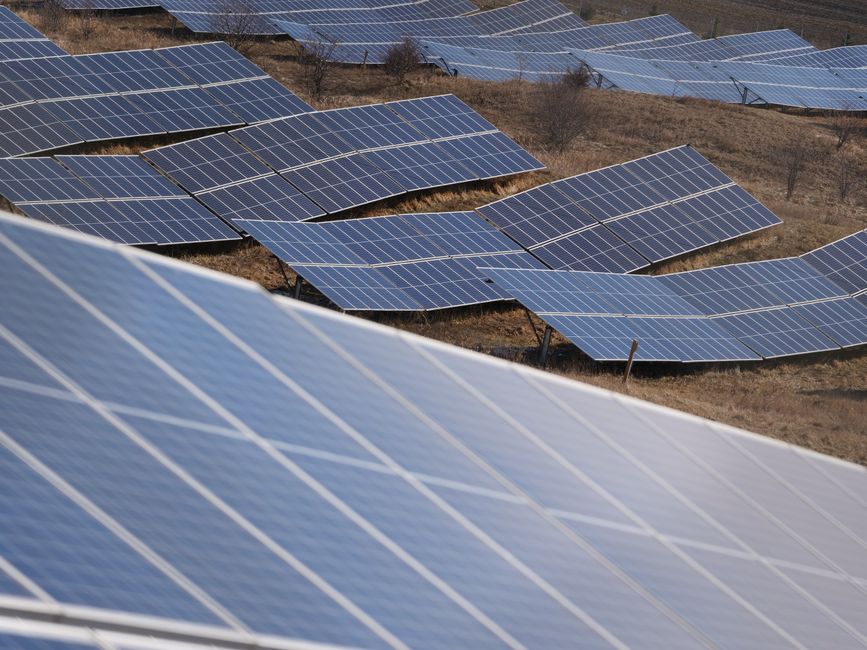
Your electric bill arrives and you think: solar makes sense, but I rent. Or you own your home but the roof faces north, or it’s shaded by a 60-year-old oak you’d never cut down, or you simply can’t swing the $18,000 upfront even after the federal tax credit. Community solar was built for exactly this moment. Not as a consolation prize. As a genuinely smart option that millions of people overlook because the marketing around it is confusing and the internet is full of vague explainer articles that never actually tell you what happens step by step.
Let me fix that.
Here's how the math typically works for a real subscriber, showing each line item you'll see on your bills.
| Line Item | Without Community Solar | With Community Solar |
|---|---|---|
| Electricity usage (800 kWh) | $120.00 | $120.00 |
| Delivery/distribution charges | $25.00 | $25.00 |
| Utility bill subtotal | $145.00 | $145.00 |
| Community solar bill credit (500 kWh × $0.14) | - | −$70.00 |
| Adjusted utility bill | $145.00 | $75.00 |
| Community solar subscription fee (500 kWh × $0.12) | - | $60.00 |
| Total monthly cost | $145.00 | $135.00 |
| Monthly savings | - | $10.00 (7%) |
| Annual savings | - | ~$120 |
General information for comparison, confirm specifics for your situation.
What Community Solar Actually Is
Somewhere within your utility service territory, a large solar array gets built. Usually it’s on farmland, a brownfield site, or a commercial rooftop. A developer, utility, co-op, or sometimes a municipality owns it. Instead of powering one building, it feeds electricity straight into the grid. Then households like yours subscribe to a share of that array’s output.
Here’s what I tell people when they’re first wrapping their head around it: no panels go on your roof. No electrician shows up. You sign a subscription agreement, and each month your share of the solar electricity generated gets credited to your utility bill. That credit is called a bill credit, and it typically shows up as a line item that reduces what you owe.
The mechanism is called virtual net metering. Your utility tracks how much energy your share of the community solar farm produces, converts that to a dollar credit based on a predetermined rate, and applies it to your account. You still get one bill from your utility. You might also get a separate monthly statement from the community solar provider showing your production and credit details.
Here’s what trips people up: you’re not literally using electrons from that specific farm. Electricity doesn’t work that way on the grid. You’re participating in a financial and accounting arrangement that reflects your proportional ownership of that generation. The grid gets cleaner by that amount. You get cheaper electricity. Done.
How the Subscription and Savings Work
Savings on community solar typically run between 5% and 15% on the portion of your bill covered by your subscription. That’s not a huge number on any single bill, but on a $150/month electricity bill, 10% savings is $180 a year, every year, with zero installation cost and zero maintenance responsibility on your end. Some programs get you closer to the high end; others are more modest. EnergySage’s market data shows average savings around 5-15% depending on the state and the specific program terms, so anyone promising you 30% is worth questioning.
There are two main subscription structures:
Fixed-rate discount subscriptions are the most common. The developer agrees to sell you credits at, say, $0.09/kWh when your utility rate is $0.12/kWh. You always get that 3-cent spread as savings, no matter what. If utility rates go up (and they will, historically by 2-3% annually), your savings actually grow in dollar terms over time.
Fixed monthly payment subscriptions work differently. You pay the developer a set amount each month, and they pass along whatever the market credit value is. These can make budgeting easier, but I’d read the fine print on how credits are valued before signing anything.
The size of your subscription should match your typical electricity consumption. If your household uses about 800 kWh per month, you want a share that produces roughly 800 kWh per month. Going way over is usually either not allowed or the excess credits get wasted. Most developers help you size this correctly when you sign up, and they’ll ask for a recent utility bill to calibrate.
Your credits cover only the supply and generation portion of your bill, not the delivery charges or fixed fees your utility charges just for being connected. So you’ll still see some utility charges every month no matter how large your subscription is.
Finding a Program and Avoiding Bad Contracts
SOLAR POWER: The Ultimate Beginner's Guide / How To · LRN2DIY on YouTube
Community solar is available in roughly 22 states right now, with the strongest markets in New York, Massachusetts, Illinois, Minnesota, Colorado, Maryland, and New Jersey. If you’re in a deregulated energy state, there’s a decent chance a program exists near you. If you’re in a rural co-op service territory or a state that hasn’t passed community solar legislation, your options may be limited or nonexistent.
To find programs, start with your utility’s website (some utilities run their own), then check databases like EnergySage or your state’s public utilities commission website. NREL also maintains research on community solar policy and availability if you want to understand which programs in your state have consumer protections baked in.
Now, the contract piece. This is where I see people get burned.
Contract length. Many community solar subscriptions run 20-25 years, which mirrors the life of the solar array. That’s not necessarily a problem, but you need to know what happens if you move. Good programs include a “move clause” that lets you transfer your subscription to your new address (if it’s within the same utility territory) or exit the contract without penalty if you relocate outside the service area. Some programs are more flexible on early termination. A 20-year lock-in with a $500 early exit fee is very different from a month-to-month subscription.
The credit rate and escalator. If your subscription has a price escalator (meaning the rate the developer charges you goes up by 1-2% per year), you want to know whether that escalator is lower than the expected rise in utility rates. If utility rates rise at 3% per year and your escalator is 2%, you stay ahead. If the escalator is 3.5% and utility rates stay flat, you could end up paying more than you’re saving in the later years.
The developer’s track record. Community solar is a relatively young industry and there have been some bad actors. Readers have told me about developers who took years longer than promised to get their array online, or who provided confusing billing that made it nearly impossible to verify actual savings. Ask directly: is this array already built and operating, or are you subscribing to a project that’s still in development? If it’s not operational yet, what’s the projected online date and what’s the penalty if they miss it?
Established names include Nexamp, Ampion, Arcadia, and EnergySage’s own marketplace. That doesn’t mean smaller regional developers are bad; it means you should do a quick search for reviews and check if they’re registered with your state’s PUC.
What It Doesn’t Replace
Community solar is not the same as rooftop solar, and it’s worth being honest about the difference. With rooftop solar, you own an asset. Your home value increases. You can potentially go off-grid or add battery storage. The National Renewable Energy Laboratory (NREL) has published research showing rooftop solar increases home resale values by an average of about $4/watt installed, which on a 7 kW system is roughly $28,000 in added value. Community solar gives you none of that equity.
Community solar also won’t help you during a grid outage unless you separately have battery backup. Some people think community solar means their lights stay on when the grid goes down. They don’t.
If you own your home, have a south or west-facing roof with minimal shading, and you plan to stay put for 10+ years, rooftop solar will almost certainly beat community solar financially over the long run. But if you rent, if your roof situation is poor, if you’re not ready to tie up capital or take on a loan, or if you just want the simplest possible way to support solar and cut your bill without any installation complexity, community solar is genuinely worth it.
I’ve helped people go both routes. Neither is wrong.
The honest truth is that community solar flies under the radar in a lot of energy conversations, and it shouldn’t. For anyone who’s been told solar isn’t an option for them, it’s worth an hour of your time to find out what’s available in your area, read one contract carefully, and do the math on your current bill. Sometimes the answer really is that simple.
Sources
- EnergySage’s market data
- NREL also maintains research
- The National Renewable Energy Laboratory (NREL)
- Jackery SolarSaga 100W Solar Panel
- P3 Kill A Watt Electricity Usage Monitor
Disclosure: As an Amazon Associate, we earn a small commission from qualifying purchases at no extra cost to you. We only recommend products that genuinely support the topics covered in this article.
- Renogy 200W Solar Starter Kit + 30A Charge Controller (~$169), Complete beginner solar kit, 200W monocrystalline panel, charge controller, and mounting hardware included.
- Renogy 2×100W Monocrystalline Solar Panels (~$99), Expandable 200W panel set from the most trusted DIY solar brand, used widely in off-grid and home backup systems.
Photo: Giant Asparagus via Pexels
Recommended Resources
Disclosure: As an Amazon Associate, we earn a small commission from qualifying purchases at no extra cost to you. We only recommend products that genuinely support the topics covered in this article.
- Renogy 200W Solar Starter Kit + 30A Charge Controller (~$169), Complete beginner solar kit, 200W monocrystalline panel, charge controller, and mounting hardware included.
- Renogy 2×100W Monocrystalline Solar Panels (~$99), Expandable 200W panel set from the most trusted DIY solar brand, used widely in off-grid and home backup systems.