 David Torres
Most homeowners treat “going solar” as a single binary decision: put panels on the roof, or don’t. That framing misses half the picture, and it’s costing people real money.
Community solar has been around long enough now that I’ve watched it go from a niche workaround to a legitimate option that, for some households, genuinely beats rooftop in every dimension that matters. I’ll be honest: when I first encountered community solar subscriptions back when I was still doing residential installs, I dismissed them as a consolation prize for renters. I was wrong. The research here is more interesting than the marketing on either side wants you to believe.
So let me give you the real comparison, contractor bias removed.
What You’re Actually Comparing
| Aspect | Rooftop Solar | Community Solar |
|---|---|---|
| Upfront Cost | $16,800-$19,600 (after 30% ITC) | $0 |
| Installation | Required; 5-10% rejection/delay rate via HOA | None |
| Payback Timeline | 7-10 years typical | N/A (subscription model) |
| Long-term Savings (20 years) | $40,000-$60,000 | $2,000-$6,000 |
| Annual Savings (Typical) | $2,000-$3,000 | $100-$300 |
| LCOE (Lifetime) | $0.06-$0.10/kWh | Utility rate minus 5-15% |
| Portability | Not portable; tied to home | Transferable or cancellable |
| Contract Length | N/A (owned asset) | 20 years (some projects); early termination fees up to $3,000 |
| Best For | Long-term homeowners; good roof; unshaded space | Renters; shaded roofs; short-term residents; HOA issues |
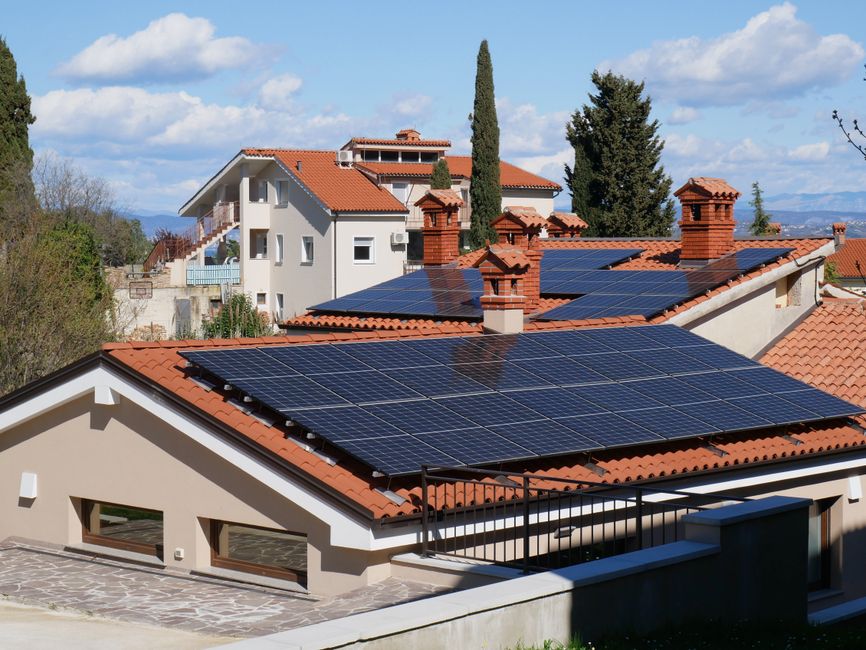
Rooftop solar is a capital investment. You’re buying (or financing) physical equipment, having it bolted to your house, and owning the electricity output for 25-plus years. The median installed cost today is running around $3.00 to $3.50 per watt before incentives. A typical 8 kW residential system lands somewhere around $24,000 to $28,000 before the federal Investment Tax Credit (ITC). After the 30% ITC, you’re looking at $16,800 to $19,600 out of pocket, or rolled into a loan.
Community solar works differently. A developer builds a large solar farm, usually somewhere in your utility territory, and sells or leases you a “share” of that array’s output. Your utility bills that energy against what your share produces, and you pay the community solar developer for your subscription, typically at a rate 5-15% below your regular utility rate. No equipment on your roof. No installation crew. No permits.
These are fundamentally different products, and comparing them requires being honest about what you actually need.
The Case for Rooftop
Helpful resource: Solar Panel Cleaning Brush Kit with Extension Handle is a top-rated option for this. (As an Amazon Associate this site earns from qualifying purchases.)
If you own your home, plan to stay there at least 7-10 years, have an unshaded south or west-facing roof, and can either pay cash or qualify for a low-interest solar loan, rooftop solar is almost certainly the better long-term financial move.
Here’s why: once you’ve paid off the system, you’re generating electricity at close to zero marginal cost. The National Renewable Energy Laboratory (NREL) has done extensive levelized cost of energy (LCOE) modeling showing that residential rooftop systems, over their full lifetime, produce energy at roughly $0.06 to $0.10 per kWh once you account for the ITC and net metering. Your utility is probably charging you $0.12 to $0.18 per kWh right now, and that number trends upward over time.
That spread compounds hard. A homeowner who installs a well-sized system today, uses net metering, and stays in the house for 20 years can realistically see $40,000 to $60,000 in cumulative utility bill savings, depending on their market and usage. That’s what I’ve seen in post-install reviews for systems I’ve had a hand in.
But here’s what surprised me: rooftop pencils out worse than that math suggests far more often than anyone admits. Because the math assumes a roof in good condition (not needing replacement in the next 5 years), enough usable unshaded roof space for the system you actually need, a utility with fair net metering policy, and you staying put. When those assumptions fail, rooftop’s advantages erode fast.
I’ve seen people put solar on a 15-year-old roof, pull it all off two years later for a re-roof, pay $2,500 to $4,500 for the panel removal and reinstallation, and completely blow their payback calculation. That’s a real thing that happens. Most installers won’t volunteer the information.
The Case for Community Solar
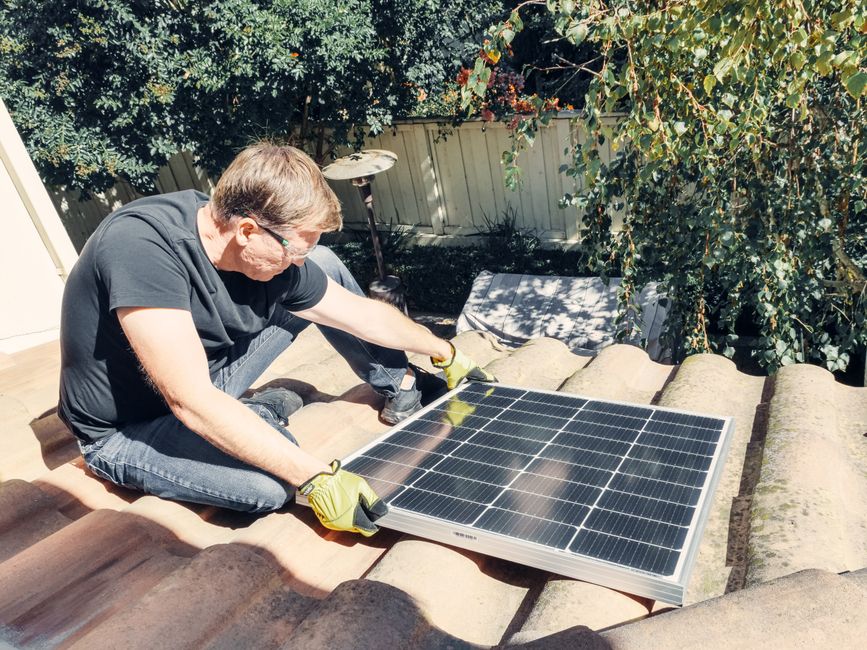
Easy DIY Solar Panel Roof Installation · Everyday Solar on YouTube
Here’s where I want to push back on the “community solar is for renters” narrative.
Community solar is available in about 20+ states today, with New York, Illinois, Minnesota, Colorado, Massachusetts, and Maryland having the most developed markets. If you’re in one of those states, you can likely subscribe to a project and start saving within 60 to 90 days. Zero upfront cost. No installation. No HOA drama.
That last point matters more than people realize. HOAs reject or complicate roughly 10-15% of residential solar installs in suburban markets, and even where you have legal protections (many states now have solar access laws), the process can drag out for months. Community solar sidesteps all of it. You sign a subscription agreement, your utility connects the billing, and you’re done.
For renters, obviously, it’s the only real option short of asking a landlord to go solar. But I’ve also recommended community solar to homeowners with heavily shaded roofs where a rooftop system would be dramatically undersized, people planning to sell within 3-5 years who don’t want to navigate the solar panel question in a home sale, households that just replaced their roof with a manufacturer’s warranty they don’t want to void, and anyone whose utility has weak net metering making the rooftop economics less compelling.
The savings are real but modest, typically $100 to $300 annually on a standard residential subscription. That’s not $40,000 over 20 years. It’s also not nothing, and the risk profile is totally different. If you move, you typically cancel or transfer the subscription. If your roof develops a leak near a penetration point, it’s not your problem.
One thing to watch carefully with community subscriptions: contract length and termination terms. Some projects lock you in for 20 years with steep early termination fees. I’ve seen $1,500 to $3,000 penalties buried in the fine print. Read that contract looking for bad news, because sometimes it’s there.
The Net Metering Variable Nobody Talks About Enough
Most comparison articles gloss over this, and it’s often the deciding factor.
Net metering policy varies wildly by state and utility. In California, NEM 3.0 dramatically cut the value of exported solar energy, effectively lengthening payback periods for new rooftop installs by years. In states like Texas, some utilities offer no net metering at all. The U.S. Department of Energy’s homeowner solar guide has a decent overview, but you really need to dig into your specific utility tariff to know what you’re working with.
Why does this matter? Because community solar projects typically sell you energy at a fixed discount to retail rate, regardless of what your utility’s net metering policy looks like. If your utility has weakened or eliminated net metering for new customers, community solar can actually outperform a rooftop system on a 10-year financial basis. The community project’s economics aren’t depending on retail-rate net metering to make the math work.
I didn’t expect that when I started looking at this more carefully. It’s one of those cases where the “inferior” product is better suited to a specific regulatory environment.
Making the Decision: A Practical Framework
Rather than a chart, let me walk through how I’d actually think about this if a neighbor knocked on my door today.
Start with your state. If community solar isn’t available in your utility territory, the decision is already made. Check EnergySage or your state’s public utility commission to confirm availability.
If it is available, next question: do you own your home and plan to stay at least 7 years? If yes, look hard at rooftop, but get a real quote (not a door-to-door pitch) and verify your roof condition first. Pull your utility bill and understand your net metering rate before you sign anything. If a salesperson can’t explain your utility’s current export compensation rate in plain English, walk away.
If you rent, plan to move soon, have a shaded or compromised roof, or your utility has gutted net metering, look at community solar. Compare at least two or three projects and focus on the discount percentage and contract termination terms. Don’t sign anything longer than 5 years without a clean exit clause.
One more suggestion for anyone going the rooftop route: invest in a home energy monitor like a Sense Energy Monitor (around $299 on Amazon, note the site may earn a commission) before you size your system. Most people dramatically overestimate or underestimate their actual loads. Knowing exactly where your electricity is going gets you to a better system size than any installer’s rule-of-thumb estimate.
The honest answer is there’s no universal winner. What surprised me most is how location-specific, and specifically utility-policy-specific, the math turns out to be. Two homeowners in adjacent states can make completely opposite decisions and both be right. Know your roof, know your utility, know your timeline, and run the actual numbers before anyone hands you a contract.
Sources
- Solar Panel Cleaning Brush Kit with Extension Handle
- National Renewable Energy Laboratory (NREL)
- U.S. Department of Energy’s homeowner solar guide
- Amazon
- Lutron Caséta Wireless Smart Dimmer Kit
Disclosure: As an Amazon Associate, we earn a small commission from qualifying purchases at no extra cost to you. We only recommend products that genuinely support the topics covered in this article.
- Renogy 200W Solar Starter Kit + 30A Charge Controller (~$169), Complete beginner solar kit, 200W monocrystalline panel, charge controller, and mounting hardware included.
- Renogy 2×100W Monocrystalline Solar Panels (~$99), Expandable 200W panel set from the most trusted DIY solar brand, used widely in off-grid and home backup systems.
Recommended Resources
Disclosure: As an Amazon Associate, we earn a small commission from qualifying purchases at no extra cost to you. We only recommend products that genuinely support the topics covered in this article.
- Renogy 200W Solar Starter Kit + 30A Charge Controller (~$169), Complete beginner solar kit, 200W monocrystalline panel, charge controller, and mounting hardware included.
- Renogy 2×100W Monocrystalline Solar Panels (~$99), Expandable 200W panel set from the most trusted DIY solar brand, used widely in off-grid and home backup systems.