 Morgan Johnson
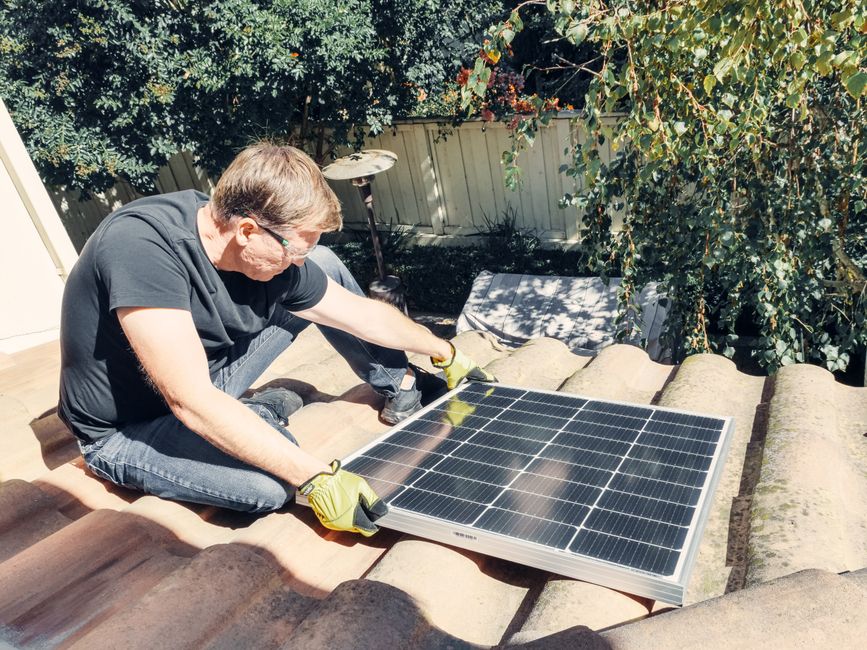
A homeowner in Phoenix told me last year he saved $14,000 by installing a 6kW solar kit himself over two weekends. His neighbor across the street, same neighborhood, same roof type, paid a contractor $28,000 for the equivalent system. The difference wasn’t luck or skill level. It was research, the right kit, and knowing exactly what he was getting into before he bought anything.
DIY solar has come a long way. The kits available today are genuinely designed for skilled homeowners, not just electricians. But “designed for DIY” doesn’t mean all kits are created equal, and the wrong choice can mean stranded equipment, failed inspections, or a system that underperforms for 25 years. Let’s get specific about what’s actually worth buying.
What a “Solar Kit” Actually Includes (And What It Doesn’t)
This is where a lot of buyers get burned. A solar kit is typically a bundled collection of components: solar panels, a solar inverter (string or microinverter), racking hardware, and sometimes wiring. That’s it. Most kits do not include the electrical panel upgrade your home might need, the interconnection application to your utility, the permits, the conduit, or the monitoring hardware.
I’ve seen clients order a kit, get excited, and then discover their main electrical panel is a Federal Pacific Stab-Lok that can’t safely accept a solar backfeed. That’s a $3,000 surprise you want to find before you buy panels.
Before you buy any kit, you need to know:
- Your roof’s orientation, tilt angle, and available unshaded space
- Your annual kilowatt-hour (kWh) usage from your utility bills
- Whether your roof can handle the added load (roughly 3-4 lbs per square foot for most racking systems)
- Your local permitting requirements
- Your utility’s interconnection rules and any capacity limits on exported power
The DIY solar panel installation guide on this site walks through the site assessment process in detail. Do that first.
How to Size Your System Before You Shop
Helpful resource: Jackery SolarSaga 100W Solar Panel is a top-rated option for this. (As an Amazon Associate this site earns from qualifying purchases.)
Buying a 10kW kit when you need 6kW is just as bad as buying too small. Oversizing wastes money and can actually cause utility issues in states with strict interconnection limits.
Here’s how to actually do it. Pull 12 months of utility bills and add up your total annual kWh consumption. Divide that number by 1,200 if you live in a sunnier region like the Southwest, or by 1,000 if you’re in the Midwest or Northeast. That gives you a rough system size in kilowatts.
Example: 9,600 kWh annual usage in Dallas divided by 1,200 equals 8kW. You’d look at 8kW kits, which typically means around 20 to 24 panels depending on panel wattage.
The National Renewable Energy Laboratory’s PVWatts calculator (free at pvwatts.nrel.gov) refines this significantly. Input your address, roof tilt, and azimuth and it gives you location-specific production estimates. I use it for every project. Don’t skip it.
Also factor in whether you’re planning to add an EV or go fully electric with appliances. If that’s a possibility in the next 3-5 years, size up by 15-20% now. Adding panels later is more expensive than doing it right initially.
The Best DIY Solar Kits Available Right Now
Complete Hybrid Solar Inverter Wiring Installation | How to Install at Home · Electrical Technologies on YouTube
| Kit Brand | Per-Watt Cost | Best For | Key Strength | Limitation |
|---|---|---|---|---|
| Renogy (4-8kW) | $1.20-$1.60 | Straightforward roofs, full grid-tied | Tier 1 panels, clear manuals, good support | String inverter less ideal for shading |
| Grape Solar | Comparable to Renogy | Budget-conscious buyers | Local Home Depot returns | Sparse racking documentation |
| EcoFlow PowerStream | Higher per-watt | Offset/balcony systems | Plug-in simplicity | Not a full grid-tied solution |
| Goal Zero / Bluetti | Higher per-watt | Portable or supplemental storage | Portability and flexibility | Not a full home solar solution |
| CivicSolar / Wholesale Solar | Variable (component-based) | Experienced DIYers, custom builds | Professional-grade equipment, better selection | Requires system design knowledge |
| Contractor Install (reference) | $2.50-$3.50 | Turn-key installation | No design work required | Higher cost than DIY |
These are real products, not hypotheticals. I’m comparing them on what actually matters for DIY success: component quality, documentation clarity, customer support, and how well the included racking handles field conditions.
Renogy Solar Kit (4kW-8kW range)
Renogy is the most widely sold DIY solar brand in the US for a reason. Their kits use Tier 1 panels and come with genuinely readable installation manuals. The 400W monocrystalline panels are efficient and widely available for replacement if needed 15 years from now. Their string inverter kits work well for straightforward roof layouts; their microinverter bundles (usually Enphase IQ7 or IQ8 series) are worth the extra cost if you have any shading or a complex multi-plane roof. Budget: $1.20 to $1.60 per watt for the kit alone before installation labor and balance-of-system costs.
Grape Solar
Sold through Home Depot, which matters for some buyers because you can return components locally if something arrives damaged. Component quality is solid. The main weakness: racking documentation can be sparse. If you’re new to roof mounting, pair this with third-party installation guides.
EcoFlow PowerStream + Panel Bundles
These are oriented toward smaller off-grid or balcony systems rather than full grid-tied residential. If you’re trying to offset a portion of usage without a full interconnection, EcoFlow’s plug-in systems are legitimate. Just understand they’re not a replacement for a full grid-tied system.
Goal Zero and Bluetti bundles
Same as EcoFlow. Great for portable power or supplemental battery storage. Not a full home solar solution.
CivicSolar and Wholesale Solar (now part of IronRidge)
These suppliers sell professional-grade equipment to licensed contractors but will also sell to homeowners in most states. If you want to build your own kit from components rather than buying a boxed bundle, this is how contractors actually buy. You get better component selection and often better pricing, but you need to know what you’re doing.
For a full grid-tied system, stick with Renogy kits or build your own from a wholesale supplier. EnergySage’s market data consistently shows that DIY solar averages $1.00 to $2.00 per watt installed versus $2.50 to $3.50 per watt for contractor installs, so the savings are real even when you factor in permit fees and supplemental materials.
Permits, Inspections, and Utility Interconnection: Don’t Skip This
I know this isn’t the fun part. But it’s where DIY projects either succeed or fall apart.
Almost every jurisdiction requires a permit for a grid-tied solar installation. The permit process typically involves submitting a site plan showing panel layout on the roof, a single-line electrical diagram, equipment spec sheets for your panels and inverter, and a structural letter or calculation for the racking load.
Some counties have simplified solar permits now, especially in California, Arizona, and Colorado. A simple online submission can get you approval in a few days. Others, particularly in parts of the Southeast and Mid-Atlantic, require plan review by a licensed engineer and can take 4-6 weeks. Call your local building department before you buy anything.
After installation, you’ll need a final electrical inspection before your utility will approve interconnection. The inspection process is identical whether a contractor or homeowner installed the system. Inspectors check wire sizing, bonding, labeling, and disconnect requirements. If you do it right, you pass. If you don’t, you fix it and re-inspect.
Your utility also has to approve interconnection separately. Most have an online application process. For systems under 10kW on a residential account, it’s usually straightforward. Larger systems sometimes trigger additional study requirements.
If your HOA is a factor, you need to understand those rules before installation day. Most states have solar access laws that limit how much HOAs can restrict solar, but “limit” doesn’t mean “eliminate.” Read the specific rules for your area at the HOA solar panel rules guide.
Choosing Inverters: String vs. Microinverters vs. Power Optimizers
This is one of the most consequential decisions in your system design, and it’s something kit buyers often don’t think through carefully.
String inverters convert DC power from a series of panels wired together (a “string”) into AC power at one central unit. They’re less expensive and simpler to maintain. The drawback: if one panel is shaded or underperforms, it drags down the whole string. For unshaded south-facing roofs, a string inverter is a perfectly rational choice. SMA, Fronius, and SolarEdge make reliable units.
Microinverters attach to each individual panel and convert at the panel level. Enphase dominates this market. Because each panel operates independently, shading one panel doesn’t affect the others. They cost more upfront, typically $0.20 to $0.30 more per watt, but they simplify monitoring, improve production in suboptimal conditions, and make future system expansion easier.
Power optimizers are a hybrid. Each panel gets an optimizer (SolarEdge is the main brand), but you still have a central inverter. You get panel-level monitoring and shading mitigation at a cost between string inverters and microinverters.
My practical recommendation: if your roof is simple and unshaded, get a string inverter kit and save the money. If you have dormers, trees, or multiple roof planes, spend the extra on Enphase microinverters. The production gains will recoup the cost.
Comparing Popular DIY Kits at a Glance
| Kit/Brand | Best For | Inverter Type | Est. Cost/Watt (Kit Only) | Documentation Quality |
|---|---|---|---|---|
| Renogy 6kW String Kit | Simple unshaded roofs | String (Growatt) | $1.20-$1.45 | Good |
| Renogy 6kW Microinverter Kit | Shaded or complex roofs | Enphase IQ7 | $1.50-$1.70 | Good |
| Grape Solar (via Home Depot) | Easy local returns, simple installs | String | $1.30-$1.60 | Fair |
| Wholesale build (CivicSolar) | Experienced DIYers | Your choice | $0.90-$1.20 | Self-guided |
| EcoFlow PowerStream | Partial offset, no interconnection | Microinverter | $1.80-$2.50 | Good |
Note: These are kit costs only. Add $0.30 to $0.70 per watt for racking, wiring, conduit, breakers, monitoring, and permit fees if not included.
DIY solar isn’t for everyone. If you’re not comfortable on a roof, not willing to read a permit application, or not prepared to learn enough electrical basics to pass an inspection, hiring a contractor is the right call. But if you’re the kind of person who rewires their own outlets, builds decks, and reads spec sheets for fun, a quality solar kit is a legitimate path to a 25-year energy asset that you built yourself. The savings are real, the technology is proven, and the resources to do it right have never been better.
Sources
- Jackery SolarSaga 100W Solar Panel
- Emporia Smart Outlet with Energy Monitoring
- Solar Panel Cleaning Brush Kit with Extension Handle
- Renogy 200W Solar Starter Kit + 30A Charge Controller
Disclosure: As an Amazon Associate, we earn a small commission from qualifying purchases at no extra cost to you. We only recommend products that genuinely support the topics covered in this article.
- Renogy 200W Solar Starter Kit + 30A Charge Controller (~$169), Complete beginner solar kit, 200W monocrystalline panel, charge controller, and mounting hardware included.
- Renogy 2×100W Monocrystalline Solar Panels (~$99), Expandable 200W panel set from the most trusted DIY solar brand, used widely in off-grid and home backup systems.
- Renogy 200W Solar Kit + 20A MPPT Controller (~$199), 200W panel kit with MPPT charge controller for maximum energy harvest.
Recommended Resources
Disclosure: As an Amazon Associate, we earn a small commission from qualifying purchases at no extra cost to you. We only recommend products that genuinely support the topics covered in this article.
- Renogy 200W Solar Starter Kit + 30A Charge Controller (~$169), Complete beginner solar kit, 200W monocrystalline panel, charge controller, and mounting hardware included.
- Renogy 2×100W Monocrystalline Solar Panels (~$99), Expandable 200W panel set from the most trusted DIY solar brand, used widely in off-grid and home backup systems.
- Renogy 200W Solar Kit + 20A MPPT Controller (~$199), 200W panel kit with MPPT charge controller for maximum energy harvest.