 Stephanie Walsh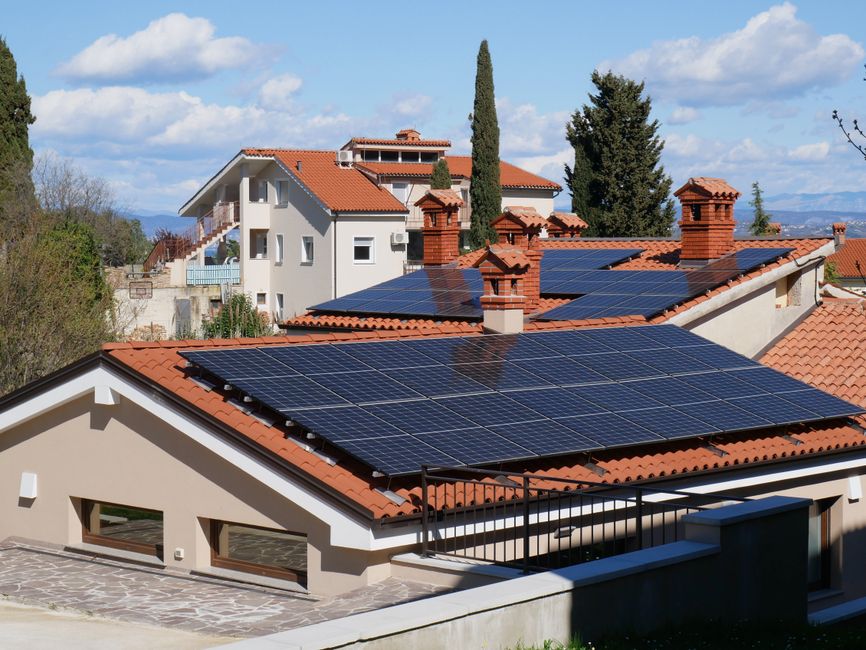
Forty-one states require a permit for residential solar installations. Not “most states.” Not “many jurisdictions.” Forty-one, and the other nine still have local municipal codes that often do the same job. I say this because the number one thing I hear from homeowners who got burned on a DIY install isn’t “I wired it wrong” or “my panels underperform.” It’s “I didn’t know I needed a permit.”
You might be wondering how hard the legal side actually is, or whether it’s even worth figuring out before you start pricing panels. Here’s what I tell people: the permit process is genuinely not that bad once you understand what’s in front of you, but it has a specific sequence, and skipping steps doesn’t save you time, it just moves the pain to a worse moment, usually right before you sell the house.
The good news is that the requirements, while varied, follow a pretty predictable pattern. Most jurisdictions want roughly the same things. The specific forms, fees, and inspection timelines are where things diverge, and that’s exactly what we’re going to walk through.
- 41 states require permits for residential solar; all others have local codes that may still require them.
- The federal 30% Investment Tax Credit (ITC) applies to DIY installs, but only if the system is correctly permitted and grid-tied.
- Most municipalities require a structural engineering letter, an electrical plan, and a utility interconnection agreement before final inspection.
- Unpermitted solar can void your homeowner's insurance and create serious problems at resale.
- Plan for 2-8 weeks for permit approval; some California counties run 10-12 weeks even for straightforward residential systems.
The Permit Layer Cake
Here’s a thing I got wrong for years before I started doing solar consulting full-time: I assumed permits were a single thing you applied for. One form, one fee, done.
The reality is there are usually three separate regulatory layers sitting on top of each other, and you have to deal with them in order.
Local building permit. This comes from your city or county building department. It covers the structural and electrical work involved in mounting panels and running conduit. You’ll typically submit a site plan showing panel placement, a wiring diagram (doesn’t have to be pretty, but it does have to be accurate), and a spec sheet for every major component: panels, inverter, racking system, and disconnect. The clerk at the counter will ask you for your AHJ designation, which stands for Authority Having Jurisdiction, and that’s just confirming which department has oversight. They always ask.
Utility interconnection agreement. This is separate from the building permit and it’s the one people forget. Before your utility will allow you to run a grid-tied system, you need their written approval. This is called a Permission to Operate (PTO), and some utilities issue it quickly (Pacific Gas & Electric has a standard small generator interconnection process that takes about 20 business days) while others are notoriously slow. My worst experience was a homeowner in rural Tennessee who waited 14 weeks because the local co-op had a one-person interconnection department. Plan accordingly.
HOA approval (if applicable). This is separate from both of the above, and it can be the most unpredictable. I’ll cover this more below.
These layers aren’t redundant, they serve genuinely different purposes, and you’ll need all three signed off before your system is legally complete.
What Your Permit Application Actually Needs
Helpful resource: P3 Kill A Watt Electricity Usage Monitor is a top-rated option for this. (As an Amazon Associate this site earns from qualifying purchases.)
Permit requirements vary by jurisdiction, but if you’re doing a standard grid-tied residential install in a single-family home, here’s what you should expect to compile. Most building departments publish a solar checklist, and you should get it from them directly, not from a third-party site that might be outdated.
That said, the following components show up on almost every checklist I’ve seen, current as of July 2026:
| Document | What It Shows | Who Prepares It |
|---|---|---|
| Site plan / aerial photo | Panel layout, roof orientation, setback compliance | You (Google Earth works fine) |
| Electrical single-line diagram | System wiring from panels to grid connection | You or a licensed electrician |
| Equipment spec sheets | Panel, inverter, racking model and ratings | Manufacturer (download PDFs) |
| Structural letter (sometimes) | Roof can handle panel load | Licensed structural engineer |
| Load calculation | Home’s electrical demand vs. system output | You, with some math |
| Utility application | Interconnection request | You, submitted to utility |
The structural letter is the item that catches people off guard. Not every jurisdiction requires one, but many do for roofs older than 15 years, or for certain racking configurations. A structural engineer letter typically runs $300-$600. I’ve seen homeowners fight this requirement and lose a month arguing about it. Just budget for it and move on.
For the electrical single-line diagram, you don’t need to be an electrician to draw one, but it needs to be accurate. There are free templates online through the U.S. Department of Energy’s homeowner solar resource, and Enphase’s IQ series inverters actually include pre-drawn single-line diagrams in their installation documentation, which is one reason I recommend them for confident DIY installers.
One worked example from my own consulting work: A homeowner in Austin, Texas submitted a permit application with a single-line diagram drawn in PowerPoint. Building department rejected it not because the diagram was wrong, but because it lacked the required NEC reference callouts (specifically NEC Article 690 for solar PV systems). Revised diagram, resubmitted, approved in four days. The lesson isn’t “hire someone to draw it.” The lesson is “look up what NEC 690 requires and label your diagram accordingly.”
The HOA Problem (And Federal Law That Helps You)
Complete Hybrid Solar Inverter Wiring Installation | How to Install at Home · Electrical Technologies on YouTube
Thirty-two states have solar access laws that restrict HOAs from prohibiting solar installations outright. If you’re in one of those states, your HOA cannot say no. What they can do is impose “reasonable” restrictions on aesthetics, like panel color or placement away from street-facing slopes, and some HOAs try to stretch “reasonable” into something much more aggressive than the law allows.
Here’s what I tell people who are nervous about this: send your HOA a certified letter with your proposed installation and a copy of your state’s solar rights statute before they can issue a blanket denial. In California, Civil Code Section 714 is your friend. In Florida, it’s Florida Statute 163.04. In Colorado, CRS 38-30-168. Look yours up. Having the statute number in your letter changes the tone of the conversation immediately.
The tricky part is that HOAs can still require pre-approval, and if you start installation without it, even in a solar-rights state, you can face fines during the dispute process. Get the approval first, even when you’re confident you’re legally protected. The approval process for HOAs is usually 30-60 days under most state laws, and they cannot deny you past that deadline in most solar-rights states.
If you’re in one of the eighteen states without strong solar access protection, you’ll need to review your HOA’s CC&Rs directly, and potentially get a real estate attorney involved if they’re being obstructionist. I don’t have great data on HOA dispute outcomes by state, so I can’t give you a reliable win rate, but the trend toward homeowner protection has been consistent over the past decade.
The Tax Credit Question (Because Everyone Asks)
The federal Investment Tax Credit currently sits at 30% and covers DIY residential solar systems. This is a big deal. On a $15,000 system with $3,000 in labor you didn’t pay because you did it yourself, you’d take the credit on the equipment and materials cost. EnergySage’s market data shows the average DIY residential system runs $8,000-$12,000 in materials before the credit, putting the credit value roughly between $2,400 and $3,600 back in your pocket.
But there’s a catch that gets people. The IRS expects the system to be for your primary or secondary residence, and it needs to be a functioning, grid-tied system (or battery-backed off-grid, with some restrictions). If your install is unpermitted, you’re technically operating an uncertified electrical system, and while the IRS doesn’t send inspectors to your roof, an unpermitted system creates downstream problems: insurance claims can be denied, and some state tax credits require proof of a passed inspection. Do not skip the permit trying to save the $150-$400 application fee.
Scenario: Homeowner in Phoenix, Arizona completes a 6.5 kW DIY install in early 2025, skips the permit, takes the federal ITC on their 2025 taxes. System works fine. Goes to sell the house in late 2025, buyer’s inspector flags the unpermitted system. Seller has to either pull a retroactive permit (possible in Maricopa County, but expensive, around $800-$1,200 plus a re-inspection fee) or disclose the unpermitted work and reduce the sale price. They reduced the price by $6,000 to get the deal done. That’s a very expensive $200 permit fee.
Grid-Tied vs. Off-Grid: Different Rules
Off-grid systems get a lot of attention in the DIY community because they sidestep the utility interconnection process entirely. And that’s true. If you’re not connecting to the grid, you don’t need a PTO from your utility.
You still need a building permit for the electrical work in most jurisdictions. You still need HOA approval if applicable. And if your system includes a battery bank (which off-grid always does), many AHJs are now specifically reviewing battery storage installations for fire code compliance, especially since California’s Title 24 updates in 2022 tightened requirements around battery placement and ventilation for lithium-based systems.
Off-grid is not a regulatory escape hatch. It’s a different regulatory path. A slightly simpler one at the utility level, but not simple overall.
Sources
- U.S. Department of Energy, Homeowner’s Guide to Going Solar: Official resource covering permitting basics, interconnection, and the federal ITC for residential solar.
- EnergySage Solar Market Intelligence Report: Installer survey data on regional permitting timelines, average system costs, and DIY vs. contractor cost comparisons.
- National Electrical Code (NEC) Article 690, NFPA 70: The governing electrical standard for PV system installations in the U.S., referenced by virtually all AHJs.
- DSIRE (Database of State Incentives for Renewables & Efficiency), dsireusa.org: State-by-state database of solar rights laws, HOA restrictions, and applicable tax incentives, updated regularly.
- California Civil Code Section 714 and Florida Statute 163.04: State-level solar access laws frequently referenced in HOA disputes.
Photo: Lena Netkach via Pexels
Recommended Resources
Disclosure: As an Amazon Associate, we earn a small commission from qualifying purchases at no extra cost to you. We only recommend products that genuinely support the topics covered in this article.
- Renogy 200W Solar Starter Kit + 30A Charge Controller (~$169), Complete beginner solar kit, 200W monocrystalline panel, charge controller, and mounting hardware included.
- Renogy 2×100W Monocrystalline Solar Panels (~$99), Expandable 200W panel set from the most trusted DIY solar brand, used widely in off-grid and home backup systems.
- Renogy 200W Solar Kit + 20A MPPT Controller (~$199), 200W panel kit with MPPT charge controller for maximum energy harvest.