 Rachel Kim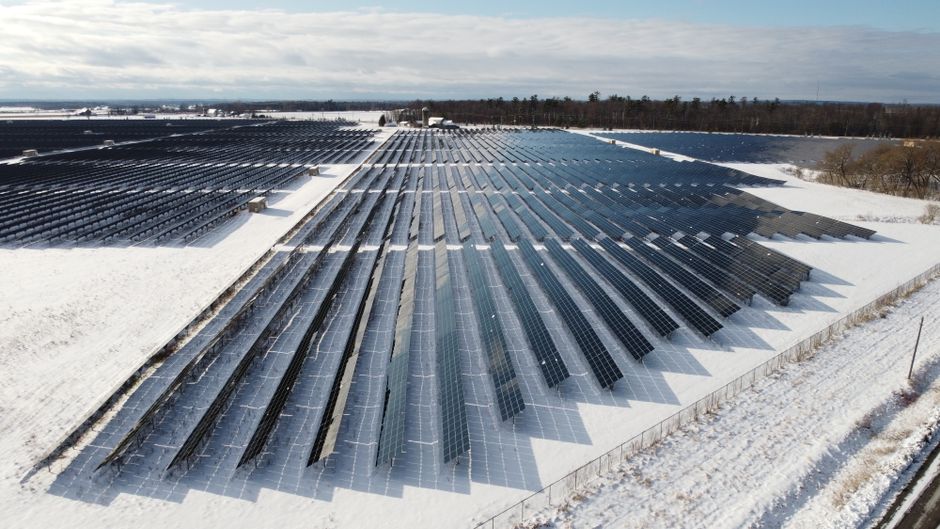
Most solar coverage in winter sounds like it was written by someone who’s never seen a snowstorm. “Panels still produce some energy!” Sure. But how much? Under what conditions? And what’s actually happening to your bill in January? Those are the questions that matter, and nobody seems to want to answer them specifically.
Here’s the honest picture.
Cold Weather Is Not Your Enemy
This surprises almost everyone, including me when I first started doing installs. Photovoltaic panels are semiconductor devices. Like most semiconductors, they perform better in cold temperatures than in heat. The technical reason: lower temperatures reduce electron resistance in the silicon cells, which means the voltage output actually increases slightly on a crisp 25°F day compared to a sweltering 95°F afternoon.
SunPower, LG (before they exited the market), and Panasonic all publish temperature coefficient specs for this reason. A typical monocrystalline panel loses about 0.3% to 0.5% of peak output for every degree Celsius above 25°C (77°F). Flip that around: a cold day in January in Minneapolis, with a clear blue sky, can push output above the rated wattage. I’ve seen this on my own monitoring data during a February cold snap in Oregon. Sunny and 28°F? That system ran hot. Figuratively.
The enemy in winter isn’t cold. It’s reduced daylight hours and low sun angles.
The Real Winter Problem: Geometry and Hours
Helpful resource: Emporia Smart Outlet with Energy Monitoring is a top-rated option for this. (As an Amazon Associate this site earns from qualifying purchases.)
Your panels are sized for a certain number of “peak sun hours” (PSH) per day. In Phoenix in July, you might see 6.5 PSH. In Seattle in December, you’re looking at 1.5 to 2.5 PSH on a decent day. That’s not a conservative estimate, that’s what the NREL data actually shows for high-latitude locations. And some days you simply don’t clear the clouds at all.
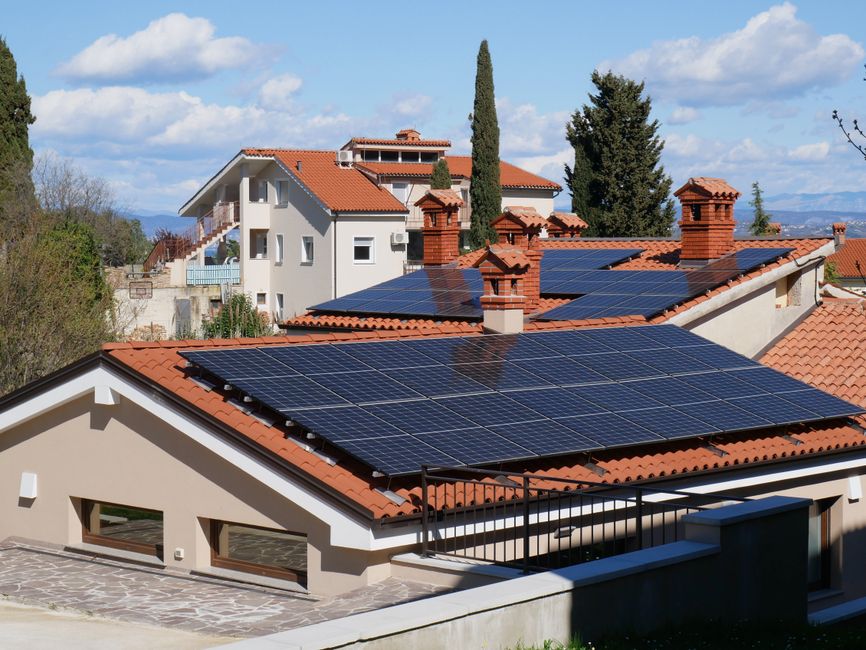
The sun’s angle matters too. In winter, the sun stays low on the horizon all day. If your panels are mounted at a shallow angle (common on low-slope roofs), the incoming light hits at a steep incidence angle and more gets reflected rather than absorbed. A roof tilt of 30-40 degrees actually performs better in winter than a flatter 10-degree install, because it intercepts that low December sun more directly. Nobody tells homeowners this during the sales pitch.
What does this look like in real numbers? Here’s a rough production comparison for a 8 kW system across different U.S. climates in winter vs. summer:
| Location | Avg. Summer Monthly Output | Avg. Winter Monthly Output | Winter as % of Summer |
|---|---|---|---|
| Phoenix, AZ | 1,380 kWh | 760 kWh | 55% |
| Denver, CO | 1,200 kWh | 580 kWh | 48% |
| Nashville, TN | 1,020 kWh | 460 kWh | 45% |
| Seattle, WA | 980 kWh | 220 kWh | 22% |
| Boston, MA | 1,040 kWh | 390 kWh | 37% |
| Miami, FL | 1,100 kWh | 870 kWh | 79% |
These are representative estimates based on NREL PVWatts modeling for an 8 kW south-facing system at typical roof pitch. Your actual system will vary. But this should calibrate expectations. Seattle in January is brutal. Miami barely notices the season change.
Snow: The Actual Complicated Part
Basic Solar Components & How They Work - Solar Panels, Inverter, Batteries, & More Explained (Ep. 2) · The Solar Lab on YouTube
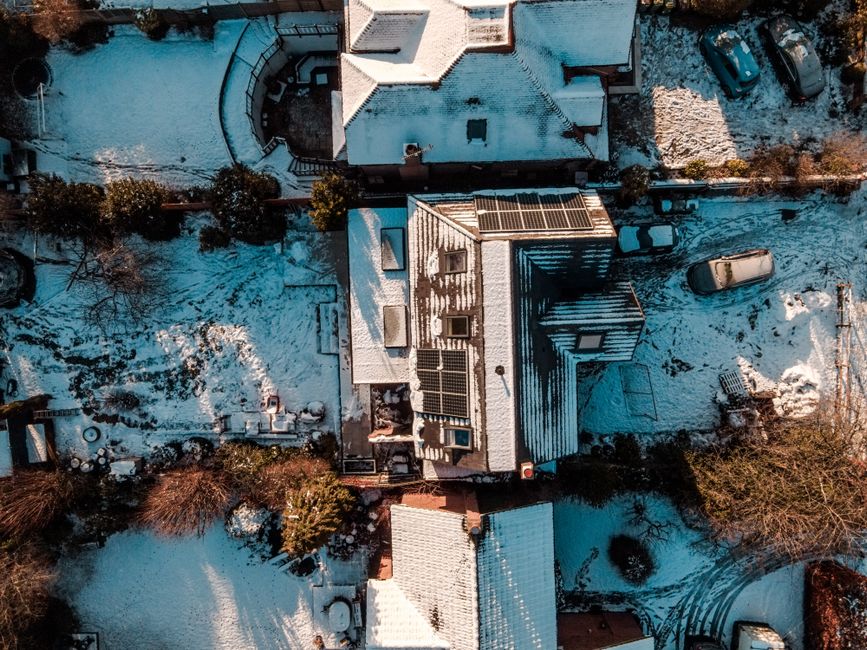
Snow on panels is where most advice turns useless fast. The standard line is “snow slides off quickly.” That’s true sometimes. It’s not true in all cases, and treating it like gospel can leave money on the table.
Light, fluffy powder on a steep 40-degree south-facing roof? It’ll shed in hours. Wet, heavy snow on a 15-degree low-slope install, freezing overnight? That can stay put for days and bring output to essentially zero.
A few things I’ve learned from fielding calls during winter installs in the Pacific Northwest and from reading through the community at EnergySage’s market data: most residential systems lose between 3% and 8% of their annual output to snow shading, depending on climate and system angle. That’s annual. Not catastrophic. But it’s also not zero, and planning for it matters.
What to do about it:
First, don’t clean snow off with a metal rake or shovel. You will scratch the anti-reflective coating or crack a cell. If you must clear panels, use a soft roof rake with a foam head (something like the Snowpeeler Solar Panel Snow Rake on Amazon, which runs around $60-80 and is specifically designed for this). The site may earn a commission on purchases.
Second, consider whether it’s worth it at all. If you’re generating 0.5 kWh/hour and it’ll take 20 minutes of physical effort plus ladder time to clear, the math probably doesn’t pencil unless you’re trying to charge something time-critical. I’ve told clients this directly: leave it alone, let it melt, check your monitoring app and see if it clears by noon. It usually does.
Third: dark panels absorb heat from even weak sunlight. A thin dusting of snow melts faster than you’d think. The bigger problem is refreezing at night once partial melt has happened, which can create an ice layer that bonds more stubbornly. Morning sun typically breaks this loose too, but not always.
The Net Metering Math That Actually Saves You
Here’s where winter stops being a disaster story and becomes a proper system design question. If you’re on net metering (and as of July 2026, most U.S. states still have some form of it, though the terms are changing in states like California and Nevada), the excess production you bank in summer covers your winter shortfall.
That’s the whole premise. A properly sized grid-tied system is designed across the full annual production cycle, not just the worst January week. EnergySage’s market data shows that most homeowners recover their installation cost in 7-10 years nationally, and the winter months are already baked into that estimate.
The worked example that makes this concrete:
Denver homeowner, 9 kW system, net metering at retail rate → Summer months (May-August) generate 1,350 kWh/month average, household uses 900 kWh, banking 450 kWh surplus each month → Winter months (November-February) produce 550 kWh/month average, household uses 1,100 kWh, drawing 550 kWh from the grid, offset by credits → Net annual bill: roughly $200-300/year in true-up, compared to $2,100+ before solar. Winter didn’t eliminate the benefit. It just shifted when the benefit is delivered.
Another scenario worth knowing: if you add a heat pump or EV charger, winter consumption spikes. I’ve seen homes that went solar in March, added an EV in November, and wondered why their December bill looked strange. The system wasn’t sized for the added load. Always model the full year with realistic consumption.
What to Actually Monitor
A home energy monitor is worth every penny in winter, specifically because that’s when the inputs and outputs are harder to track mentally. I use a Sense Energy Monitor (about $299 installed, link goes to Amazon where the site may earn a commission) and the granularity is useful: I can see exactly when my panels came online in the morning, how much snow shade knocked production down, and whether my evening draw is trending higher than expected.
The SEIA recommends homeowners review their production data monthly for the first year, and I’d push that harder in winter specifically. If your monitoring shows consistently low output and you don’t have obvious shade or snow, call your installer. Inverter issues, micro-inverter failures, and connection problems are easier to catch when you’re watching the data rather than just the annual bill.
Sources
- NREL PVWatts Calculator: National Renewable Energy Laboratory tool for estimating residential solar production by location, system size, and tilt
- Solar Energy Industries Association (SEIA): Industry data on net metering policies, installation rates, and market conditions as of 2026
- EnergySage Solar Marketplace Data: Homeowner-reported cost and production data, payback period benchmarks, and regional installation pricing
- NREL Solar Resource Maps: Peak sun hour data by geography used for winter/summer production comparisons
- SunPower and manufacturer panel datasheets: Temperature coefficient and output rating data referenced for cold-weather performance
Recommended Resources
Disclosure: As an Amazon Associate, we earn a small commission from qualifying purchases at no extra cost to you. We only recommend products that genuinely support the topics covered in this article.
- Renogy 200W Solar Starter Kit + 30A Charge Controller (~$169), Complete beginner solar kit, 200W monocrystalline panel, charge controller, and mounting hardware included.
- Renogy 2×100W Monocrystalline Solar Panels (~$99), Expandable 200W panel set from the most trusted DIY solar brand, used widely in off-grid and home backup systems.