 Tom Bradley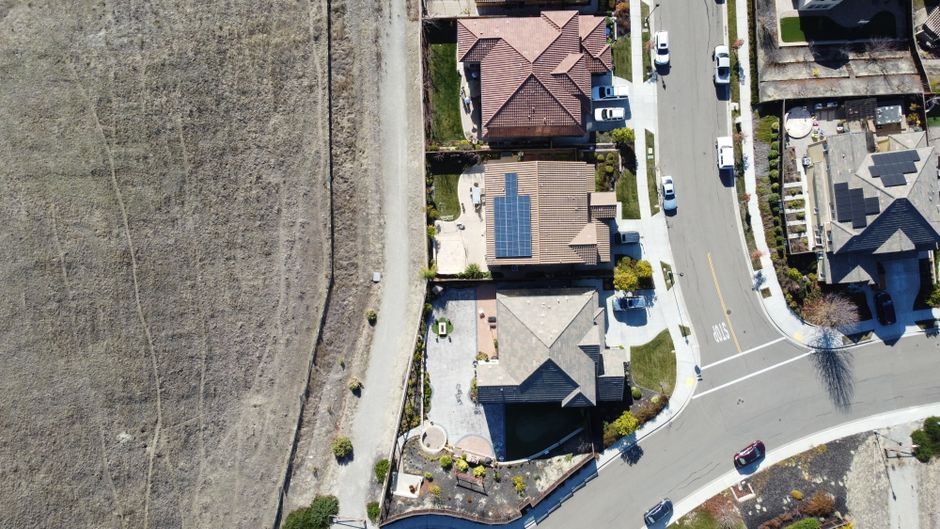
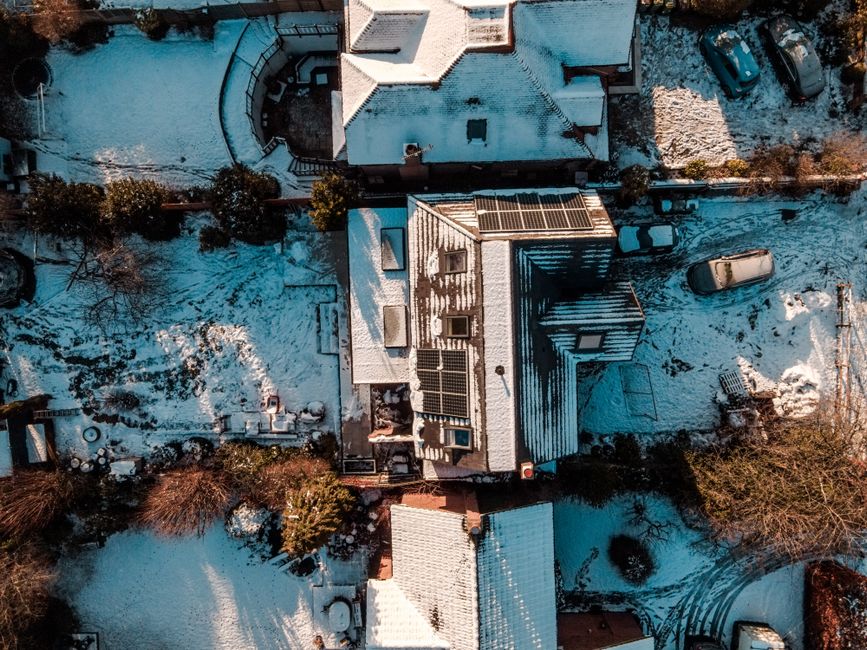
Three years ago, a homeowner in Asheville, North Carolina called me in a panic. She’d already signed a contract with a solar installer who’d told her, flat out, that her north-facing roof was “fine.” I pulled up her address on Google Maps satellite view before she even finished the sentence. The main roof slope faced almost due north. I told her to pause the contract. She was about 10 days away from a $28,000 mistake.
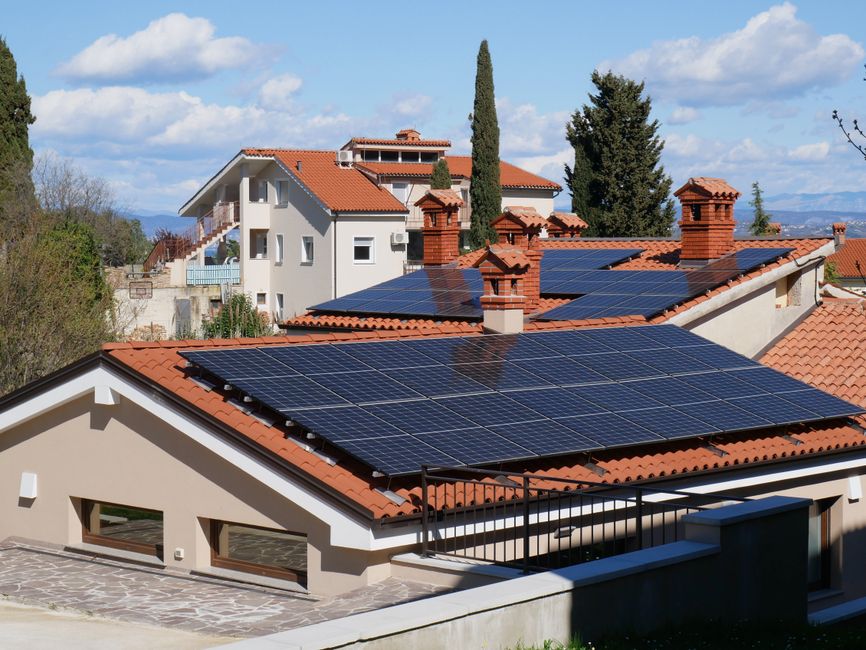
So let’s settle this honestly: yes, solar panels can be installed on a north-facing roof. Whether they should be is a completely different question, and the answer depends on factors most installers won’t take the time to explain to you.
What “North-Facing” Actually Means for Solar Production
In the Northern Hemisphere, the sun tracks from east to west across the southern sky. That’s just geometry. A south-facing roof at the right pitch gets the maximum direct exposure throughout the day. A north-facing roof gets the least. It’s not a gray area.
A properly oriented south-facing system in a mid-latitude U.S. location (think Tennessee, Colorado, North Carolina) will typically produce somewhere between 4.0 and 5.5 peak sun hours per day over the course of a year. A north-facing roof at the same pitch? You’re looking at roughly 2.0 to 2.8 peak sun hours. Depending on your exact latitude and local shading, that can mean 40 to 60 percent less annual energy production compared to the ideal.
What most people don’t realize is that this isn’t just a “you’ll produce less power” situation. It changes your entire system economics. Your payback period, your net metering surplus (if you have one), your eligibility for certain incentives tied to production minimums. Everything shifts.
I thought for years that east and north were roughly equivalent. They’re not. East is genuinely usable. North is a last resort.
The Cases Where North-Facing Panels Actually Make Sense
Helpful resource: P3 Kill A Watt Electricity Usage Monitor is a top-rated option for this. (As an Amazon Associate this site earns from qualifying purchases.)
Here’s where I’ll push back on the instinct to say “never.”
You’re in a net metering state with full retail credit. If your utility gives you dollar-for-dollar retail credit on every kilowatt-hour you export, and if you have significant daytime usage you want to offset, even a smaller system on a north-facing roof might pencil out. It won’t be great, but “not great” isn’t “never.”
Your south-facing roof is heavily shaded. I’ve seen houses where the south slope is under a mature white oak canopy from May through October, and the north slope is completely clear. Shade is a system killer. A clear north-facing roof beats a shaded south-facing one in actual production.
You have a flat or very low-slope roof. On a flat roof, orientation matters much less because you can mount panels on tilted racking pointed any direction you want. If your “north-facing roof” is actually a low-slope commercial-style flat section, this whole conversation changes. Rack them south, problem mostly solved.
Hawaii and other low-latitude locations. The closer you are to the equator, the less severe the north vs. south penalty. In Hawaii, north-facing panels still produce meaningfully because the sun angle is much more overhead. If you’re in Minnesota, the math is brutal. If you’re in Honolulu, it’s uncomfortable but not disqualifying.
Running the Real Numbers
Basic Solar Components & How They Work - Solar Panels, Inverter, Batteries, & More Explained (Ep. 2) · The Solar Lab on YouTube
| Condition | Annual Production (10 kW system) | vs. South-Facing | Notes |
|---|---|---|---|
| South-facing, 30° tilt, no shade | ~14,000-16,000 kWh | Baseline | Optimal install |
| East or West-facing, 30° tilt | ~10,500-12,500 kWh | -15% to -25% | Still viable |
| North-facing, 30° tilt | ~6,500-9,000 kWh | -35% to -55% | Marginal; location-dependent |
| North-facing, 10° tilt (nearly flat) | ~9,000-11,000 kWh | -20% to -30% | Shallower pitch recovers production |
| North-facing, heavily shaded | ~4,000-6,000 kWh | -60% to -70% | Usually not worth it |
Let me put some actual figures on this so you can pressure-test any quote you receive.
| Condition | Annual Production (10 kW system) | vs. South-Facing | Notes |
|---|---|---|---|
| South-facing, 30° tilt, no shade | ~14,000-16,000 kWh | Baseline | Optimal install |
| East or West-facing, 30° tilt | ~10,500-12,500 kWh | -15% to -25% | Still viable |
| North-facing, 30° tilt | ~6,500-9,000 kWh | -35% to -55% | Marginal; location-dependent |
| North-facing, 10° tilt (nearly flat) | ~9,000-11,000 kWh | -20% to -30% | Shallower pitch recovers production |
| North-facing, heavily shaded | ~4,000-6,000 kWh | -60% to -70% | Usually not worth it |
These are estimated ranges based on industry modeling tools like PVWatts (NREL’s free calculator) and my own experience sizing systems across the Southeast and Mid-Atlantic. Your actual numbers will vary by latitude, local weather, and equipment.
A few worked examples from real projects:
Asheville homeowner mentioned above: North-facing roof, 28° pitch, minimal shade, 8 kW proposed system. PVWatts estimated ~8,200 kWh/year. Her annual usage was 14,000 kWh. The system would have offset about 58% of her usage, and only because her utility (Duke Energy Progress) offered retail net metering at the time. After renegotiating, she installed 6.4 kW on a small detached garage with a south-facing roof instead. Estimated production: ~9,600 kWh/year. Better output, smaller system, $6,000 less in cost.
Reader from Portland, Oregon (emailed me in early 2026): Flat-ish 5° pitch on a ranch house, technically “north-facing” per the installer’s assessment. Mounted 9.6 kW on adjustable ground-mount racking in the side yard pointing south. Annual production estimate: 10,800 kWh. His original north-roof proposal would have produced an estimated 8,100 kWh. The ground mount cost about $2,200 more but recovered the difference in production value within three years.
Commercial scenario: A small business owner in Raleigh with a north-facing flat commercial roof installed 22 kW with east-west tilted racking in an alternating A-frame layout. Production came in at roughly 85% of what a pure south-facing system would have produced, and the space efficiency was excellent. That’s a legitimate solution for flat commercial roofs that doesn’t get discussed enough in the residential space.
How to Evaluate Whether It’s Worth It For Your House
Don’t trust your installer’s word on this. I love a lot of installers, but I’ve seen enough “it’ll be fine” assessments on poor roof orientations to tell you: verify it yourself.
First, plug your address into NREL’s PVWatts calculator. It’s free, takes five minutes, and will let you model south-facing vs. north-facing on your specific roof pitch and latitude. Change the azimuth angle (180° is true south, 0° is true north) and compare the annual kWh outputs. That number tells you what you’re actually buying.
Second, get a shading analysis done. SolarEdge’s Designer tool, Aurora Solar, or a basic Solmetric SunEye reading will show you whether your south-facing option has a shade problem you haven’t noticed. I’ve had homeowners completely flip their orientation decisions after seeing a shading report.
Third, check your utility’s net metering policy. As of July 2026, several states including California (under NEM 3.0) have shifted from retail to avoided-cost net metering, which significantly changes the ROI on any system that exports heavily. EnergySage’s market data tracks net metering policy changes by state and is the most current free resource I’ve found for this.
Fourth, if your south-facing roof is genuinely not an option, price out a ground mount before you default to the north-facing roof install. Ground mounts run $0.25 to $0.75 per watt more than rooftop installs, but they’re optimally oriented, easier to maintain, and avoid any roof penetration issues.
The Installer Red Flags to Watch For
I’ve seen it twice now: an installer who breezes past the orientation issue without pulling production numbers. That’s a red flag. Any installer quoting a north-facing system should be showing you a PVWatts or Aurora Solar production estimate, a specific kWh/year figure, and how that compares to your current consumption. If they’re not showing you that comparison, ask for it. If they resist, walk.
The other one: installers who size the system large to compensate for poor orientation. “We’ll just put up more panels” sounds reasonable until you realize you’re paying for 14 kW of north-facing panels to do the work of a 9 kW south-facing system. You’re paying more for less efficient use of your roof and your money. The U.S. Department of Energy’s homeowner guide to going solar covers system sizing basics, but it won’t tell you when an installer is padding a quote to compensate for a bad site. That part takes a little experience to recognize.
Sources
- NREL PVWatts Calculator: NREL’s free tool for estimating solar production by location, tilt, and azimuth. The most credible quick-modeling resource available to homeowners.
- EnergySage Solar Market Intelligence: Tracks installer pricing, net metering policy changes, and market trends. Current as of 2026.
- U.S. Department of Energy, Homeowner’s Guide to Going Solar: Federal resource covering system sizing, financing, and installer vetting basics.
- NREL, “Solar Resource Data” (Technical Reports): Source for regional solar irradiance and peak sun hour data used in production estimates.
Recommended Resources
Disclosure: As an Amazon Associate, we earn a small commission from qualifying purchases at no extra cost to you. We only recommend products that genuinely support the topics covered in this article.
- Renogy 200W Solar Starter Kit + 30A Charge Controller (~$169), Complete beginner solar kit, 200W monocrystalline panel, charge controller, and mounting hardware included.
- Renogy 2×100W Monocrystalline Solar Panels (~$99), Expandable 200W panel set from the most trusted DIY solar brand, used widely in off-grid and home backup systems.