 Rachel Kim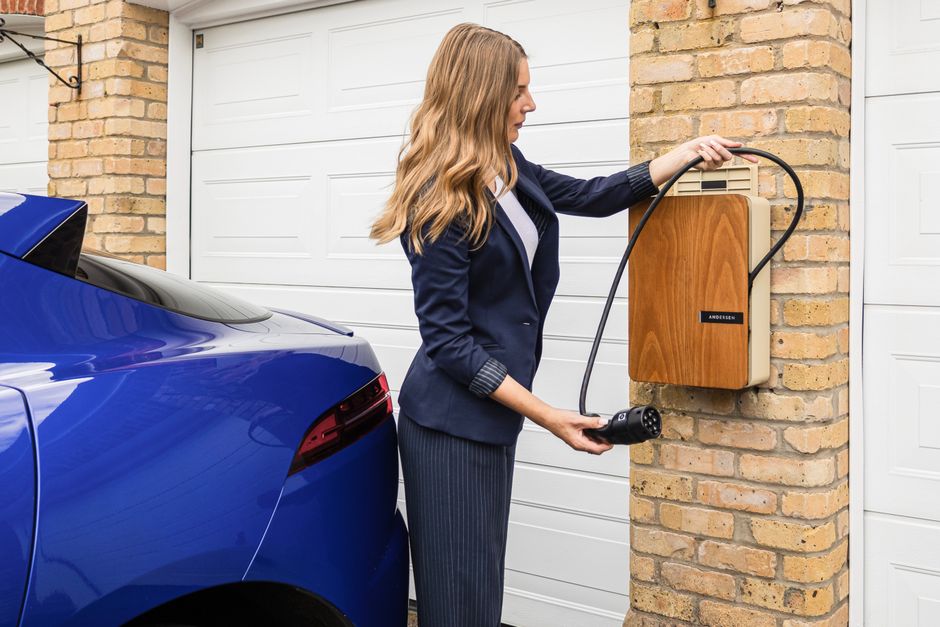
Three years ago, I wired a 10 kWh Enphase IQ Battery 10 into a client’s new construction home in the East Bay and thought: this is either the cleanest residential storage install I’ve ever done, or Enphase has just made it impossibly easy to miss something important. Turns out it was mostly the former.
The Enphase IQ Battery line gets a lot of breathless coverage from solar marketers and not enough from people who’ve actually pulled wire on these systems. So here’s what I know from hands-on installs, homeowner check-ins, and two years of watching how these batteries actually perform in the field.
- The IQ Battery 10T costs roughly $10,000–$12,000 installed; the smaller 5P runs $5,500–$7,500.
- Enphase uses microinverter-based architecture, which means AC coupling , simpler to retrofit, slightly less efficient than DC-coupled competitors.
- Whole-home backup requires a battery system large enough to cover your loads; the 5P alone won't cut it for most homes.
- Enphase's Enlighten monitoring app is the best in the residential space, full stop.
- The 10-year warranty covers 70% capacity retention , in line with the industry but not exceptional.
The Product Line, Sorted Out
Enphase has renamed and revised these batteries more times than I can count, which genuinely confuses homeowners. As of July 2026, the active products you’ll encounter are the IQ Battery 5P and IQ Battery 10T. The old IQ8 Battery lineup has been largely phased out for new installs, though you’ll still find them in existing systems.
The 5P delivers 5 kWh usable capacity with 3.84 kW continuous power output. The 10T packs 10.08 kWh usable with 7.68 kW continuous. Both use lithium iron phosphate (LFP) chemistry, which trades slightly lower energy density for better thermal stability and longer cycle life. That’s a real advantage, not marketing copy.
One thing installers know that customers rarely hear: these are AC-coupled batteries. They don’t store DC power directly from your panels. Power flows solar panels, microinverters convert to AC, battery inverts back to DC for storage, then inverts again to AC when discharging. Each conversion costs you a few percentage points. In practice, round-trip efficiency on the 10T runs about 89%, compared to roughly 94% on a DC-coupled system like some SolarEdge configurations. Not catastrophic, but real.
What It Actually Costs
Helpful resource: Emporia Smart Outlet with Energy Monitoring is a top-rated option for this. (As an Amazon Associate this site earns from qualifying purchases.)
Here’s the table I wish every salesperson handed over before the pitch:
| System | Battery Cost (equipment) | Installed Cost (est.) | Good For |
|---|---|---|---|
| 1x IQ Battery 5P | $2,800–$3,500 | $5,500–$7,500 | Basic load shifting, partial backup |
| 1x IQ Battery 10T | $5,500–$7,000 | $10,000–$12,500 | Whole-home modest backup, most load-shifting needs |
| 2x IQ Battery 10T | $11,000–$14,000 | $18,000–$22,000 | Robust whole-home backup, larger homes |
| 3x IQ Battery 10T | $16,500–$21,000 | $26,000–$32,000 | Heavy users, EV charging during outage |
Prices current as of July 2026, and yes, they vary significantly by region and installer markup. California installs run high. Texas runs lower. EnergySage’s market data shows average battery storage quotes in California hovering around $1,200–$1,400 per kWh installed for LFP systems, which tracks with what I’m seeing from installer bids in my network.
The federal investment tax credit (ITC) still applies at 30% to standalone storage meeting IRS requirements, which brings that 10T installed cost down to roughly $7,000–$8,750 after credit. Some states layer additional incentives on top. California’s SGIP program, when funded, can knock off another $1,000–$2,000+.
The Architecture That Makes It Different
EASIEST Grid-Tied Solar Battery Back Up System | Anker SOLIX E10 · Martin Johnson - Off Grid Living on YouTube
Enphase’s approach is modular and stackable. You can start with one 10T and add another later without replacing your microinverters or your IQ System Controller 3 (the brain that manages backup switching). That’s genuinely useful for homeowners who want to expand over time.
I thought for years that AC coupling was just a compromise Enphase made because they were already a microinverter company. Partially true. But when you’re retrofitting storage onto an existing solar system that uses string inverters from, say, 2018, AC coupling is actually cleaner than a full DC-coupled rip-and-replace. No need to touch the existing inverter or re-run DC home runs. One reader who emailed me last spring, a DIY-leaning guy in Phoenix with a 2017 SMA string system, asked whether he should swap to Enphase or try to add a Powerwall. I told him: if you’re keeping that SMA inverter, the Powerwall is AC-coupled too, so you’re not giving anything up on efficiency. But Enphase’s ecosystem management is tighter.
The IQ System Controller 3 handles whole-home backup isolation. When grid goes down, it disconnects your home from the utility in roughly 200 milliseconds, then the batteries take over. Fast enough that most electronics don’t notice. My one nitpick: if you have a well pump or an air compressor, check the startup surge requirements before assuming you’ll run them on battery backup. The 10T’s 7.68 kW continuous output doesn’t mean it can absorb a 12 kW motor startup surge cleanly.
Monitoring: This Is Where Enphase Wins, Clearly
The Enlighten app is the honest best consumer-facing energy monitoring platform in residential solar storage right now. You get panel-level production data (because microinverters report individually), battery state of charge, grid import/export, and home consumption, all in real time. NREL’s work on solar system performance visibility highlights how panel-level monitoring can cut fault detection time dramatically, and that’s been true in my experience: a bad microinverter shows up immediately rather than hiding in aggregated string data.
I had a client in Sacramento text me six months after her install because her app showed one microinverter producing 40% less than its neighbors. We replaced it under warranty in two weeks. On a string system, that underperformance would’ve been invisible until the annual yield report.
The Storm Guard feature, where the system automatically charges to 100% when a storm warning is detected in your area, is one of those things that seems gimmicky until you live through a grid outage that started the night before a storm warning. Then it seems obvious.
Real-World Performance Scenarios
Single-story home, 2,200 sq ft, Northern California, 1x IQ Battery 10T: Runs essential loads (refrigerator, lights, TV, phone charging, one mini-split on low) for roughly 12–16 hours overnight with a full charge. Recharges from solar by early afternoon the following day. Grid outages up to 18 hours are essentially transparent. Longer outages require load discipline.
Whole-home backup goal, 3,000 sq ft Texas home, central AC, 2x IQ Battery 10T: Central AC is the killer. A 3-ton unit draws roughly 3.5 kW running. Two 10Ts give you 20 kWh usable. Run the AC 6 hours and you’ve burned 21 kWh before accounting for anything else. This scenario → requires backup generator integration or significant load shedding → works better as a hybrid system than pure battery backup.
Load shifting only, no backup, 1x IQ Battery 5P with TOU rates: Charges from solar midday, discharges during peak evening rates (6–9 PM). At PG&E’s current peak rate of roughly $0.55/kWh, a 5 kWh discharge saves about $2.75/day, roughly $1,000/year. System pays for itself in load-shifting savings alone in 5.5–7.5 years, before any backup value.
Warranty and Longevity
Ten years, 70% capacity retention. Every major manufacturer offers essentially this benchmark now. What Enphase does differently is that the modular design means a failed battery unit can theoretically be replaced without swapping the whole system. In practice, I haven’t seen enough field failures yet to know how smoothly that plays out. The LFP chemistry should handle 3,000–6,000 cycles before hitting that 70% threshold, which at one cycle per day is 8–16 years of useful life. The warranty is the conservative floor.
Sources
- Enphase Energy product specifications: Official IQ Battery 5P and 10T specs, July 2026
- EnergySage Solar + Storage Marketplace Report: Installed cost data, installer quote trends
- NREL: Solar Performance Monitoring: Research on microinverter-level monitoring and fault detection
- California SGIP Program (CPUC): Incentive levels and eligibility for battery storage
- Enphase Enlighten platform documentation: Storm Guard, consumption monitoring, IQ System Controller 3 specs
Photo: Andersen EV via Pexels
Recommended Resources
Disclosure: As an Amazon Associate, we earn a small commission from qualifying purchases at no extra cost to you. We only recommend products that genuinely support the topics covered in this article.
- Renogy 200W Solar Starter Kit + 30A Charge Controller (~$169), Complete beginner solar kit, 200W monocrystalline panel, charge controller, and mounting hardware included.
- Renogy 2×100W Monocrystalline Solar Panels (~$99), Expandable 200W panel set from the most trusted DIY solar brand, used widely in off-grid and home backup systems.
- EF EcoFlow DELTA 2 Portable Power Station (1024Wh) (~$599), 1024Wh LFP battery with 1800W output, top-rated solar generator for home backup power. Charges in under 2 hours.
- EF EcoFlow DELTA 2 Max (2048Wh) (~$999), 2048Wh LFP battery with 2400W output, ideal for whole-home solar backup or pairing with rooftop solar panels.