 Morgan Johnson
If you’ve been watching the national solar market this summer, you might be wondering whether the whole rooftop solar moment has passed. The federal 30% tax credit, the Section 25D credit that made the math work for millions of homeowners, expired on January 1, 2026, with no phase-down, no soft landing, just gone. The national residential market is forecast to shrink 18 to 21% this year because of it. Installers in California, Texas, and New England are laying off crews. Lead times are shrinking because demand is shrinking. For a lot of homeowners who were on the fence, this feels like confirmation that they missed the window.
And then there’s Florida, which apparently didn’t get the memo.
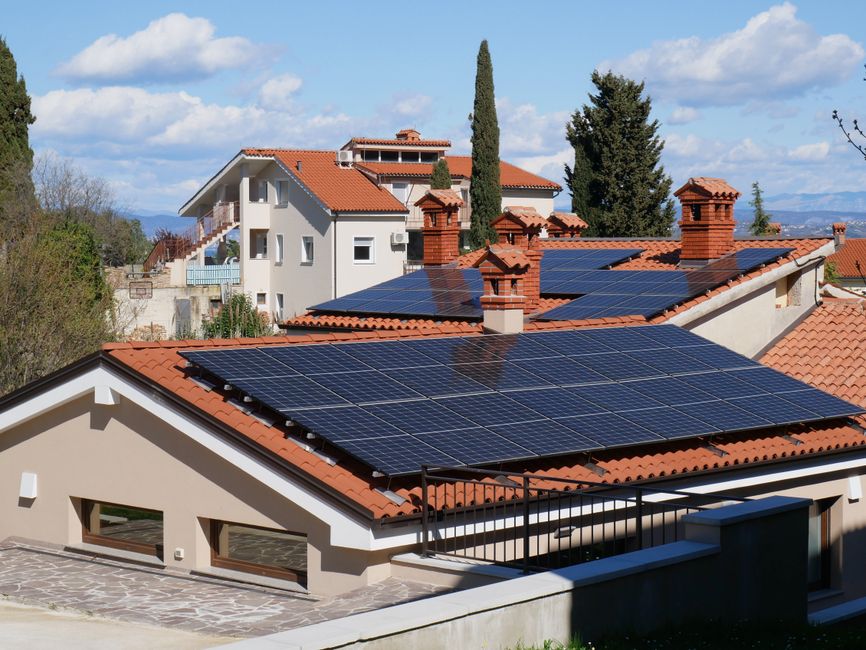
BloombergNEF named Florida the fastest-growing state for home solar in the country right now, and the numbers behind that claim are hard to ignore. Florida installed over 110 MW of residential solar in Q1 2026 alone. The full-year projection sits at 710 MW, which would be a 62% jump from the 439 MW installed in all of 2025. In the first 13 weeks of 2026, Florida led the entire nation with approved permits for at least 450 MW worth of home solar projects, a fourfold increase compared to the same period in the prior two years. That’s not a blip. That’s a structural shift, and it traces directly back to state policy, not federal generosity.
- Florida installed 110 MW of residential solar in Q1 2026 alone, defying an 18-21% national market contraction.
- BloombergNEF projects Florida will reach 710 MW of residential solar in 2026, a 62% jump from 2025.
- Florida's HB 683 requires permit approval within 5 business days, replacing multi-week local backlogs.
- A 2026 law will create one statewide permit application form for all Florida jurisdictions starting in 2027.
- The federal Section 25D tax credit expired January 1, 2026, with no phase-down, reshaping the national market.
What HB 683 Actually Changed (And Why It Matters More Than You Think)
Here’s what I tell people who ask why Florida is different: the bottleneck in residential solar was never really the panels or the inverters. It was the permit office. A homeowner in some Florida counties was waiting 6 to 10 weeks just to get a permit approved before a single wire got touched. That delay costs money. Installers carry overhead while jobs sit in queue. Some customers cancel. Financing terms can expire. The whole soft cost structure of a residential install balloons the longer that approval window stays open.
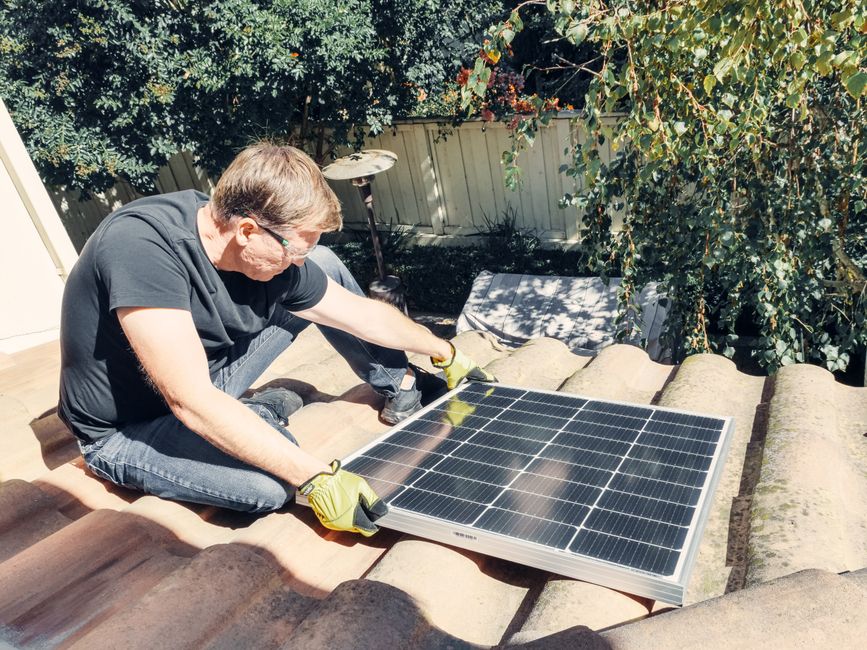
HB 683 cut through that. The law now requires local jurisdictions to approve solar permits within 5 business days. It also opened the door to third-party and remote inspections, including drone and video-based inspections, statewide. That last piece is significant in a state with a lot of rural and coastal territory where getting an inspector to a job site on a specific day was its own scheduling puzzle.
The practical effect shows up in those permit numbers. A fourfold increase in approved permits during Q1 2026 compared to prior years isn’t happening because Florida suddenly got 4 times more interested in solar. It’s happening because the approval friction got removed. Projects that would have stalled are moving. Crews that would have been idle between jobs are booked.
The 2027 Statewide Permit Form: Quiet but Important
Helpful resource: Emporia Vue 2 Home Energy Monitor is a top-rated option for this. (As an Amazon Associate this site earns from qualifying purchases.)
Florida passed a second piece of legislation in 2026 that hasn’t gotten as much press but deserves your attention if you’re planning an install. Starting in 2027, a single statewide permit application form will replace the current patchwork of local forms that vary by county and municipality.
This sounds like bureaucratic housekeeping. It’s not. Right now, a solar company operating across multiple Florida counties maintains different documentation packages for each jurisdiction. That overhead gets priced into your quote. A uniform form reduces that administrative drag for installers and makes it easier for smaller, local contractors to compete with the big national players who have dedicated permitting departments. Competition among installers tends to push prices down. That’s a real benefit for homeowners, even if it arrives quietly.
Florida vs. the National Market: The Numbers Side by Side
To understand how much Florida is diverging from the national trend, it helps to see the figures in one place.
| Metric | National Market (2026) | Florida (2026) |
|---|---|---|
| Market direction | Contracting 18-21% | Growing ~62% |
| Key driver | Federal tax credit expired | State permitting reform (HB 683) |
| Permit approval time | Varies, often 4-8+ weeks | Required within 5 business days |
| Inspection options | Mostly in-person | In-person + remote/drone statewide |
| Uniform permit form | No national standard | Statewide form coming 2027 |
The contrast is sharp. According to reporting from both the Insurance Journal and Bloomberg in late July 2026, the national residential market is cratering while Florida is putting up numbers that would look impressive even in a strong year nationally.
What This Means If You’re a Florida Homeowner Right Now
You might be wondering whether this is the right time to act, or whether the loss of the federal credit means you should wait for Congress to do something. Here’s my honest read: waiting on Congress is not a strategy. The Section 25D credit is gone, and there’s no serious phase-back-in legislation moving right now.
What Florida has done is demonstrate that state-level reform can meaningfully lower the cost of going solar by cutting soft costs. Soft costs, permitting fees, inspection fees, administrative overhead, installer time spent waiting, can represent 30 to 40% of a residential solar project’s total cost. When you compress the permit window from weeks to days and allow remote inspections, you trim real dollars. Homeowners in Florida are seeing that reflected in competitive quotes right now.
The federal incentive is gone. That’s real money off the table. But the Florida market is telling us that policy-driven efficiency gains can partially offset that loss, and the installer competition that comes with a healthy permitting environment keeps pricing honest.
If you’re in Florida and you’ve been sitting on a solar quote, the conditions this summer are genuinely favorable. The pipeline is full, which means installers are motivated, and the streamlined permit process means your project timeline is more predictable than it’s been in years. Get multiple quotes, check your installer’s license with the Florida Department of Business and Professional Regulation, and don’t let anyone pressure you into signing before you’ve seen at least three bids.
The rest of the country is watching what Florida is doing. They should be.
Sources
- As US Residential Solar Industry Craters, Florida Bucks Trend (July 28, 2026)
- Florida Solar Surge: 110MW Added Despite National Downturn (July 28, 2026)
- Why Florida’s Residential Solar Industry Started 2026 So Strong (July 28, 2026)
- Solar Market Insight Report Q2 2026 (July 2026)
Photo: Florida Solar Fix via Pexels
Recommended Resources
Disclosure: As an Amazon Associate, we earn a small commission from qualifying purchases at no extra cost to you. We only recommend products that genuinely support the topics covered in this article.
- Renogy 200W Solar Starter Kit + 30A Charge Controller (~$169), Complete beginner solar kit, 200W monocrystalline panel, charge controller, and mounting hardware included.
- Renogy 2×100W Monocrystalline Solar Panels (~$99), Expandable 200W panel set from the most trusted DIY solar brand, used widely in off-grid and home backup systems.