 Rachel Kim
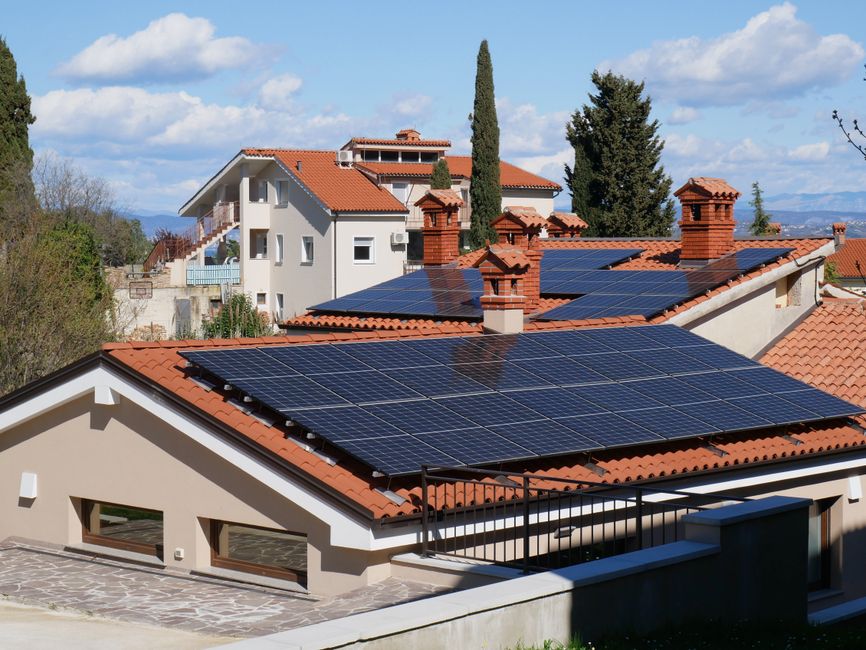
My neighbor lost power for 11 days during a derecho storm last summer. She had solar panels. She still lost everything in her fridge by day two.
Here’s why: she had no battery. Her grid-tied system shut off automatically the moment the utility lines went down, which is exactly how it’s supposed to work (a safety feature to protect line workers). But she didn’t know that. Her installer had mentioned a “solar backup” in a vague, optimistic way, and she’d assumed that meant something it didn’t.
That story drives a lot of what I want to cover here. The question “how long does a solar battery last during an outage” is actually two questions hiding inside one. How big is your battery? And what the heck are you running on it?
The answer ranges from three hours to three weeks. Both are technically correct.
This table shows how long common battery systems last under three realistic usage patterns, from emergency-only to near-normal household operation.
| Battery System | Capacity | Emergency Mode (fridge, lights, phones: ~0.5 kW avg) | Essential Mode (+ well pump, fan, router: ~1.2 kW avg) | Comfort Mode (+ window AC, TV, microwave use: ~3 kW avg) |
|---|---|---|---|---|
| Enphase IQ 5P (single) | 5 kWh | ~10 hours | ~4 hours | ~1.5 hours |
| Tesla Powerwall 3 (single) | 13.5 kWh | ~27 hours | ~11 hours | ~4.5 hours |
| FranklinWH aPower 2 | 15 kWh | ~30 hours | ~12 hours | ~5 hours |
| Two Powerwalls stacked | 27 kWh | ~54 hours | ~22 hours | ~9 hours |
| Three Powerwalls stacked | 40.5 kWh | ~81 hours (3+ days) | ~34 hours | ~13 hours |
| Note: Runtimes assume battery-only (no solar recharging) and 90% usable capacity. With daytime solar production, runtimes extend significantly-often indefinitely for Emergency Mode in sunny conditions. | ||||
General information for comparison, confirm specifics for your situation.
What “battery capacity” actually means in practice
Most home batteries sold today are measured in kilowatt-hours (kWh). A Tesla Powerwall 3 holds 13.5 kWh. The Enphase IQ Battery 5P holds 5 kWh. The FranklinWH aPower 2 gives you 15 kWh. On paper these numbers look clean. They don’t mean much until you stack them against what you actually want to power.
Here’s a basic reality check. A standard refrigerator draws about 100-150 watts continuously, or roughly 1.5 kWh per day. A window AC unit pulls 500-1,500 watts. A well pump surges at 2,000 watts or higher on startup. An electric dryer runs around 5,500 watts. If you try to keep everything running like normal, a single 13.5 kWh Powerwall lasts maybe 12 hours. Possibly less. That’s not pessimism. That’s math.
Shift into outage mode though, just the fridge, a few lights, phone charging, maybe a small fan, and that same 13.5 kWh stretches to 24 to 36 hours realistically. Two Powerwalls stacked (27 kWh) with disciplined usage? I’ve seen homeowners breeze through 48 to 72 hour outages comfortably.
There’s another spec everyone glosses over: continuous power output, separate from storage capacity. A Powerwall 3 outputs up to 11.5 kW continuous. This matters when your well pump kicks on, because a battery packed with capacity but weak surge output will trip the inverter. Always check both numbers before you buy anything.
Solar matters way more than most people realize
I’ll be honest: I underestimated this early on. People fixate on battery size and completely ignore solar input, which is the thing that determines whether your outage is a 24-hour annoyance or a weeks-long non-issue.
A battery in the dark is a finite resource. Once drained, it’s done. But pair it with even modest solar (6-8 kW of panels) and a hybrid inverter, and it recharges meaningfully every sunny day. Here’s what caught me off guard: how fast this changes everything. During a February outage in the Pacific Northwest with 3-4 hours of usable sun and conservative consumption, a homeowner with a 13.5 kWh Powerwall and a 7 kW array could put back 15-20 kWh on a decent day. A complete recharge. That means if you’re careful about nighttime loads, you can ride out indefinitely long outages, not just a few days.
It’s not guaranteed. Cloudy weather ruins the math. Winter in Seattle beats summer in Phoenix. But the principle holds: solar input is the multiplier on your battery, and any installer who doesn’t model this for your specific location and roof angle is selling you short.
EnergySage’s market data shows homeowners pairing batteries with 8-12 kW systems outperform in extended outages, while those with undersized arrays (under 5 kW) find their battery chronically undercharged by day one.
The real variables nobody puts on a spec sheet
EASIEST Grid-Tied Solar Battery Back Up System | Anker SOLIX E10 · Martin Johnson - Off Grid Living on YouTube
Your critical loads panel configuration. Most battery installs don’t back up your whole house. They back up a subpanel (sometimes called a critical loads panel or backup panel) that feeds select circuits. If nobody thought hard about which circuits make the cut, you might have your home theater backed up but not your well pump. I’ve audited installs where homeowners didn’t even realize their master bedroom outlets weren’t on the backup circuits. Get the load list in writing before the install happens.
Temperature. Lithium iron phosphate (LFP) batteries, what most residential systems use today, perform reasonably in the cold but start losing capacity below 32°F. If your battery sits in an unconditioned garage in Minnesota, it won’t deliver rated capacity during a January ice storm. This is a real problem that nobody talks about enough.
Battery age. All lithium batteries degrade. Most manufacturers rate their batteries to retain 60-70% capacity at the end of warranty (typically 10 years). A 6-year-old Powerwall might hold 10 kWh instead of 13.5. Your outage math needs to account for where you sit on that degradation curve.
Inverter efficiency. Small but it adds up. Most hybrid inverters operate at 93-97% efficiency. You lose a few percentage points every time energy moves through the system, and that compounds over days of cycling.
Sizing for real outages, not marketing scenarios
The U.S. Department of Energy recommends calculating your daily energy needs before sizing any backup system. It’s practical advice. The problem is most homeowners don’t know their actual consumption, and many installers just recommend whatever battery the manufacturer is pushing that quarter.
Here’s how I walk people through it. Pull your utility bills for the last 12 months and find your highest daily usage month (usually July or August). Divide that month’s kWh by 30. That’s your worst-case daily draw. Cut it by 40-50% to simulate outage mode where you’re skipping the dryer and dishwasher. That number is your minimum daily battery requirement.
For most three-bedroom homes, that lands somewhere between 8 and 15 kWh per day. One Powerwall handles short outages with discipline. Two batteries give you actual resilience. Three or more, combined with decent solar, and you’re effectively weather-independent for most storms.
One honest caveat: if you have EV charging in your critical loads panel, this explodes. A Level 2 charger pulls 7-10 kW. Most people rightly leave this off backup circuits, but I’ve seen installs where it was accidentally included.
A good home energy monitor (something like the Sense Energy Monitor or an Emporia Vue) is worth the $150-300 investment before you size your battery, because it shows your real consumption patterns, not guesses. (The site may earn a commission on purchases through affiliate links.)
When one battery isn’t enough and nobody will tell you that
This is where installers go quiet because it costs them a sale. If you live somewhere with realistic risk of multi-day or multi-week outages (coastal hurricane zones, rural areas with aging infrastructure, anywhere that sees regular ice storms), one 13.5 kWh battery paired with modest solar isn’t a resilience solution. It’s a short-term bridge.
Real resilience, where you’re actually comfortable and not rationing power on day four, requires stacked batteries (2-3 units minimum), a larger capacity system like the Enphase IQ Battery 10T (10.08 kWh per unit, designed to stack), or supplemental backup like a propane generator for the heavy loads.
The marketing around residential batteries often implies independence that a single battery doesn’t deliver. I’ve read product pages claiming “power your home through any outage” without mentioning the 12-hour math.
FAQ
How long will a Tesla Powerwall last during a power outage?
A single Powerwall 3 (13.5 kWh) typically lasts 12-24 hours depending on what you’re powering. With disciplined usage and solar recharging it daily, it can potentially sustain you through extended outages of several days or longer.
Can a solar battery run a whole house during an outage?
Technically yes, but only for a short time and only if your system is large enough. Most single-battery setups are configured to power a critical loads subpanel, not the whole house, which is the smarter approach for stretching runtime.
Does solar still charge my battery during a power outage?
Yes, if you have a hybrid inverter or battery with a built-in inverter designed for islanding (like a Powerwall or Enphase system). Basic grid-tied-only systems shut down completely during outages and can’t charge your battery. This distinction is the single most important one to clarify before you buy.
What uses the most battery power during an outage?
Electric resistance loads: water heaters, dryers, ovens, baseboard heat, and air conditioning compressors. A well pump with high surge draw can also drain a battery fast. These are the loads to remove from your backup panel or use minimally.
How many solar batteries do I need to last 3 days without power?
For a typical home running essential loads only (fridge, lights, phone charging, internet router), you’d need roughly 30-45 kWh of storage for three days without solar input. That’s two to three Powerwalls. With a good solar array recharging daily, you might get there with two.
If you take one thing away, it’s the distinction between a battery that buys you time and a system that actually keeps you going. The former is worth having. The latter requires real planning, honest load math, and ideally a second opinion from someone who isn’t trying to sell you a specific product.
My neighbor got batteries installed six months after that derecho. Two Powerwalls, a 9 kW array, a properly configured critical loads panel. I helped her pick her circuits. Last spring, when her neighborhood lost power for four days in an ice storm, she didn’t lose a single thing in her freezer.
Sources
- Jackery SolarSaga 100W Solar Panel
- Solar Panel Cleaning Brush Kit with Extension Handle
- Emporia Vue 2 Home Energy Monitor
- Renogy 200W Solar Starter Kit + 30A Charge Controller
Disclosure: As an Amazon Associate, we earn a small commission from qualifying purchases at no extra cost to you. We only recommend products that genuinely support the topics covered in this article.
- Renogy 200W Solar Starter Kit + 30A Charge Controller (~$169), Complete beginner solar kit, 200W monocrystalline panel, charge controller, and mounting hardware included.
- Renogy 2×100W Monocrystalline Solar Panels (~$99), Expandable 200W panel set from the most trusted DIY solar brand, used widely in off-grid and home backup systems.
- EF EcoFlow DELTA 2 Portable Power Station (1024Wh) (~$599), 1024Wh LFP battery with 1800W output, top-rated solar generator for home backup power. Charges in under 2 hours.
- EF EcoFlow DELTA 2 Max (2048Wh) (~$999), 2048Wh LFP battery with 2400W output, ideal for whole-home solar backup or pairing with rooftop solar panels.
Recommended Resources
Disclosure: As an Amazon Associate, we earn a small commission from qualifying purchases at no extra cost to you. We only recommend products that genuinely support the topics covered in this article.
- Renogy 200W Solar Starter Kit + 30A Charge Controller (~$169), Complete beginner solar kit, 200W monocrystalline panel, charge controller, and mounting hardware included.
- Renogy 2×100W Monocrystalline Solar Panels (~$99), Expandable 200W panel set from the most trusted DIY solar brand, used widely in off-grid and home backup systems.
- EF EcoFlow DELTA 2 Portable Power Station (1024Wh) (~$599), 1024Wh LFP battery with 1800W output, top-rated solar generator for home backup power. Charges in under 2 hours.
- EF EcoFlow DELTA 2 Max (2048Wh) (~$999), 2048Wh LFP battery with 2400W output, ideal for whole-home solar backup or pairing with rooftop solar panels.