 Morgan Johnson
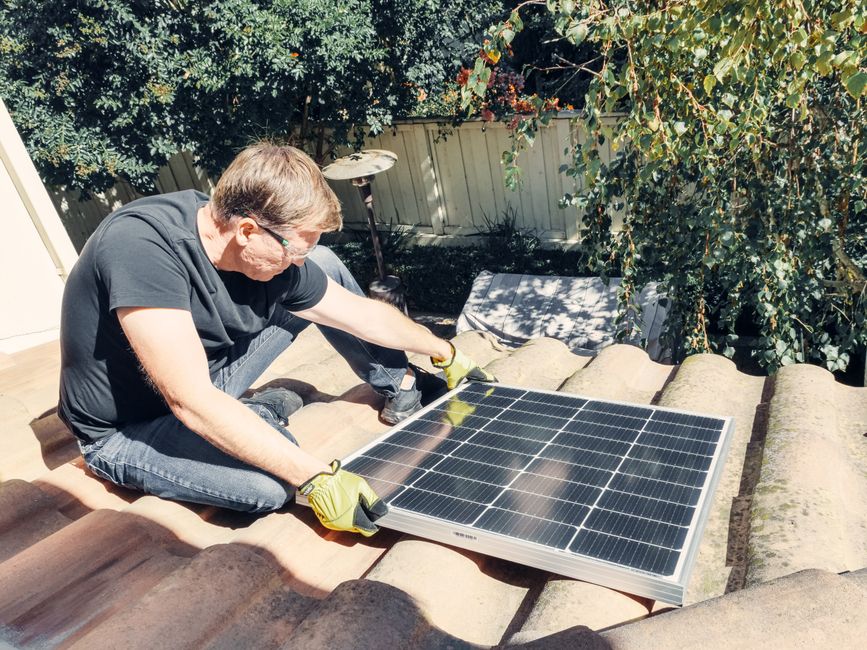
You bought your solar system in 2019, your installer promised you’d “basically eliminate your electric bill,” and for a while that was true. Then your utility quietly revised its net metering policy, cut the export rate from retail to something closer to wholesale, and now you’re watching your annual bill creep back up while your panels sit there doing exactly what they were designed to do. You’re not imagining it. This is happening to solar owners all over the country, and it’s exactly why battery retrofits have become the loudest conversation in residential solar right now.
Why 2026 Is the Year This Actually Matters
Here’s the situation in plain terms. The 30% federal Investment Tax Credit for homeowner-purchased solar, Section 25D, expired on December 31, 2025 under the One Big Beautiful Bill Act. That’s gone. New installs just got significantly more expensive relative to what early adopters paid, which is cold comfort if you’re one of those early adopters, but it does mean the math on adding storage to an existing system looks different now than it did a year ago. You already own the panels. You already have the wiring, the interconnection agreement, the permits on file. Adding a battery is additive, not a full system replacement.
Meanwhile, Lawrence Berkeley National Laboratory estimates that fewer than 10% of residential solar systems installed before 2020 included any storage. With the U.S. now past 6 million total solar installations according to SEIA’s June 2026 data, that’s potentially millions of grid-tied-only homes sitting exposed to deteriorating net metering policies. The market has noticed. A record 45% of new residential solar installations in Q1 2026 included a battery, up from a 35% average across 2025, per SEIA and BloombergNEF data released this month. And nearly half of all solar sales professionals in Aurora Solar’s 2026 Snapshot are now actively selling battery retrofits. The industry has pivoted hard toward the existing customer base, which means the products and the installer experience are finally catching up with the demand.
AC-Coupled vs. DC-Coupled: The Decision That Drives Everything Else
| Retrofit Type | Existing Inverter | Typical Cost | Best For | Efficiency |
|---|---|---|---|---|
| AC-Coupled | Stays in place | $12,000-$18,000 (10-13.5 kWh) | Most retrofit situations | Lower (conversion losses) |
| DC-Coupled | Replaced with hybrid unit | Higher | Inverter near end-of-life | Higher (fewer conversions) |
Helpful resource: Solar Panel Cleaning Brush Kit with Extension Handle is a top-rated option for this. (As an Amazon Associate this site earns from qualifying purchases.)
This is where most homeowners get confused, and understandably so. When you’re retrofitting a battery onto an existing solar system, the fundamental question is whether your new battery talks to your existing system through AC wiring (AC-coupled) or bypasses your current inverter to connect directly on the DC side (DC-coupled).
For the vast majority of retrofit situations, AC-coupled is the right answer. Here’s why: your existing string inverter or microinverters stay in place. You’re adding a new piece of equipment, not replacing the heart of your system. The battery has its own inverter built in, it connects to your main panel or a critical loads panel, and the two systems operate somewhat independently. Tesla Powerwall 3 and the Enphase IQ Battery lineup are the most common retrofit products going this route, and installers are comfortable with them. The average installed cost for a 10 to 13.5 kWh AC-coupled retrofit runs $12,000 to $18,000 before state and local incentives, which is real money but a fraction of replacing your entire system.
DC-coupled retrofits are more efficient in theory (you lose less energy in conversion steps) but they typically require replacing your existing inverter with a hybrid unit that can manage both the solar and the battery on the DC side. If your inverter is five years old and due for replacement anyway, this can make financial sense. If it was installed last year, you’re throwing away working equipment for a marginal efficiency gain. I’ve seen homeowners get talked into DC-coupled retrofits they didn’t need because the installer had a preferred hybrid inverter they wanted to sell. Ask directly: why are we replacing my existing inverter?
New Products Actually Built for Retrofit
EASIEST Grid-Tied Solar Battery Back Up System | Anker SOLIX E10 · Martin Johnson - Off Grid Living on YouTube
Until recently, the battery options available for retrofits were mostly products designed for new installations that happened to also work with existing systems. That’s changing fast.
Anker Solix launched the Solarbank Max AC in April 2026, and it’s genuinely designed from the ground up as a rooftop solar retrofit product. It’s a 7 kWh modular system that connects via a standard plug-in connection, which dramatically simplifies installation. More importantly, it’s expandable up to 42 kWh, so you can start with one unit and add capacity as your budget allows or as your needs change. The pv magazine coverage from April 9, 2026 noted it specifically targets the exact situation millions of homeowners are in: existing solar, no storage, increasing frustration with grid export rates.
This modular approach matters for one practical reason: permitting. Larger battery systems, especially anything above about 20 kWh, can trigger more complex permit requirements and sometimes additional utility approvals. Being able to start smaller and expand later gives you a path that’s easier to get through your AHJ (Authority Having Jurisdiction) on the first pass.
The Permit and Utility Side Nobody Warns You About
Your installer will pull the permits. That’s not your job. But you should understand what’s happening because it affects your timeline and your costs.
A battery retrofit almost always requires a new permit, even though you already have permits on file for the solar system. You’re modifying the electrical system. In some jurisdictions, this also triggers a new utility interconnection review, which can add weeks. If your utility has recently revised its tariff structures (and many have, specifically around storage), that review may include questions about whether your battery can export to the grid and under what conditions. Some homeowners have been surprised to find that adding storage changes their net metering tier or requires a different rate schedule.
What most people don’t realize is that backup capability, meaning the ability to run your home when the grid goes down, requires an automatic transfer switch or a gateway device that isolates your home from the grid during an outage. This is not optional from a safety standpoint and it’s not optional from a utility standpoint. It also adds to your cost. Don’t let any installer quote you a battery system without explicitly including this. If the quote seems suspiciously low, ask what happens to your system during a grid outage. If the answer is vague, that’s a red flag.
What to Actually Ask Before You Sign
Three questions cut through most of the noise. First: is this AC-coupled or DC-coupled, and if it’s DC-coupled, why do I need to replace my existing inverter? Second: does this quote include the transfer switch or gateway hardware and its installation? Third: what state or utility incentives apply to this specific project, and are they factored into this number?
California’s SGIP (Self-Generation Incentive Program) has had funding gaps and waitlists for years, but other states have stepped up. Several utilities in the Southeast and Mid-Atlantic are now offering direct rebates for storage that can knock $1,500 to $4,000 off your installed cost. Your installer should know what’s available in your area. If they don’t, that tells you something about how much retrofit business they’ve actually done.
The Electrek piece from June 9, 2026 framed the broader market shift well: storage keeps winning because the grid keeps struggling, and homeowners who already invested in solar are in the best position to take the next step. You have the roof space, you have the interconnection, you already did the hardest part. The case for adding a battery in 2026 isn’t about chasing a tax credit you can no longer get. It’s about protecting the investment you already made.
Sources
- U.S. Residential Solar Installations Set to Stall for Years (June 15, 2026)
- Solar + Storage Keeps Winning the US Power Race (June 9, 2026)
- Anker Solix Launches 7 kWh Plug-In Battery Targeting Rooftop Solar Retrofits (April 9, 2026)
- Solar Energy Storage in 2026: Everything You Need to Know (May 8, 2026)
- The Untapped Market: Retrofit Solar Battery Storage (December 31, 2025)
- 6 Million Solar Installations: Powering American Communities (June 2026)
Recommended Resources
Disclosure: As an Amazon Associate, we earn a small commission from qualifying purchases at no extra cost to you. We only recommend products that genuinely support the topics covered in this article.
- Renogy 200W Solar Starter Kit + 30A Charge Controller (~$169), Complete beginner solar kit, 200W monocrystalline panel, charge controller, and mounting hardware included.
- Renogy 2×100W Monocrystalline Solar Panels (~$99), Expandable 200W panel set from the most trusted DIY solar brand, used widely in off-grid and home backup systems.
- EF EcoFlow DELTA 2 Portable Power Station (1024Wh) (~$599), 1024Wh LFP battery with 1800W output, top-rated solar generator for home backup power. Charges in under 2 hours.
- EF EcoFlow DELTA 2 Max (2048Wh) (~$999), 2048Wh LFP battery with 2400W output, ideal for whole-home solar backup or pairing with rooftop solar panels.