 Stephanie Walsh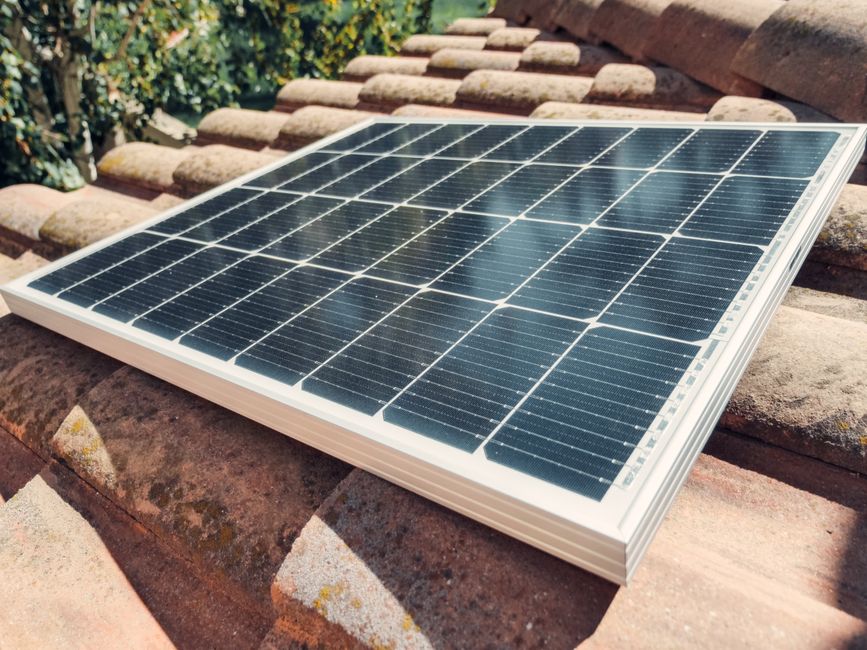
Your electricity bill is the single most important document in your whole solar project, and most people barely glance at it before calling a contractor.
I get it. You’ve probably spent the last few weeks getting quotes, reading Reddit threads, maybe watching a few YouTube videos where someone installs 40 panels on their barn roof. It’s a lot. And somewhere in all of that noise, you’re wondering: how many panels do I actually need? What size system makes sense for my house, my roof, my budget? You’re not trying to become a solar engineer. You just don’t want to spend $20,000 on the wrong system.
Here’s what I tell people who come to me at this stage: sizing a solar system is mostly arithmetic, but the inputs matter enormously. Get the inputs wrong and you’ll either overbuild (wasting money) or underbuild (still paying a painful electric bill every month). Let me walk you through the actual process.
Use this step-by-step checklist to calculate your target system size in kilowatts (kW), with illustrative thresholds at each stage.
- Find your annual kWh usage, Log into your utility account and sum all 12 months. Example: 10,800 kWh/year
- Add planned future loads
- Electric vehicle: add 3,000-5,000 kWh/year (≈12,000 miles driven)
- Heat pump replacing gas furnace: add 2,000-4,000 kWh/year
- Hot tub or pool pump: add 2,500-3,500 kWh/year
- Look up your location's peak sun hours, Use NREL's PVWatts or a sun-hours map. Typical ranges:
- Southwest U.S. (AZ, NV): 5.5-6.5 hours/day
- Southeast U.S. (FL, GA): 4.5-5.5 hours/day
- Midwest/Northeast (OH, NY): 3.5-4.5 hours/day
- Pacific Northwest (OR, WA): 3.0-4.0 hours/day
- Calculate raw system size, Formula: (Annual kWh ÷ 365 days ÷ peak sun hours) = kW needed
Example: 14,800 ÷ 365 ÷ 6.0 = 6.76 kW - Apply a 20-25% efficiency buffer, Accounts for inverter losses, panel degradation, soiling, and suboptimal roof angles.
Example: 6.76 kW × 1.22 = 8.25 kW system - Convert to panel count, Divide system size by panel wattage (common residential panels: 370-420W).
Example: 8,250W ÷ 400W = 20.6 → 21 panels - Sanity-check against roof space, Each 400W panel needs roughly 18-22 sq ft installed. Multiply panel count × 20 sq ft for a quick estimate.
Example: 21 panels × 20 sq ft = 420 sq ft of usable south/west-facing roof
General information for comparison, confirm specifics for your situation.
Start With Your Annual Kilowatt-Hour Usage
Pull up your utility account online and grab 12 months of usage data. Not just last month. Twelve months, because your summer AC load and winter heating are completely different.
Add up all 12 months of kilowatt-hours (kWh). That’s your annual consumption. The average U.S. home uses about 10,500 kWh per year according to the EIA, but that statistic is almost useless for your specific situation. I’ve seen 1,400 square-foot homes in Phoenix running 22,000 kWh because they’re pumping a pool and heating water with electricity. I’ve seen 2,800 square-foot homes in Oregon at 7,000 kWh because they’re on natural gas for everything and obsessive about efficiency.
Your number is your number. Write it down.
Now think about what’s coming. Planning to buy an EV in the next couple of years? EVs add 3,000 to 5,000 kWh annually depending on your driving. Replacing your gas furnace with a heat pump? Add another 2,000 to 4,000 kWh per year. If any of that’s in your plans, fold it in now. It’s way cheaper to slightly oversize your system today than to bolt on panels later (new racking, permits, possible inverter replacement).
The Peak Sun Hours Factor Is Where People Get Confused
| Region | Peak Sun Hours/Day | Example Locations |
|---|---|---|
| Southwest U.S. | 5.5-6.5 | Arizona, Nevada |
| Southeast U.S. | 4.5-5.5 | Florida, Georgia |
| Midwest/Northeast | 3.5-4.5 | Ohio, New York |
| Pacific Northwest | 3.0-4.0 | Oregon, Washington |
This tripped me up the first time I designed a system. Peak sun hours aren’t how much daylight you get. They’re a measure of solar irradiance: the number of hours per day when your location receives 1,000 watts of solar energy per square meter. It’s just a standardized way to compare regions.
San Diego gets roughly 5.5 peak sun hours daily. Seattle gets about 3.5. Massachusetts is looking at 4.0 to 4.2. These numbers come from the National Renewable Energy Laboratory’s solar data, and you can find your exact location on their PVWatts Calculator at pvwatts.nrel.gov. It’s free, accurate, and I’d trust it way more than any solar salesperson.
This number directly controls how much work your panels do each day, which directly determines how many you need.
Helpful resource: Renogy 100W 12V Flexible Solar Panel is a top-rated option for this. (As an Amazon Associate this site earns from qualifying purchases.)
The Actual Sizing Math (Not That Scary)
Offgrid Solar Beginner Crash Course: Build a 10,000W Solar System · DIY Solar Power with Will Prowse on YouTube
Here’s the formula to find your required system size in kilowatts (kW):
System size (kW) = Annual kWh usage / (Peak sun hours × 365)
Real example: your home uses 12,000 kWh per year and you’re in Atlanta, which gets about 4.5 peak sun hours daily.
12,000 / (4.5 × 365) = 12,000 / 1,642.5 = 7.3 kW
That’s your raw system size. But panels aren’t perfect. Inverters lose some power. There’s wiring loss, temperature derating, shading you didn’t fully account for. Real-world systems typically operate at 75% to 85% of their rated capacity. So apply an 80% efficiency factor:
7.3 kW / 0.80 = 9.1 kW system
Now convert to panels. Using a 400-watt panel (pretty standard stuff like Qcells Q.PEAK DUO or REC Alpha), you’d divide:
9,100 watts / 400 watts = roughly 23 panels
That’s your ballpark. A professional installer will refine this using actual shading analysis software (Aurora or Helioscope), roof orientation data, and your utility’s net metering terms.
Here’s something people don’t ask enough: what’s your actual goal? If it’s to offset 100% of your bill, size to full consumption. If you want to cut costs by 70% and keep prices down, size to that instead. Some utilities cap residential net metering at 10 kW, which becomes a hard ceiling you’ll have to design around.
Roof Matters More Than Most Calculators Admit
You can do all this math and land on 24 panels, then step outside and realize your usable south-facing roof fits maybe 14. That’s a real problem to solve early.
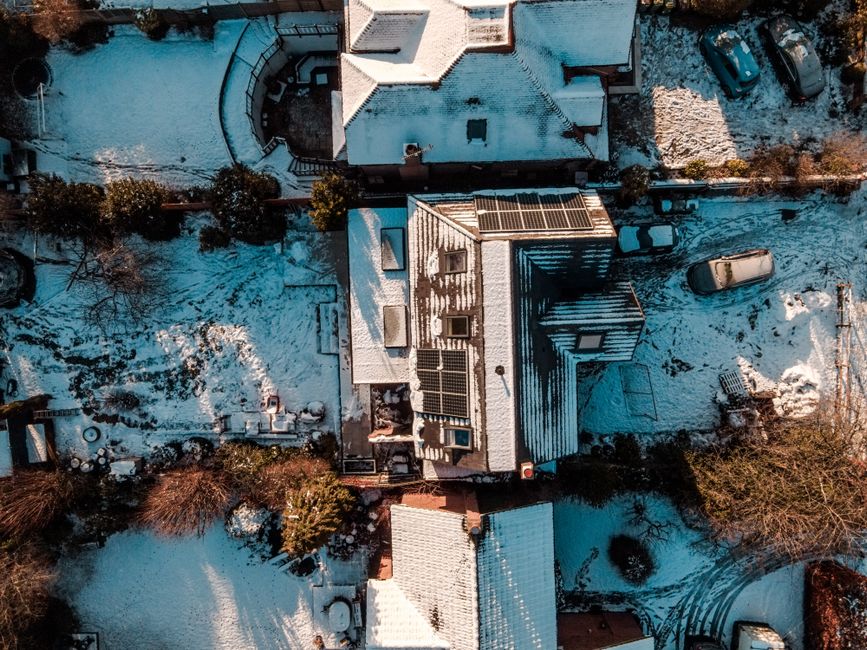
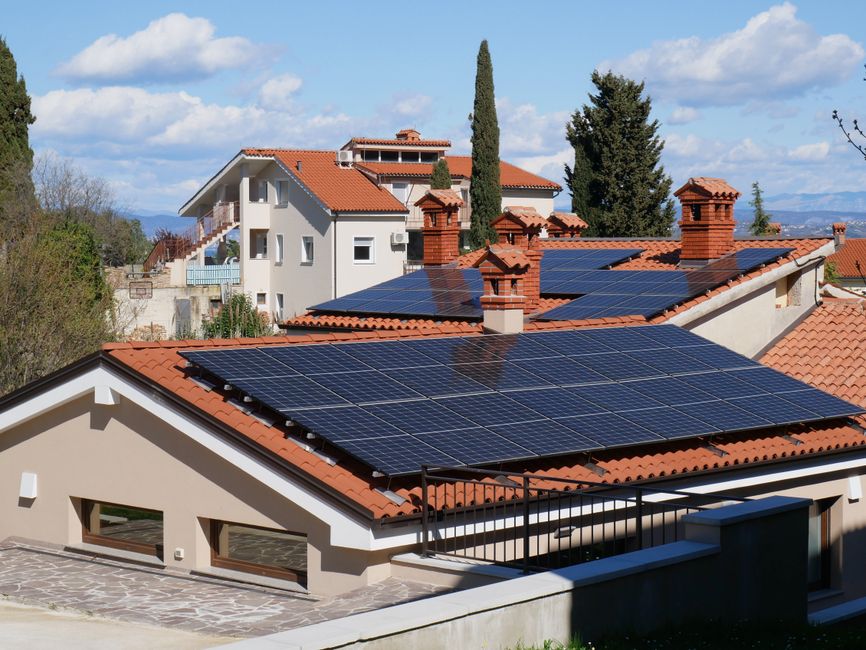
A standard 400-watt panel runs about 22 square feet. Twenty-four panels need around 528 square feet of usable roof. Not total roof area. Usable: south or west-facing (east works, north generally doesn’t in the Northern Hemisphere), minimal shading from trees or chimneys, and enough clearance from edges and ridges to meet fire code setbacks.
California’s Title 24, for example, mandates 3-foot clear pathways on at least two sides of a residential array. Other states have similar rules. Your permitting office knows exactly what applies to your project.
If your roof comes up short on square footage, you’ve got options. Higher-efficiency panels like the SunPower Maxeon 6 (440 watts) squeeze more output from less space. Or you accept a smaller system and pair it with serious efficiency upgrades elsewhere.
The Battery Question Changes the Math
Adding a battery (Tesla Powerwall 3, Franklin WH10, Enphase IQ Battery 5P) isn’t just about offsetting your grid usage anymore. You’re sizing for backup duration.
Here’s what I tell people: figure out which loads actually matter during a grid outage. Your fridge, some lights, phone charging, maybe Wi-Fi. That’s probably 1.5 to 2.5 kWh daily of critical loads. A Powerwall 3 stores 13.5 kWh usable capacity. In a serious outage, that’s maybe two to three days of critical loads if the sun never comes back.
Want your system genuinely self-sufficient for longer outages? You need solar that covers your daily usage and recharges the battery every day. That means a significantly larger array than grid-tied systems require. EnergySage data shows battery-paired systems run $10,000 to $15,000 more than equivalent grid-tied setups, so be honest about what you actually need backup for before locking into that cost.
What a Responsible Quote Should Look Like
Once you’ve run your own numbers, you’re ready to evaluate what installers propose. This is where the math actually pays off.
If you’ve calculated a 9 kW system and an installer quotes 6.5 kW “because that covers 70% of your bill,” ask them to show the yearly production estimate. If another installer is proposing 14 kW without a clear reason (like an EV you’re definitely buying), question it. Oversizing costs money. You’ll hit inverter limits and bump into net metering ceilings.
Ask every installer for annual kWh production estimates, not just system size in kW. Those numbers should land close to what PVWatts calculates independently. If they’re way higher, either they’re using inflated peak sun hours or they haven’t accounted for shading.
The math itself isn’t difficult. The hard part is getting accurate inputs and not caving to pressure for a quick decision. Grab your utility bills, run PVWatts for your address, and do this calculation before you talk to a single installer. You’ll ask smarter questions, catch overblown proposals, and get a system actually designed for your house.
Sources
- Renogy 100W 12V Flexible Solar Panel
- Lutron Caséta Wireless Smart Dimmer Kit
- Solar Panel Cleaning Brush Kit with Extension Handle
- Renogy 200W Solar Starter Kit + 30A Charge Controller
Disclosure: As an Amazon Associate, we earn a small commission from qualifying purchases at no extra cost to you. We only recommend products that genuinely support the topics covered in this article.
- Renogy 200W Solar Starter Kit + 30A Charge Controller (~$169), Complete beginner solar kit, 200W monocrystalline panel, charge controller, and mounting hardware included.
- Renogy 2×100W Monocrystalline Solar Panels (~$99), Expandable 200W panel set from the most trusted DIY solar brand, used widely in off-grid and home backup systems.
Recommended Resources
Disclosure: As an Amazon Associate, we earn a small commission from qualifying purchases at no extra cost to you. We only recommend products that genuinely support the topics covered in this article.
- Renogy 200W Solar Starter Kit + 30A Charge Controller (~$169), Complete beginner solar kit, 200W monocrystalline panel, charge controller, and mounting hardware included.
- Renogy 2×100W Monocrystalline Solar Panels (~$99), Expandable 200W panel set from the most trusted DIY solar brand, used widely in off-grid and home backup systems.