 Tom Bradley
Most homeowners I talk to start the solar-plus-EV conversation completely backwards. They buy the car first, get the charging equipment installed, then call a solar installer and say something like “I want to offset my electricity bill.” The installer quotes them a system based on their current usage, and six months later they’re wondering why their net metering credit disappeared and their bill is climbing again. The EV wasn’t in the equation. That one oversight can mean undersizing your system by 30 to 50 percent, and I’ve seen it happen more times than I can count.
Use this worksheet to estimate your total solar system size before talking to installers.
| Input | How to Find It | Example |
|---|---|---|
| Annual home usage (kWh) | Sum 12 months of utility bills | 10,500 kWh |
| Annual miles driven | Odometer ÷ years owned, or estimate daily × 365 | 13,500 miles |
| EV efficiency (mi/kWh) | Check EPA rating: sedans 3.5-4, SUVs 2.5-3, trucks 1.8-2.2 | 3.0 mi/kWh |
| Annual EV demand (kWh) | Miles ÷ efficiency | 4,500 kWh |
| Total annual need (kWh) | Home + EV demand | 15,000 kWh |
| Local sun-hours/day | NREL PVWatts or installer estimate (US range: 3.5-6.5) | 5.0 hrs |
| System size needed (kW) | Total kWh ÷ 365 ÷ sun-hours ÷ 0.80 (system losses) | 10.3 kW |
General information for comparison, confirm specifics for your situation.
Why Your EV Changes Everything About System Sizing
Here’s the number that reframes everything: the average American drives about 37 miles per day, according to Federal Highway Administration data. Most EVs get roughly 3 to 4 miles of range per kilowatt-hour, depending on the vehicle and how you drive. Do the math and you’re looking at 10 to 12 kWh of additional electricity demand every single day, just to charge one car.
Annualized, that’s somewhere between 3,600 and 4,400 kWh per year from a single EV. The average U.S. household uses around 10,500 kWh annually. So adding an EV without adjusting your solar design means you’ve just grown your electricity demand by 35 to 40 percent overnight. If you drive more than average, or you’ve got a larger vehicle like a Ford F-150 Lightning that can pull 2 miles per kWh in cold weather, the impact gets even steeper.
Solar installers who quote you a system without asking how many miles you drive annually are leaving money on the table. Your money.
How to Calculate Your Actual Solar Needs
Before you talk to a single installer, you need two numbers: your current annual household kWh consumption, and your projected annual EV kWh consumption. Everything else flows from there.
Step 1: Pull your utility bills.
Get 12 months of electricity bills and add up the total kWh consumed. Don’t average three months and extrapolate. Seasonal variation matters. If you live in a hot climate and run AC hard in summer, that peak load affects what size system you need to break even on net metering over a full year.
Step 2: Calculate your EV charging demand.
Take your average annual miles driven (check your odometer history or insurance records if you’re not sure) and divide by your vehicle’s EPA-rated miles per kWh efficiency. Then multiply by 1.15 to account for charging losses, because Level 2 AC charging isn’t 100 percent efficient. A rough formula:
(Annual miles / vehicle efficiency in mi/kWh) x 1.15 = Annual EV kWh demand
Example: 13,500 miles / 3.5 mi/kWh x 1.15 = approximately 4,440 kWh per year.
Step 3: Add them together and account for production ratio.
Add your household kWh to your EV kWh. That’s your target annual production. Then divide by your location’s production ratio, which accounts for sun hours and system losses. In southern California, a production ratio of 1.5 to 1.6 is typical. In the Pacific Northwest, it might be 1.0 to 1.2. EnergySage’s market data breaks down average production ratios by state, and it’s genuinely useful for sanity-checking installer quotes.
Total annual kWh needed / production ratio = System size in kW (DC)
So if your combined annual demand is 15,000 kWh and you’re in a 1.4 production ratio zone: 15,000 / 1.4 = 10.7 kW system.
Level 1 vs. Level 2 Charging: Why It Affects More Than Convenience
| Charging Level | Power Draw | Typical Daily Charge Time | Solar Production Window | Best For |
|---|---|---|---|---|
| Level 1 (120V) | 1.4 kW | 8-10 hours | Evening (off-peak solar) | Emergency backup, overnight charging |
| Level 2 (240V) | 7.2-11.5 kW | 2-4 hours | Daytime (peak solar) | Daily charging, TOU rate optimization |
This part surprised me when I started digging into the grid interaction side of things. The charger you use doesn’t just affect how fast your car charges. It affects when your solar array is most valuable to you.
Level 1 charging draws about 1.4 kW from a standard 120V outlet. At that rate, adding 10 to 12 kWh takes 8 to 10 hours. Most people plug in when they get home in the evening, which means Level 1 charging often happens at night when your panels produce nothing. You’re drawing from the grid, not your solar system. Net metering softens this, but if your utility has time-of-use (TOU) rates, you may be paying peak evening prices while your daytime solar credit goes to waste.
Level 2 charging uses a 240V circuit and draws 7.2 kW to 11.5 kW depending on your equipment. Smart EVSE units let you set charge schedules so your car charges during solar production hours or during off-peak rate windows. That’s a huge deal if your utility uses TOU pricing.
If you’re on a flat-rate tariff and have good net metering, Level 1 vs. Level 2 timing matters less for economics. But if your utility is moving toward reduced net metering (and a lot of them are, California’s NEM 3.0 being the loudest example), charging during peak solar hours becomes critical. A Level 2 EVSE with smart scheduling isn’t optional in that environment. It’s how you actually use the solar energy you’re producing.
Battery Storage: When It Makes Sense for EV Owners
I’ll be straight with you: battery storage is one of those topics where the marketing is often ahead of the math. Not always, but often.
For an EV owner, the case for adding a home battery like a Tesla Powerwall or Enphase IQ Battery comes down to a few specific scenarios.
Scenario 1: Your utility has poor net metering or TOU rates with high evening peaks. Under California’s NEM 3.0, for example, the avoided cost credit for daytime solar export dropped significantly. Storing midday solar and using it to charge your EV at night actually pencils out. Under older flat-rate net metering with 1:1 credit, a battery adds cost without proportional savings.
Scenario 2: You need backup power. If grid outages are a real concern in your area, a battery covers the gap. But size it for your actual backup loads, not your EV. Running a 75 kWh car battery off a 13.5 kWh Powerwall during an outage would drain the home battery in hours.
Scenario 3: You want to use your EV as a battery. Vehicle-to-home (V2H) technology is real and expanding. The Ford F-150 Lightning supports it natively with a home energy hub. Rivian R1T doesn’t yet. The Nissan Leaf has supported bidirectional charging longer than any mainstream U.S. vehicle. The research here is mixed on long-term battery degradation from frequent V2H cycling, and I’d wait for more independent data before banking on it as a primary strategy.
Install a home energy monitor first. Watch your load patterns for 60 to 90 days, and you’ll have real data on when and how you consume power. That data is worth more than any installer’s estimate. Then decide if battery storage actually makes sense for your situation.
Permits, HOA Rules, and Sizing Limits You Need to Know
This is the part people skip until it bites them.
Utility interconnection limits. Many utilities cap the size of residential solar systems they’ll allow to interconnect. Common limits are 10 kW, 15 kW, or tied to your service panel capacity. If your math says you need a 12 kW system but your utility caps residential interconnects at 10 kW, you need to know that before signing a contract. Ask your installer to pull your utility’s interconnection tariff, or look it up yourself on your utility’s website. SEIA maintains state-level policy resources that can point you toward the right regulatory framework in your area.
HOA restrictions. Most states have solar access laws that limit HOA authority to block solar installations, but “limit” doesn’t mean “eliminate.” Some HOAs can still dictate placement, visibility from the street, and aesthetic requirements that affect your optimal layout. Get the specific HOA rules in writing before you start design work.
Permit fees and timelines. Some jurisdictions are running 4 to 8 week permit timelines right now. If you’re planning to add an EV charger and solar at the same time, pull both permits simultaneously, not sequentially. Your electrician and your solar installer need to coordinate on the electrical panel. Doing it as one project saves you a second inspection fee and can reduce panel upgrade costs.
Panel capacity reality check. If your main service panel is a 100-amp or older 150-amp panel, adding a Level 2 EVSE and a solar system with a battery inverter may require upgrading to 200 amps. Budget $2,000 to $4,500 for a panel upgrade depending on your market. It’s not optional if you don’t have the headroom.
Red Flags When Getting Solar Quotes for an EV Household
What surprised me most when I started consulting on these projects was how many installers don’t ask the right questions upfront.
They don’t ask how many miles you drive. If a salesperson quotes you a system based only on your past 12 months of utility bills without asking about EV charging plans, they’re quoting your past, not your future. Walk away or educate them. Either way, recalculate the system size yourself using the method above.
They quote DC watts without explaining production ratio. “We’ll put 10 kW on your roof” means nothing without telling you what annual production to expect in your specific location with your roof’s orientation and shading profile. Get an annual kWh production estimate in writing, and compare it to your target demand.
They can’t explain your utility’s net metering rules. Net metering policy varies enormously by utility and state. An installer who vaguely says “you’ll get credit for what you send back” isn’t giving you useful information. You need to know whether credits roll over month to month, how they’re valued, and whether your utility charges demand fees or grid access fees that eat into those credits.
They push battery storage without analyzing your TOU rates first. Batteries are profitable for installers. Some are the right call for your situation. But if they’re leading with battery upsells before they’ve shown you your time-of-use rate analysis, that’s a flag.
The bottom line: solar-plus-EV is one of the best financial decisions a homeowner can make right now, but only if the system is actually sized for the combined load. Do your own math before you talk to a contractor. Know your driving miles, your vehicle’s efficiency, your utility’s net metering rules, and your roof’s production ratio. When you walk into that consultation with your numbers already on paper, you’ll spot the order-takers from the engineers almost immediately. You’ll end up with a system that actually does what you bought it to do.
Sources
- Govee WiFi Smart Plug with Energy Monitoring
- Lutron Caséta Wireless Smart Dimmer Kit
- Jackery Explorer 300 Portable Power Station
- Renogy 200W Solar Starter Kit + 30A Charge Controller
- Renogy 2×100W Monocrystalline Solar Panels
Disclosure: As an Amazon Associate, we earn a small commission from qualifying purchases at no extra cost to you. We only recommend products that genuinely support the topics covered in this article.
- Renogy 200W Solar Starter Kit + 30A Charge Controller (~$169), Complete beginner solar kit, 200W monocrystalline panel, charge controller, and mounting hardware included.
- Renogy 2×100W Monocrystalline Solar Panels (~$99), Expandable 200W panel set from the most trusted DIY solar brand, used widely in off-grid and home backup systems.
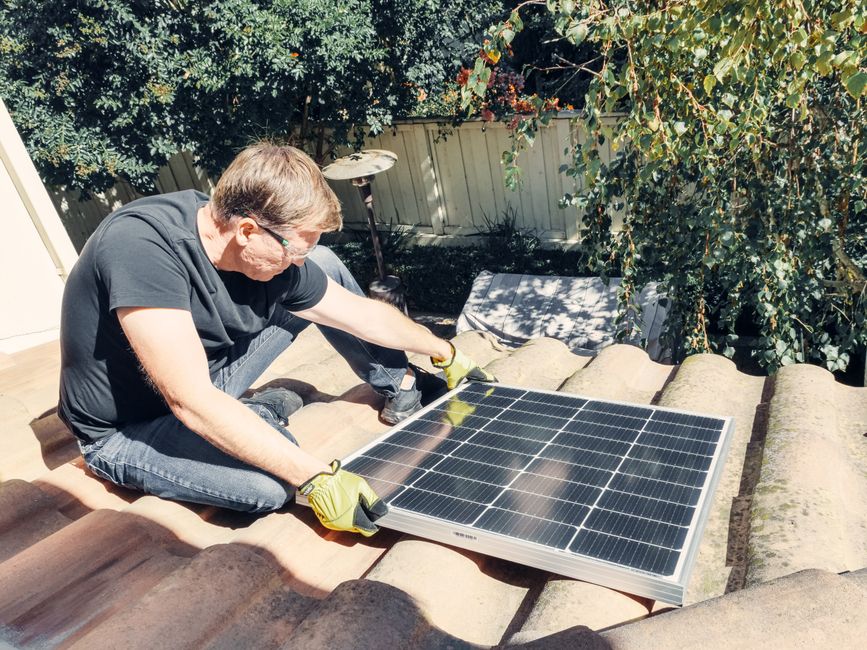
Photo: K via Pexels
Recommended Resources
Disclosure: As an Amazon Associate, we earn a small commission from qualifying purchases at no extra cost to you. We only recommend products that genuinely support the topics covered in this article.
- Renogy 200W Solar Starter Kit + 30A Charge Controller (~$169), Complete beginner solar kit, 200W monocrystalline panel, charge controller, and mounting hardware included.
- Renogy 2×100W Monocrystalline Solar Panels (~$99), Expandable 200W panel set from the most trusted DIY solar brand, used widely in off-grid and home backup systems.