 Morgan Johnson
Your neighbor just walked over with a single solar panel propped against his fence and asked if he could “just plug it in.” Six months ago, the honest answer was “sort of, but you’re in a gray area.” As of July 15, 2026, the answer is finally a clean yes, at least if he’s running a Hoymiles HiFlow Pro.
Hoymiles launched the HiFlow Pro this month as the first microinverter in the US certified to UL 3700, which is the first dedicated North American safety standard built specifically for plug-in photovoltaic systems. That distinction matters more than it might sound. Before UL 3700 existed, plug-in solar products in the US were either untested against any relevant standard or shoehorned into certifications designed for different equipment. Electricians like me lost sleep over those setups. A product that carries UL 3700 has been tested for anti-islanding, output limits, and the kind of backfeed scenarios that worry utilities and fire marshals. According to the Hoymiles official product release, setup runs through Bluetooth and Wi-Fi in under 60 seconds. I’ve seen people spend longer arguing with a GFCI outlet.
The timing here is not accidental. SEIA’s Q2 2026 report showed residential solar installations dropped 15% quarter-over-quarter after the Section 25D federal tax credit expired at the end of 2025. That credit was covering 30% of system costs for millions of homeowners. Without it, a full rooftop install is suddenly a much harder financial case to make, and a lot of people who were on the fence are now looking for cheaper entry points.
- The HiFlow Pro is the first US microinverter certified to UL 3700, the dedicated plug-in solar safety standard.
- Eight states have plug-in solar laws signed; New York's bill is on the governor's desk as of July 2026.
- One unit produces up to 300W; four in parallel reach 1,200W total from standard household outlets.
- APsystems launched a competing EZ1-LV (900 VA) in May 2026, giving buyers two certified options.
- Residential solar fell 15% in Q2 2026 after the Section 25D tax credit expired, boosting plug-in appeal.
Why UL 3700 Actually Changes Things
What most people don’t realize is how much legal and insurance ambiguity existed for plug-in solar before this standard landed. Some HOAs and landlords banned the products outright because there was no accepted safety framework to point to. Some utilities flagged customers using them. UL 3700 gives everyone, the homeowner, the HOA board, the insurance adjuster, something concrete to reference.
The HiFlow Pro hits 99.8% static MPPT efficiency and 99.5% dynamic MPPT efficiency, and it operates across a temperature range of -40°C to +65°C. That second number covers pretty much every US climate, from a Phoenix patio in August to a Vermont balcony railing in February. The wide thermal range isn’t marketing filler. It means you can leave this thing mounted through winter without nursing it indoors like a houseplant.
The unit can run up to four inverters in parallel across separate outlets, scaling to 1,200W total. That’s not going to eliminate your utility bill, but it can meaningfully offset a chunk of it, especially if you’re a renter who’s been completely locked out of solar until now.
The State Legislation Map Right Now
Helpful resource: Lutron Caséta Wireless Smart Dimmer Kit is a top-rated option for this. (As an Amazon Associate this site earns from qualifying purchases.)
Eight states have signed plug-in solar legislation into law as of this month: Utah, Maine, Virginia, Maryland, Colorado, Connecticut, Vermont, and New Hampshire. New York passed its bill and it’s sitting on the governor’s desk. Each of these laws generally does the same thing: it prevents utilities from blocking small plug-in systems and often requires that landlords allow tenants to install them under reasonable conditions.
If you’re in one of these states, your path is cleaner than it’s ever been. If you’re not, you’re not necessarily blocked, but you may encounter more friction with your utility or building management. The legislation is moving fast, though. Three of those eight state laws passed in 2026.
What the laws don’t do, and this is where I see people get confused, is guarantee permit exemptions everywhere. Some jurisdictions still want a notification or a simple form filed. Check your local AHJ (authority having jurisdiction) before you assume “no permit required” applies to your specific address. The state law sets a floor; local rules can still vary.
The Competition: HiFlow Pro vs. APsystems EZ1-LV
DIY Plug-In Solar Power LEGAL in All 50 States! (First Look at Craftstrom Solar) · There's A Trick For That on YouTube
You should know you’re not looking at a single option here. APsystems released the EZ1-LV in May 2026, which Electrek covered as part of the broader category taking shape. The two units are genuinely different products, and the right one depends on your situation.
| Feature | Hoymiles HiFlow Pro | APsystems EZ1-LV |
|---|---|---|
| US Launch | July 15, 2026 | May 2026 |
| Max Output | 1,200W (4 units parallel) | 900 VA (single unit) |
| Certification | UL 3700 | UL 3700 |
| Setup Method | Bluetooth + Wi-Fi, under 60 sec | App-based |
| MPPT Efficiency | 99.8% static / 99.5% dynamic | Not published |
| Temp Range | -40°C to +65°C | Not specified |
If you want to start with one panel and possibly expand later, the HiFlow Pro’s parallel scaling is a real advantage. If you’re a renter who just wants one panel on a balcony and doesn’t plan to grow the system, the EZ1-LV may be all you need and it had a two-month head start in the market, so there’s more real-world user data trickling in.
What to Actually Watch Out For
I’ve seen plug-in solar cause genuine problems, and none of them were electrical. The problems were almost always about where the panel physically mounts. A panel on a balcony railing needs to handle wind loads. A panel propped against a fence is a liability waiting to happen. The HiFlow Pro being UL 3700 certified tells you the inverter is safe. It tells you nothing about whether your mounting setup is engineered.
Use a proper mounting rail rated for wind in your area. Don’t trust a panel zip-tied to anything. If you’re in a multi-story building, check your local fire code, because some jurisdictions have restrictions on panel placement on upper-floor balconies specifically related to egress and firefighter access.
Also: your outlet matters. These units plug into a standard 120V outlet, but you want one that’s on a dedicated or lightly loaded circuit, and you want to confirm the outlet and its wiring are in good shape before you start pushing power through it. If the outlet is old, loose, or wired with aluminum, get an electrician to look at it first. That’s a $75 service call that could save you a real headache.
The broader shift here is real. Residential rooftop solar just hit a rough patch after the Section 25D expiration, and products like the HiFlow Pro are filling a gap that genuinely needed to be filled. If you’ve been waiting for plug-in solar to be something you could point to and say “this is a legitimate product with a legitimate safety standard,” that moment arrived on July 15, 2026.
Sources
- Electrek , The US’s first UL 3700 balcony solar microinverter is here (July 20, 2026)
- pv magazine USA , Hoymiles introduces first UL 3700-compliant plug-in microinverter to U.S. market (July 15, 2026)
- Hoymiles Official Release , HiFlow Pro Product Page (July 15, 2026)
- SEIA Solar Market Insight Report Q2 2026 (July 2026)
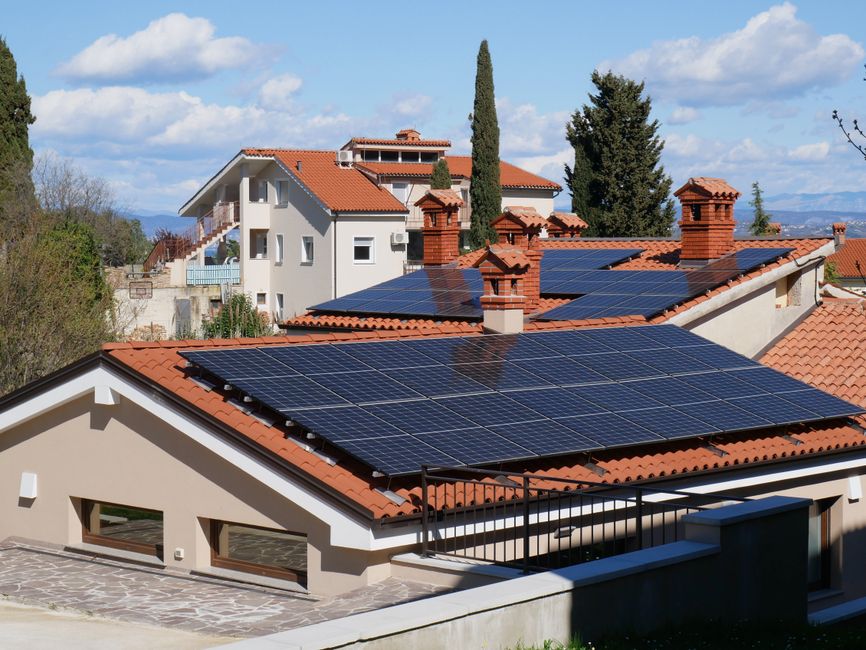
Photo: Vladimir Srajber via Pexels
Recommended Resources
Disclosure: As an Amazon Associate, we earn a small commission from qualifying purchases at no extra cost to you. We only recommend products that genuinely support the topics covered in this article.
- Renogy 200W Solar Starter Kit + 30A Charge Controller (~$169), Complete beginner solar kit, 200W monocrystalline panel, charge controller, and mounting hardware included.
- Renogy 2×100W Monocrystalline Solar Panels (~$99), Expandable 200W panel set from the most trusted DIY solar brand, used widely in off-grid and home backup systems.