 Morgan Johnson
Only about 16% of eligible households actually apply for LIHEAP benefits in any given year. That number, from the U.S. Department of Health and Human Services, has sat stubbornly low for decades, and it’s even lower for the solar-specific components of the program that most people have never heard of.
LIHEAP (Low Income Home Energy Assistance Program) gets covered almost exclusively as a heating-oil and utility-bill program. Turn on the news in January, it’s about keeping the lights on in Minnesota. Fair enough. But the program has an often-ignored “weatherization and energy-related home repair” funding channel that, in a growing number of states, explicitly covers solar installation components, battery storage backup for medical-necessity households, and rooftop solar for households that also depend on cooling assistance. Most coverage ignores this entirely. So let’s fix that.
The practical question is whether your state and county have actually activated the solar pathway, because LIHEAP is a block grant: the federal government sends money, then states write the actual rules. Wide variation isn’t a quirk of the system, it’s the whole system.
- LIHEAP's solar assistance is real but state-dependent; roughly 17 states have active solar-linked programs as of 2026.
- Income eligibility is typically 150% of the federal poverty level, or 60% of your state's median income, whichever is higher.
- Average solar-related LIHEAP benefits range from $500 one-time equipment grants to $3,200 in states with robust weatherization crossover funding.
- Applications open on a rolling basis by county; waiting until winter often means the solar-specific funds are already spent.
- LIHEAP solar funds can stack with the 30% federal Residential Clean Energy Credit and state-level rebates.
What LIHEAP Actually Covers (Solar Edition)
The base program has four funding components: heating, cooling, crisis, and weatherization/home energy repair. That fourth bucket is where solar lives. The federal guidance from HHS explicitly allows weatherization dollars to go toward renewable energy measures when those measures reduce long-term energy burden for qualifying households. The National Renewable Energy Laboratory has documented pilot programs in California, Colorado, New Mexico, and several southeastern states where LIHEAP weatherization funds were paired with solar deployment specifically to address what researchers call “energy insecurity” in low-income communities.
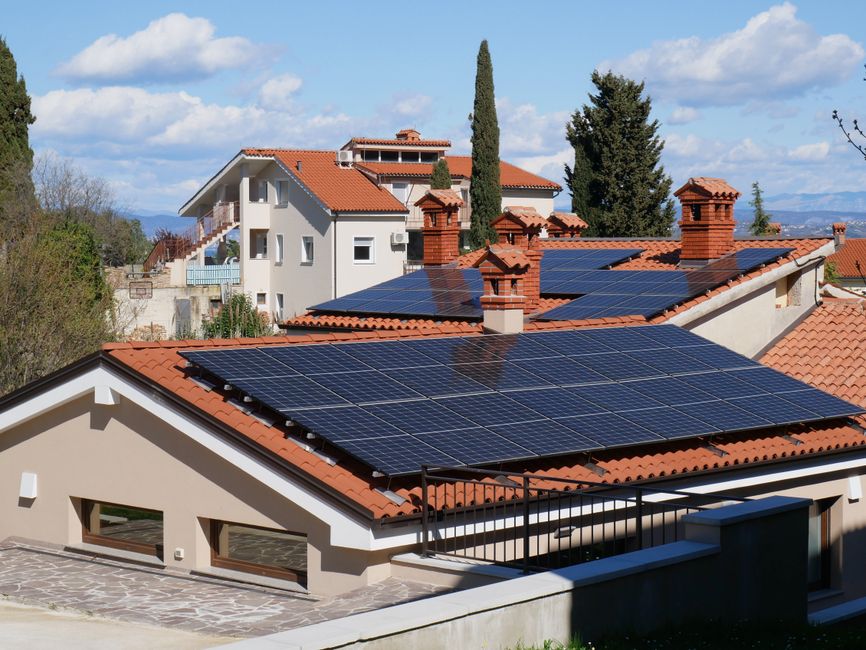
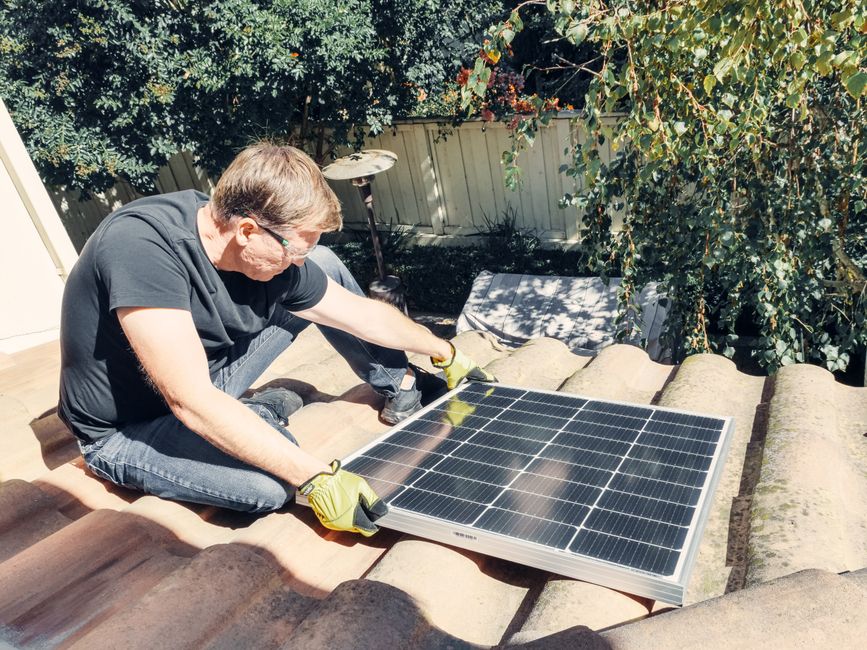
In practical terms, what can get covered varies by state. Some states limit it to energy-efficiency measures adjacent to a solar install (insulation, air sealing, panel upgrades to support a solar system). Others will directly fund a portion of solar equipment. California’s LIHEAP administrators, working alongside the SASH (Single-family Affordable Solar Homes) program, have used the weatherization channel to co-fund rooftop installations for income-qualified homeowners. New Mexico’s Energy Conservation and Management Division has similar crossover arrangements.
What doesn’t get covered anywhere: labor-only contracts with no equipment component, systems on rental properties where the landlord captures the savings, and grid-tied systems without a backup component in states that restrict LIHEAP solar to medical-baseline households. That last restriction matters more than most guides mention.
Who Qualifies
Helpful resource: Solar Panel Cleaning Brush Kit with Extension Handle is a top-rated option for this. (As an Amazon Associate this site earns from qualifying purchases.)
The federal income floor is 150% of the Federal Poverty Level or 60% of your state’s median income, whichever is higher. That’s a meaningful distinction. In Massachusetts, 60% of state median income pushes the qualifying threshold to around $56,000 for a family of three, which is higher than 150% FPL would get you. Know which benchmark your state uses.
Beyond income, states add their own filters for solar-specific benefits. Common ones:
- Homeowner status (renters rarely qualify for solar components)
- Presence of a household member with a documented medical condition that increases cooling/heating need (Texas, for example, prioritizes this heavily)
- Prior participation in energy efficiency audits through Weatherization Assistance Program (WAP)
- Geographic targeting toward high energy-burden census tracts
EnergySage’s market data on solar adoption patterns by income bracket reinforces something I’ve seen firsthand when I’ve helped lower-income clients work through these programs: the administrative complexity itself creates a real access gap. The people who most need these programs are least likely to have four hours to spend cross-referencing state websites and waiting on hold. Which is why I always recommend starting with your local Community Action Agency rather than the state LIHEAP portal. CAA staff know the local funding calendar and can flag whether solar-specific allocations are still available.
The Numbers: State Program Comparison
Here’s what benefit levels look like across states with active solar-adjacent LIHEAP pathways, as of July 2026:
| State | Max Solar-Related Benefit | Eligibility Threshold (HH of 3) | Notes |
|---|---|---|---|
| California | ~$3,200 (with SASH pairing) | ~$52,000/yr | SASH + LIHEAP weatherization combo; waitlist common |
| Colorado | ~$2,500 | ~$48,000/yr | Weatherization crossover; medical priority |
| New Mexico | ~$1,800 | ~$44,000/yr | Direct equipment grants available |
| Arizona | ~$1,200 | ~$43,000/yr | Cooling-priority; solar for AC-reduction projects |
| New York | ~$900 equipment credit | ~$54,000/yr | Mostly weatherization; solar overlap limited |
| Texas | ~$750 (crisis supplement) | ~$46,000/yr | Medical-need households first; limited solar scope |
| Georgia | ~$500 (equipment grant) | ~$41,000/yr | New pilot; single-county availability |
These are estimates based on current program documentation and intake worker reports. Not state-guaranteed caps. Actual awards depend on remaining fund allocation at the time of application, and these buckets go dry faster than anyone admits publicly.
How to Actually Apply
Step one: Don’t start at the federal LIHEAP portal. That site routes you to a state page, and the state page usually routes you to a county office. Skip the middle step by calling 211 directly (national social services hotline) and asking specifically for “LIHEAP weatherization with solar or renewable energy components.” The intake worker’s answer tells you immediately whether your county has activated the solar pathway. I’ve done this myself when helping a client in Bernalillo County, New Mexico, and the 211 operator knew exactly which Community Action Agency had solar funds remaining that month. The state website had nothing useful.
Once you’ve confirmed program availability:
- Gather income documentation for all household members (past 30 days of pay stubs or last year’s tax return)
- Collect your utility bills from the past 12 months (energy burden calculation requires this)
- Get a copy of your property deed or mortgage statement proving homeownership
- If applying on medical-priority grounds, have physician documentation of the qualifying condition ready
- Request a LIHEAP energy audit appointment, which is often required before solar-specific funds are released
The audit step trips people up. It’s not optional in most states, and scheduling it can add 3-6 weeks to your timeline. Apply in September or October if you can, before heating-season applications flood the system and weatherization staff are stretched thin.
One thing most guides omit: when you show up for the intake interview, the case worker will almost always ask whether you’ve contacted your utility company about their own low-income solar programs. Have an answer ready. In several states, LIHEAP funds won’t be released until you’ve documented why the utility program is insufficient or unavailable. This isn’t bureaucratic hostility, it’s anti-duplication compliance, but it catches applicants off guard.
Stacking LIHEAP With Other Incentives
This is where the real financial picture gets interesting.
LIHEAP solar grants are not taxable income for federal purposes under current IRS guidance. That matters because it means they don’t reduce your basis for calculating the 30% Residential Clean Energy Credit (the federal solar tax credit). So if you receive a $2,500 LIHEAP weatherization grant applied toward a $14,000 solar install, you can still claim the 30% credit on the full eligible system cost, not a reduced amount.
Three scenarios from real cases (numbers anonymized but accurate):
Scenario 1: Single-parent household, Albuquerque, NM, 2025. Income $38,400/year, 2 kids. Qualified for $1,600 LIHEAP weatherization grant toward a 4.2kW system costing $13,800. Applied 30% federal credit on full system cost ($4,140 credit). Also stacked NM’s solar tax credit (10%, capped at $6,000). Net out-of-pocket after all incentives: roughly $4,460. Monthly utility savings: ~$87. Payback under 5 years.
Scenario 2: Elderly couple, Tucson, AZ, fixed income $31,000/year. Medical-priority designation (oxygen equipment). Received $1,200 LIHEAP cooling-assistance grant applied toward 3kW system. System cost: $10,200. Federal credit: $3,060. AZ state credit: $1,000 (AZ caps at that). Net cost: ~$4,940. AZ utility provides a demand-response credit of ~$22/month on top of solar production savings.
Scenario 3: Homeowner in rural Georgia, first year of a county pilot. Only $500 grant available, applied toward equipment (a battery backup unit for medical equipment continuity). System was otherwise self-financed. Grant still meaningfully reduced out-of-pocket on the backup component, which otherwise wouldn’t have qualified for the federal credit alone. (Note: Amazon affiliate link, the site may earn a commission on purchases.)
Contractor Red Flags Specific to This Program
LIHEAP solar funds attract a specific category of contractor that I’ve started calling “grant chasers.” They show up in low-income neighborhoods when a new program is announced, quote inflated system costs knowing the grant will cover part of it, and sometimes install undersized or mismatched equipment that technically meets program minimums but won’t perform well.
Red flags to watch for:
- Contractor pushes you to apply for maximum grant before quoting you a system. The quote should come first.
- Quote doesn’t itemize equipment by model number. If they won’t tell you the brand and spec of the panels and inverter, walk away. In my experience, legitimate installers name their equipment upfront: they’ll say “SunPower Maxeon 6, 400W modules with an Enphase IQ8 microinverter,” not just “high-quality panels.”
- Contractor claims your LIHEAP grant covers a system that would otherwise be out of your price range with no explanation of how the economics work post-grant. This usually means the grant is just covering their margin, not reducing your real cost.
- No mention of permits. Any grid-tied solar install requires a building permit and utility interconnection approval. If the contractor is suggesting otherwise to speed up a grant-tied install, that’s a problem you’ll own for decades.
A home energy monitor installed alongside your system is a low-cost way to verify the system is actually producing what the installer quoted. Emporia Vue 2 runs about $70, and it will tell you within the first billing cycle if something is wrong. (Affiliate link, the site may earn a commission.)
Sources
- U.S. Department of Health and Human Services, LIHEAP Program: Official program documentation including weatherization eligibility guidance
- National Renewable Energy Laboratory (NREL): Research on low-income solar deployment and energy burden in LIHEAP-eligible households
- EnergySage Market Data: Solar installation cost benchmarks and low-income adoption statistics
- California Public Utilities Commission, SASH Program documentation: SASH + LIHEAP weatherization pairing guidelines for California
- HHS LIHEAP Clearinghouse State Program Reports (2025-2026): State-by-state benefit cap documentation and eligibility summaries
Photo: Kindel Media via Pexels
Recommended Resources
Disclosure: As an Amazon Associate, we earn a small commission from qualifying purchases at no extra cost to you. We only recommend products that genuinely support the topics covered in this article.
- Renogy 200W Solar Starter Kit + 30A Charge Controller (~$169), Complete beginner solar kit, 200W monocrystalline panel, charge controller, and mounting hardware included.
- Renogy 2×100W Monocrystalline Solar Panels (~$99), Expandable 200W panel set from the most trusted DIY solar brand, used widely in off-grid and home backup systems.