 Stephanie Walsh
If you’ve spent more than twenty minutes researching solar panels, you’ve already encountered this argument. Monocrystalline or polycrystalline? Black or blue? And you’re probably thinking it doesn’t matter, that this is one of those distinctions that sounds technical but makes zero practical difference.
Here’s what I tell people face-to-face: it used to matter far more than it does now. But understanding it still matters, because it actually affects your roof space calculation, your system design, and sometimes your wallet.
Let me walk you through what’s genuinely different between these two technologies.
What You’re Actually Looking At
Both monocrystalline and polycrystalline panels generate electricity the same way: silicon crystals absorb sunlight and release electrons. The actual difference is in how that silicon gets manufactured, and it has real downstream effects on performance.
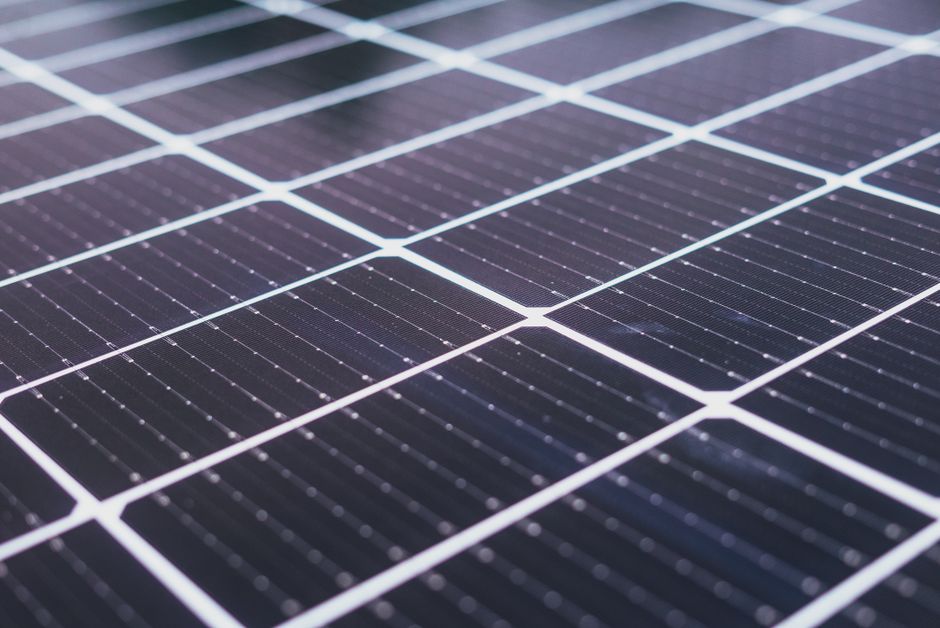
Monocrystalline cells are cut from a single continuous crystal of silicon, grown in a lab using the Czochralski method. That uniform crystal structure means electrons move through the material more freely. You get nearly black cells, sometimes with rounded corners, visually distinctive once you know what to look for.
Polycrystalline cells start with many silicon fragments melted together and cooled into a block, then sliced into wafers. The crystal structure isn’t uniform, so you get those characteristic blue speckled cells. Cheaper to produce. Visually different. Slightly less efficient at converting light to electricity.
That’s the core of it. Now let’s get into what it actually means for your roof.
The Efficiency Gap: Real Numbers, Not Marketing Copy
| Specification | Monocrystalline | Polycrystalline |
|---|---|---|
| Typical Efficiency | 19-22% | 15-17% |
| Temperature Coefficient | -0.3% to -0.36% per °C | -0.4% to -0.45% per °C |
| Cell Appearance | Nearly black, rounded corners | Blue speckled |
| Manufacturing Method | Single crystal (Czochralski) | Multiple fragments melted together |
| Wholesale Cost (2024) | $0.25-$0.40 per watt | $0.20-$0.28 per watt |
| Market Availability | Dominant in residential | Niche/declining |
Helpful resource: EG4 Battery Monitor Shunt for Solar Systems is a top-rated option for this. (As an Amazon Associate this site earns from qualifying purchases.)
The efficiency difference is real, but salespeople pushing premium products love to overstate it.
A quality monocrystalline panel today typically runs 19 to 22% efficiency. SunPower’s Maxeon 6 series hits around 22.8%. LG’s older NeON 2 line (before they exited the solar market in 2022) routinely hit 21%. Mainstream mono panels from Jinko, LONGi, and Canadian Solar cluster around 19 to 20%.
Polycrystalline panels generally land between 15 and 17% efficiency.
Here’s where people get confused: efficiency measures how much electricity a panel produces per square foot, not total output. A 400-watt monocrystalline panel and a 400-watt polycrystalline panel both produce 400 watts under standard test conditions. The mono panel just does it in less space.
So if you have plenty of roof space, the efficiency difference might mean almost nothing to your total system output. If your roof is small, shaded around the edges, or oddly shaped, higher efficiency panels let you pack more watts into what you’ve got available. That’s when mono earns its price premium.
Temperature Coefficient: The Detail Most Articles Skip
How Many Solar Panels Do You Need? Follow This Easy Breakdown! · Top Homeowner on YouTube
This one actually matters, and almost nobody talks about it.
Every solar panel produces less power as it gets hotter. The temperature coefficient tells you how much output drops per degree Celsius above 25°C (77°F). Monocrystalline panels typically run around -0.3% to -0.36% per degree Celsius. Polycrystalline panels tend to run closer to -0.4% to -0.45%.
That sounds trivial. It isn’t if you live in Phoenix, Tucson, Dallas, or anywhere with sustained 100°F+ summers. On a brutally hot July afternoon when your roof surface hits 140°F and the panels themselves are cooking at 70°C or more, that difference in temperature coefficient means mono panels are losing noticeably less output than poly panels at the exact moment you need power most for air conditioning.
In mild climates, the Pacific Northwest, Oregon coast, much of New England, the temperature coefficient gap matters much less because the panels rarely get that hot. The National Renewable Energy Laboratory (NREL) includes this variable in its PVWatts modeling tool, and if you’re sizing a system for a hot region, it’s worth plugging in actual numbers rather than assuming.
The Price Picture in 2024
Polycrystalline panels used to be significantly cheaper per watt. That gap has nearly vanished.
In the early 2010s, polycrystalline might have gone for $0.70 to $0.90 per watt while mono panels ran $1.20 to $1.50. Today, mid-tier monocrystalline panels from Jinko Solar, LONGi, or Risen Energy come in at $0.25 to $0.40 per watt at the wholesale level. Polycrystalline, where you can still find it, might be $0.20 to $0.28 per watt. The gap is almost irrelevant once you scale it to a full system.
More practically: most residential installers in the U.S. have stopped stocking polycrystalline panels altogether. If you’re getting bids from local contractors right now, the majority are going to propose monocrystalline regardless. The industry shifted. LONGi, which became the world’s largest solar manufacturer, committed to monocrystalline production. Poly isn’t dead, but it’s increasingly a niche product.
If a contractor is pushing polycrystalline panels aggressively in 2024 without a serious price discount, that’s worth questioning. Ask them why they’re recommending it.
Which One Should You Actually Buy?
Monocrystalline, in most residential situations today.
Not because polycrystalline is bad. It isn’t. If someone offered you a polycrystalline system at a 15 to 20% lower total installed cost with adequate roof space, it’s worth running the numbers. But that deal is increasingly rare.
The practical case for mono:
Your roof size matters most. The U.S. Department of Energy has noted that available roof area is one of the primary constraints for residential solar systems. If you’re working with a modest south-facing section, maybe a few hundred square feet, higher wattage per panel means you might hit your target system size where you couldn’t with lower-efficiency modules.
You’re in a hot climate. Temperature coefficient again. See above.
You’re pairing with a home battery. Adding a Tesla Powerwall 3, Enphase IQ Battery 5P, or Franklin Electric eFlex means you want to maximize charging hours. More efficient panels on the same roof area means more energy to store.
One scenario where I’d genuinely reconsider: ground-mount systems with no space constraints and a tight budget. If you’re putting 40 panels on a half-acre in rural Texas and the poly option saves you $2,000 installed, that’s real money. Use NREL’s PVWatts to run a production estimate on both and see if the lifetime output difference covers the savings. Sometimes it doesn’t.
What About Aesthetics?
This comes up constantly. HOAs especially care.
Monocrystalline panels are typically black or very dark, which blends more cleanly with black or dark gray roofing materials. Polycrystalline panels have that blue speckled look, which some people find attractive and others find jarring against certain roof colors.
If your HOA has solar guidelines (and many do now, especially in California, Nevada, and Florida where state law has softened HOA solar rules), they may require that panels “reasonably blend” with roofing. That language is vague on purpose, but darker mono panels usually pass more easily than bright blue poly panels on a charcoal shingle roof.
Check your HOA CC&Rs before you sign anything with a contractor. I’ve seen installations get stopped mid-project over this.
A home energy monitor like the Emporia Vue (Amazon, commission may apply) is actually useful once your system is running, regardless of panel type, because it shows you real-time production and consumption data in a way that most installer app interfaces don’t. Knowing how your panels actually perform through different seasons tells you far more than any spec sheet comparison ever will.
Buy the mono panels. Get the system sized right for your roof and your load. And spend your research energy on picking a contractor who pulls permits and doesn’t vanish after installation, because that matters more than the crystalline structure debate.
Sources
- EG4 Battery Monitor Shunt for Solar Systems
- National Renewable Energy Laboratory (NREL)
- U.S. Department of Energy
- home energy monitor like the Emporia Vue
- Renogy 100W 12V Flexible Solar Panel
Disclosure: As an Amazon Associate, we earn a small commission from qualifying purchases at no extra cost to you. We only recommend products that genuinely support the topics covered in this article.
- Renogy 200W Solar Starter Kit + 30A Charge Controller (~$169), Complete beginner solar kit with 200W monocrystalline panel, charge controller, and mounting hardware included.
- Renogy 2×100W Monocrystalline Solar Panels (~$99), Expandable 200W panel set from the most trusted DIY solar brand, widely used in off-grid and home backup systems.
Recommended Resources
Disclosure: As an Amazon Associate, we earn a small commission from qualifying purchases at no extra cost to you. We only recommend products that genuinely support the topics covered in this article.
- Renogy 200W Solar Starter Kit + 30A Charge Controller (~$169), Complete beginner solar kit, 200W monocrystalline panel, charge controller, and mounting hardware included.
- Renogy 2×100W Monocrystalline Solar Panels (~$99), Expandable 200W panel set from the most trusted DIY solar brand, used widely in off-grid and home backup systems.