 Rachel Kim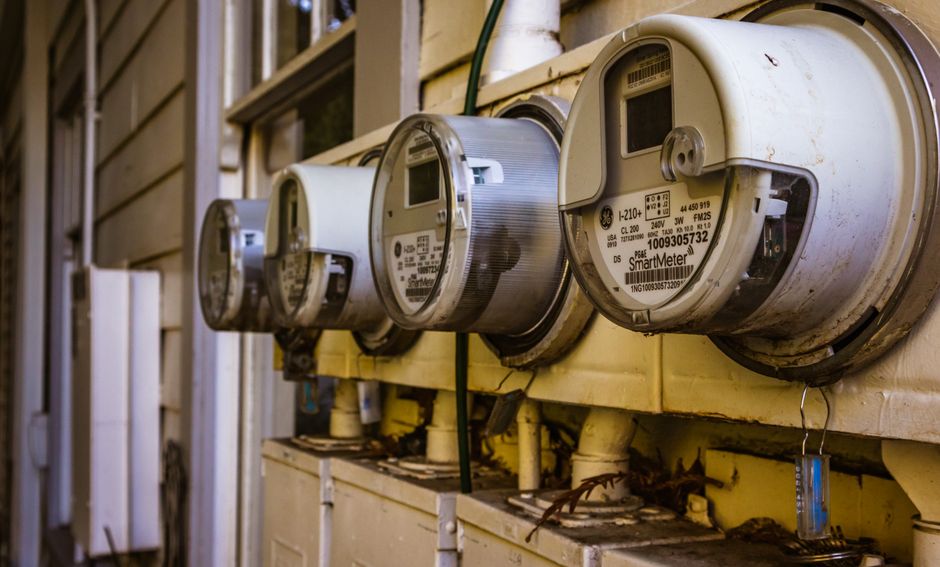
Most solar homeowners I talk to can name their panel brand and their system’s wattage off the top of their head. Ask them how net metering actually works on their utility bill, and you’ll get a long pause. That surprised me, because net metering is the single financial mechanism that determines whether your solar investment pays off in 7 years or 15. It’s not a bonus feature. It’s the math underneath everything.
What Net Metering Actually Is (Not the Brochure Version)
Here’s the simple version: when your solar panels produce more electricity than your home is using at that moment, the excess flows back onto the grid. Your utility meter literally runs backward. You get a credit for that power, and later, when your panels aren’t producing enough (at night, on cloudy days, in winter), you draw from the grid and those credits offset what you owe.
The thing most installers don’t spell out clearly is that net metering is a policy, not a technology. Your panels don’t care about net metering. Your inverter doesn’t either. It’s a billing agreement between you and your utility company, and it exists only because a state law, a utility tariff, or a public utilities commission ruling requires it. That distinction matters enormously, because it means the terms can change. And they have changed, in some states quite dramatically.
I’ll be honest: when I first started consulting on residential solar, I assumed net metering was more standardized than it is. It’s not. A homeowner in Arizona lives in a completely different financial reality than one in California, even if they have identical 8 kW systems on identical roofs.
How the Credits Actually Get Calculated
| Credit Type | Export Rate | Import Rate | Financial Impact | Use Case |
|---|---|---|---|---|
| Full Retail Net Metering | $0.14/kWh | $0.14/kWh | Optimal; predictable ROI | Gold standard; most favorable |
| Avoided Cost/Wholesale | $0.03-$0.06/kWh | $0.14/kWh | Significantly reduced savings | After policy revisions |
| Value of Solar (VOS) Tariff | Variable (calculated) | $0.14/kWh | Mixed outcomes; state-dependent | Regulatory alternative to retail |
The core mechanic is straightforward. Your meter tracks two numbers: electricity you consumed from the grid, and electricity you exported to the grid. At the end of your billing cycle (monthly, in most cases), the utility nets those two numbers against each other. If you exported more than you imported, you carry a credit forward. If you imported more, you pay the difference.
What varies wildly is the rate at which your exports get credited.
Full retail net metering is the gold standard. Every kilowatt-hour you push onto the grid gets credited at the same rate you’d pay to pull one off the grid. If your retail rate is $0.14/kWh, you export at $0.14/kWh. This makes your solar system’s math clean and predictable.
Avoided cost or wholesale rate crediting is where things get painful. Some utilities, especially after policy revisions, credit your exports at the wholesale rate, which might be $0.03 to $0.06/kWh, while you’re still buying power back at $0.14/kWh. You’re essentially selling low and buying high. Your system still saves you money, but significantly less than the installer’s original estimate might have shown.
Value of Solar (VOS) tariffs are a hybrid approach some states use. They try to calculate the actual value your solar generation provides to the grid (capacity value, line loss savings, environmental benefits) and credit you that amount. The research here is mixed on whether this benefits or hurts homeowners compared to full retail metering. It depends heavily on how your state’s regulators run the calculation.
What surprised me was how many homeowners sign contracts with solar companies using financial projections based on their state’s current net metering rules, without any discussion of what happens if those rules change mid-loan. That’s a real risk worth asking about.
True-Up Billing: The Annual Accounting You Need to Understand
Many utilities, especially in states with strong net metering programs, use an annual true-up billing cycle instead of monthly accounting. California’s net metering program (NEM) is probably the most well-known example. Here’s how it works in practice.
Each month, you get a statement showing your running credit or balance, but you don’t pay or receive a check. The utility is keeping score. At the end of 12 months, you settle up. If you consumed more than you produced annually, you pay the net amount owed. If you produced more than you consumed, most utilities either give you a very small payment at that wholesale rate or simply zero out your account and you lose the excess credit.
That last part is important. Almost no utility will write you a check for significant overproduction. The goal should be to size your system to roughly match your annual consumption, not dramatically exceed it, because over-generating doesn’t pay proportionally. This is exactly why the National Renewable Energy Laboratory (NREL) consistently emphasizes accurate load analysis before system sizing. You’re not trying to maximize production. You’re trying to match your load profile intelligently.
Go pull 12 months of utility bills right now. You want your annual kWh consumption number. That’s your target. Your installer should be designing to that number, adjusted for local production factors.
How to Read Your Net Metering Bill (Step by Step)
Utility bills with solar can look genuinely confusing the first few times. Here’s the walkthrough I wish someone had given me earlier.
Step 1: Find your billing period dates. Note whether this is a monthly statement or part of an annual true-up cycle.
Step 2: Locate the “energy delivered” line. This is what you pulled from the grid. It’s measured in kWh.
Step 3: Find the “energy received” or “energy exported” line. This is what your panels pushed to the grid. Not all utilities show this on the same page; you may need to check a supplemental solar production statement.
Step 4: Look at the net calculation. The bill should show delivered minus received, and that net number is what you’re either paying for or receiving credit on.
Step 5: Check the rate applied to your exports. This is where you’ll see whether you’re on full retail, avoided cost, or a VOS tariff. If you don’t see it explicitly, call your utility’s solar department and ask. Every homeowner should know this number.
Step 6: Identify any fixed charges that don’t go away. Most utilities have a customer charge, sometimes called a service fee, that’s a flat monthly amount, usually $5 to $25, that you owe regardless of your solar production. Net metering can reduce your energy charges to zero some months, but it can’t eliminate fixed fees.
A home energy monitor like the Emporia Vue 2 can help you track real-time production and consumption so you’re not waiting for a monthly statement to understand what’s happening. (As an Amazon Associate this site earns from qualifying purchases.)
The Policy Risks Nobody Wants to Talk About
I’ll be honest: this is the section most solar salespeople skip, and they shouldn’t.
Net metering policies are not guaranteed. California moved from NEM 2.0 to NEM 3.0 in April 2023, and the export rates dropped by roughly 75% for new applicants. Homeowners who got their systems installed under NEM 2.0 were grandfathered in for a period, but new installations now operate under dramatically different financial terms. Hawaii went through a similar disruption years earlier. Several other states are actively revisiting their net metering rules.
The U.S. Department of Energy notes that net metering policies vary significantly by state and are subject to change as utility commissions periodically review rate structures. That’s politely worded. The real-world implication is that the financial projections your installer gives you today are based on today’s policy environment.
If you’re in a state with full retail net metering right now, don’t assume that will hold for the 25-year life of your system. Consider whether adding battery storage makes sense as a hedge, because batteries let you consume your own solar production directly instead of exporting it at whatever rate the utility decides to pay you later. If you’re already thinking about an EV, pairing solar with a Level 2 home EV charger is a smart way to consume more of your own daytime production and reduce your grid dependency, which matters more as net metering becomes less generous.
Comparison: Net Metering Structures at a Glance
| Structure | Export Credit Rate | Common In | Best For |
|---|---|---|---|
| Full Retail NEM | Same as retail rate ($0.12-$0.18/kWh) | Many states currently | Maximum bill offset |
| Avoided Cost / Wholesale | Grid wholesale rate ($0.03-$0.06/kWh) | Post-reform states | Less favorable; battery storage helps |
| Value of Solar (VOS) Tariff | Calculated value, varies | MN, some others | Depends on calculation methodology |
| Net Billing (NEM 3.0 CA style) | Low export rate + Time-of-Use | California post-2023 | Battery storage + smart load shifting |
Net metering is the piece of the solar equation that deserves as much attention as panel efficiency ratings or installer reviews. The hardware on your roof is relatively standardized at this point. The billing structure underneath it is where the real financial variability lives. Know your utility’s current export rate, understand whether you’re on a monthly or annual true-up cycle, and ask your installer explicitly how their production estimates would change if your state’s net metering policy shifted. That’s not pessimism. That’s how you make a $20,000 decision with your eyes open.
Sources
- National Renewable Energy Laboratory (NREL)
- Emporia Vue 2
- U.S. Department of Energy
- Emporia Vue 2 Home Energy Monitor
- Govee WiFi Smart Plug with Energy Monitoring
Disclosure: As an Amazon Associate, we earn a small commission from qualifying purchases at no extra cost to you. We only recommend products that genuinely support the topics covered in this article.
- Renogy 200W Solar Starter Kit + 30A Charge Controller (~$169), Complete beginner solar kit, 200W monocrystalline panel, charge controller, and mounting hardware included.
- Renogy 2×100W Monocrystalline Solar Panels (~$99), Expandable 200W panel set from the most trusted DIY solar brand, used widely in off-grid and home backup systems.
- EF EcoFlow DELTA 2 Portable Power Station (1024Wh) (~$599), 1024Wh LFP battery with 1800W output, top-rated solar generator for home backup power. Charges in under 2 hours.
Recommended Resources
Disclosure: As an Amazon Associate, we earn a small commission from qualifying purchases at no extra cost to you. We only recommend products that genuinely support the topics covered in this article.
- Renogy 200W Solar Starter Kit + 30A Charge Controller (~$169), Complete beginner solar kit, 200W monocrystalline panel, charge controller, and mounting hardware included.
- Renogy 2×100W Monocrystalline Solar Panels (~$99), Expandable 200W panel set from the most trusted DIY solar brand, used widely in off-grid and home backup systems.
- EF EcoFlow DELTA 2 Portable Power Station (1024Wh) (~$599), 1024Wh LFP battery with 1800W output, top-rated solar generator for home backup power. Charges in under 2 hours.