 Rachel Kim
A surprising number of people come to me thinking off-grid solar is plug-and-play. You buy some panels, a battery, an inverter, and suddenly you’re living free from the utility company. I’ve had that conversation dozens of times, and I’ve sat across the table from people who spent $4,000 on equipment that couldn’t run their refrigerator overnight. So let’s talk about what an off-grid system actually needs to function, before you buy a single panel.
If you’re here, you might be wondering what the bare minimum looks like. Maybe you’re building a cabin, a tiny home, a remote workshop, or just want to cut the cord completely on your primary residence. The answer is going to depend on your load more than anything else, but there’s a real floor below which the system simply won’t be reliable. Let me walk you through it.
You Have to Know Your Load Before Anything Else
This sounds obvious, and yet it’s the step everyone skips. I made this mistake myself on my first off-grid consultation. I focused on the solar array size and didn’t spend nearly enough time on the load audit. The homeowner ended up undersizing their battery bank by about 30% because we had underestimated their evening usage.
Here’s what I tell people: write down every appliance you plan to run, its wattage, and how many hours per day you’ll actually use it. Then multiply wattage by hours to get watt-hours per day. Add it all up. That number is your daily energy budget, and everything else in the system is sized around it.
A realistic minimal off-grid setup, say for a small cabin with LED lighting, a laptop, a phone charger, a small 12V refrigerator, and a ceiling fan, might land around 1,000 to 1,500 watt-hours per day. A full-time off-grid home with a standard refrigerator, well pump, washer, and modest lighting will often land at 5,000 to 8,000 watt-hours per day. Those are dramatically different systems.
[Cabin with LED lights, a 12V fridge (45W), two phones charging, and occasional laptop use] → [Daily load audit comes to about 1,100 Wh/day] → [Drives a system design of 400W of panels, 200Ah of lithium battery capacity at 24V, and a 1,000W inverter, total equipment cost around $1,800 to $2,200 as of June 2026]
The Four Components That Must Exist in Every Off-Grid System
| System Component | Minimum Specification | Purpose | Typical Cost Range (June 2026) |
|---|---|---|---|
| Solar Panels | 400W (cabin); 1,500-3,000W (full home) | Generation source | $0.25-$0.40 per watt |
| Charge Controller | MPPT (100A+) | Regulates panel-to-battery power | $130-$150 |
| Battery Bank | 2+ days of consumption; LiFePO4 preferred | Energy storage | Varies by capacity |
| Inverter | 1,000-2,000W pure sine wave | DC-to-AC conversion | Varies by wattage |
| Daily Load Budget | 1,000-1,500 Wh (cabin); 5,000-8,000 Wh (home) | System sizing baseline | N/A |
Helpful resource: Jackery Explorer 300 Portable Power Station is a top-rated option for this. (As an Amazon Associate this site earns from qualifying purchases.)
No shortcuts here. A functioning off-grid solar system has four things: solar panels, a charge controller, a battery bank, and an inverter (if you’re running any AC loads at all). Some tiny DC-only systems can skip the inverter, but the moment you want to plug in anything with a standard household plug, you need one.
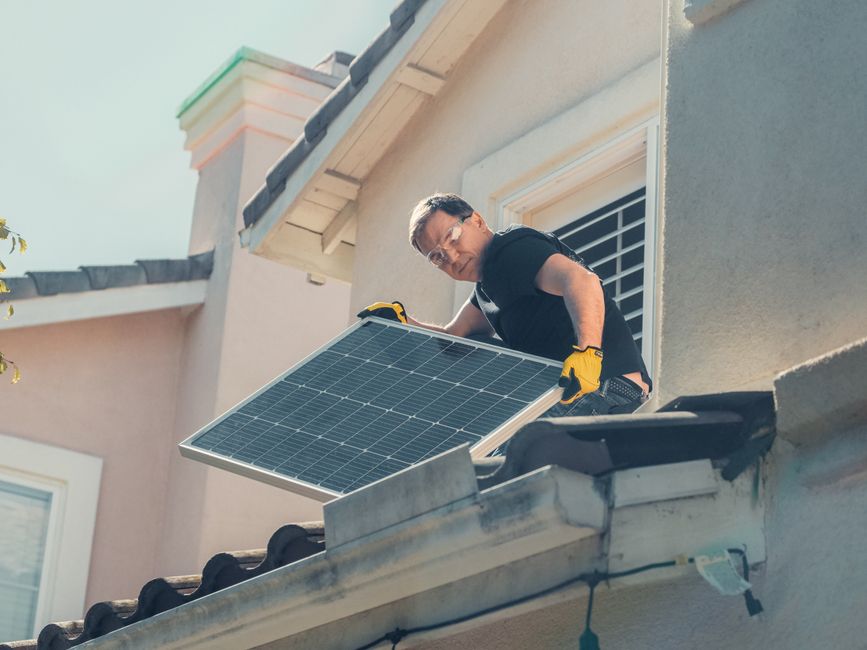
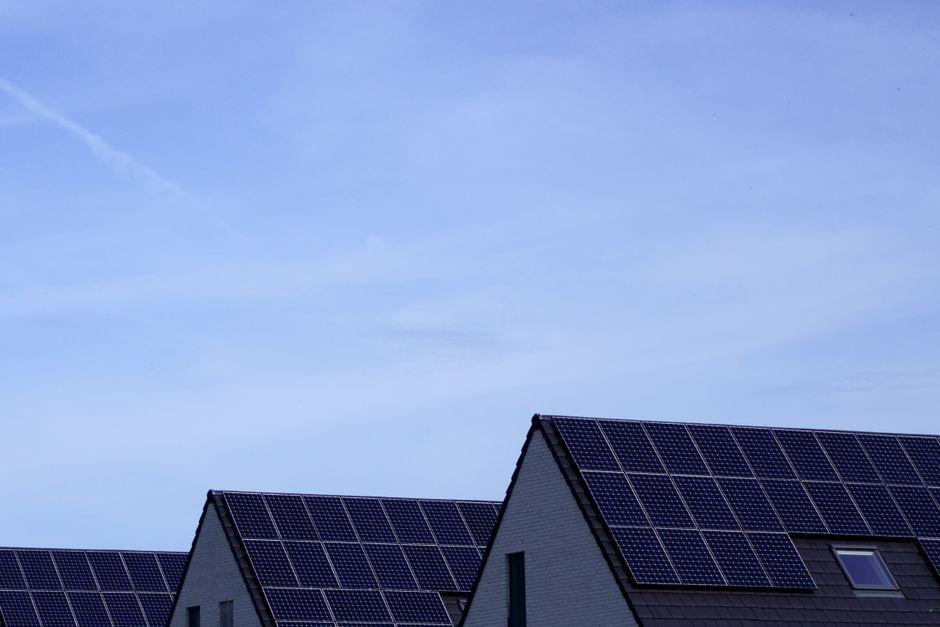
Solar panels are your generation source. For a minimum viable off-grid setup, I’d put 400 watts as a practical floor for anything beyond a weekend camper setup. That gets you roughly 1.5 to 2 kWh per day in decent sun conditions, which covers a basic cabin or tiny home. Most serious off-grid homes start at 1,500 to 3,000 watts of panels. Current pricing (June 2026) runs about $0.25 to $0.40 per watt for the panels themselves before racking and wiring.
Charge controllers regulate the power flowing from your panels into your batteries. You’ve got two main types: PWM (pulse width modulation) and MPPT (maximum power point tracking). Honestly, skip PWM for any system over 200 watts. MPPT controllers, like the Victron SmartSolar or Epever Tracer series, extract 20 to 30% more usable energy from your panels, especially in partial shading or cold weather. The Victron 100/30 runs about $130 to $150 and is worth every dollar.
Battery banks are where most people get burned by undersizing. A common minimum recommendation is storing at least two days of energy consumption, without accounting for solar input. So if you’re using 2,000 Wh per day, you want 4,000 Wh of usable storage minimum. With lithium iron phosphate (LiFePO4) batteries, which I strongly prefer over lead-acid for off-grid applications, you can use 80 to 95% of rated capacity. With flooded lead-acid, you should only use about 50% to avoid killing the battery early.
[Off-grid homeowner using lead-acid batteries with 400Ah at 12V (4,800 Wh rated)] → [Realized usable capacity was only about 2,400 Wh after applying 50% depth-of-discharge limit] → [Switched to 200Ah LiFePO4 at 24V, giving 4,608 Wh usable, same capacity, half the weight, 10+ year lifespan vs. 3-4 years for the lead-acid bank]
Inverters convert DC battery power to 120V AC. For a small system, a 1,000 to 2,000 watt pure sine wave inverter covers most basic loads. Do not buy a modified sine wave inverter. They’re cheaper, but they cause buzzing in audio equipment, can damage motors in appliances, and won’t run some electronics reliably. I’ve seen this cause real headaches for people who tried to save $80.
How Much Panel Do You Actually Need? The Math Is Simpler Than You Think
EASIEST Grid-Tied Solar Battery Back Up System | Anker SOLIX E10 · Martin Johnson - Off Grid Living on YouTube
Take your daily watt-hour load and divide it by the peak sun hours at your location. Peak sun hours are not daylight hours. They’re a measure of solar intensity equivalent to full direct sun, and they range from about 3.5 hours per day in cloudy Pacific Northwest locations to 6 or more in Arizona or New Mexico. The Solar Energy Industries Association has location-specific data, and a quick search of NREL’s PVWatts tool will give you a solid estimate for your address.
So if you need 3,000 Wh per day and you get 4.5 peak sun hours, you need 3,000 / 4.5 = 667 watts of panels before losses. But you always add 20 to 25% for real-world inefficiencies: wiring losses, charge controller efficiency, temperature derating. Round up to about 800 to 850 watts of panels for that load.
Here’s what I tell people who are nervous about the math: the consequences of undersizing panels are annoying but recoverable. The consequences of undersizing your battery bank are more serious, because you’ll run out of power at night and you’ll damage the batteries if you run them too low repeatedly.
Permits, Codes, and the Stuff Nobody Warns You About
A lot of off-grid installations happen in rural areas where permitting is lighter, but that doesn’t mean it’s nonexistent. If the system is attached to a structure, many counties still require an electrical permit. If you’re building a new structure around the system, building permits apply. Always check with your local AHJ (authority having jurisdiction) before installation.
The National Electrical Code (NEC), Article 690, governs solar PV installations. As of 2026, most jurisdictions are on the 2020 or 2023 NEC cycle. Rapid shutdown requirements, which require the system to de-energize panels within 30 seconds of a disconnect command, apply to rooftop systems even in off-grid installations. Ground-mounted systems have more flexibility here, which is one underrated advantage of going ground-mount for off-grid.
One thing that surprises people: off-grid systems still require proper overcurrent protection (fuses or breakers) on every circuit segment, including between your battery bank and inverter. I’ve seen DIY installs where this was skipped, and it’s a genuine fire hazard. The wire between a lithium battery bank and an inverter can carry 200+ amps. Without a properly rated fuse within 18 inches of the battery terminal, a short circuit can start a fire before any breaker reacts.
EnergySage’s market data shows that professionally installed off-grid systems average $3 to $5 per watt fully installed, meaning a modest 2 kW off-grid system might run $6,000 to $10,000 installed. DIY drops that substantially, but you need to be honest about your skill level. Wiring a battery bank is not the place to learn on the job.
[First-time DIYer in rural Montana, 1,500W system, cabin install] → [Pulled county permit, passed inspection, used Victron charge controller and 200Ah LiFePO4 bank] → [System has run reliably for 18 months, no issues, total DIY cost about $3,200 including panels, batteries, inverter, racking, and wiring]
Sources
- National Renewable Energy Laboratory (NREL) PVWatts Calculator: Location-specific solar resource data and energy production estimates for the U.S.
- Solar Energy Industries Association (SEIA): Industry data on installation costs, market trends, and solar resource information
- EnergySage Market Data: Real-time installer pricing and consumer cost benchmarks for residential solar
- National Electrical Code (NEC) Article 690, 2023 edition: Governing standard for solar PV installations in the United States
- Battery University (batteryuniversity.com): Depth-of-discharge, cycle life, and chemistry comparison data for battery types used in solar storage
Recommended Resources
Disclosure: As an Amazon Associate, we earn a small commission from qualifying purchases at no extra cost to you. We only recommend products that genuinely support the topics covered in this article.
- Renogy 200W Solar Starter Kit + 30A Charge Controller (~$169), Complete beginner solar kit, 200W monocrystalline panel, charge controller, and mounting hardware included.
- Renogy 2×100W Monocrystalline Solar Panels (~$99), Expandable 200W panel set from the most trusted DIY solar brand, used widely in off-grid and home backup systems.