 Rachel Kim
You found a piece of land. Maybe you inherited it, maybe you’ve been saving for years, or maybe you just got tired of watching your utility bill climb past $300 a month with no end in sight. Whatever brought you here, you’re now staring at the real question: can you actually power a home without being connected to the grid? The answer is yes, and people do it every day. But the path from “I want off-grid solar” to “my lights are on and my freezer is running” involves a lot of decisions that most YouTube videos gloss over. Let’s work through this properly.
What “Off-Grid” Actually Means (And What It Demands From You)
Off-grid solar isn’t just solar panels on a roof. It’s a complete, self-contained power system that has to meet 100% of your energy needs, 24 hours a day, including cloudy weeks in January when your panels are producing a fraction of their summer output.
That distinction matters because grid-tied solar, the kind most suburban homeowners install, uses the utility grid as a free battery. You send excess power out during the day, you pull power back at night. Off-grid can’t do that. Every kilowatt-hour you use at 11pm on a rainy Tuesday has to come from batteries you charged earlier, which means your battery bank, your charge controllers, and your panel array all have to be sized to handle your worst-case consumption scenarios, not your average ones.
You might think it’s just a matter of buying more panels. Partly. But it’s really a system design challenge, and getting this right early saves you from expensive mistakes. A 10 kW array with an undersized battery bank will still leave you in the dark. The components have to work together, and they have to be sized around your actual load, not a guess.
Sizing Your System: The Math You Can’t Skip
Before we talk about any equipment, we need to talk about how much power you use and when you use it.
Step 1: Calculate your daily load in watt-hours.
Go through every appliance and device in your home. For each one, multiply its wattage by the hours per day you run it. A refrigerator might draw 150 watts and run roughly 8 hours a day in compressor cycles, so that’s 1,200 Wh. A well pump at 750 watts running 2 hours a day is another 1,500 Wh. Add it all up. Most moderately efficient American homes land somewhere between 20 and 40 kWh per day.
Step 2: Factor in your peak sun hours.
This is a location-specific number, the average daily hours of sunlight strong enough to produce rated panel output. Phoenix, Arizona averages around 6.5 peak sun hours. Seattle averages closer to 3.5. The National Renewable Energy Laboratory’s PVWatts calculator is free and gives you location-specific data.
Step 3: Size your array with a cushion.
Divide your daily load by your peak sun hours, then multiply by 1.25 to account for real-world losses from heat, wiring, and inverter inefficiency. If your load is 30 kWh and you get 5 peak sun hours: (30 / 5) x 1.25 = 7.5 kW of solar panels minimum.
Step 4: Size your battery bank for autonomy.
Most off-grid designers aim for 3 to 5 days of autonomy, meaning the battery bank can carry the household through several cloudy days without the panels contributing much. At 30 kWh/day with 3 days of backup, that’s 90 kWh of storage. But lithium iron phosphate (LiFePO4) batteries can be discharged to about 20% safely, so you divide by 0.8 to get the rated capacity you need: roughly 112 kWh. That’s a significant investment. At current prices, a quality LiFePO4 bank of that size runs $20,000 to $35,000 for the battery equipment alone.
This is also where load reduction pays off more than anywhere else. Replacing a 5,000-watt central air system with a 1,500-watt mini-split doesn’t just save money on electricity. It potentially cuts your battery bank size by 30%, which saves you far more in upfront equipment costs.
The Core Components and What to Actually Buy
Build Your Own SOLAR POWER SYSTEM | Simple & Affordable Off-Grid Setup · DIY Tiny Home on YouTube
| Component | Type/Standard | Efficiency Gain | Cost Range | Key Benefit |
|---|---|---|---|---|
| Solar Panels | Monocrystalline | - | $0.70-$1.10/watt | Best efficiency per sq ft |
| Charge Controller | MPPT | 20-30% vs PWM | Higher upfront | Captures more daily energy |
| Battery Bank | LiFePO4 | - | $20,000-$35,000 (112 kWh example) | 3,000-6,000 cycles; deeper discharge |
| Battery Bank | Lead-acid | - | Lower upfront | 300-1,000 cycles; higher long-term cost |
| Inverter/Charger | Victron/Schneider | - | Varies | Handles AC conversion + generator charging |
Every off-grid system has four main parts. Understanding each one helps you evaluate quotes and avoid getting sold equipment that doesn’t fit your situation.
Solar Panels
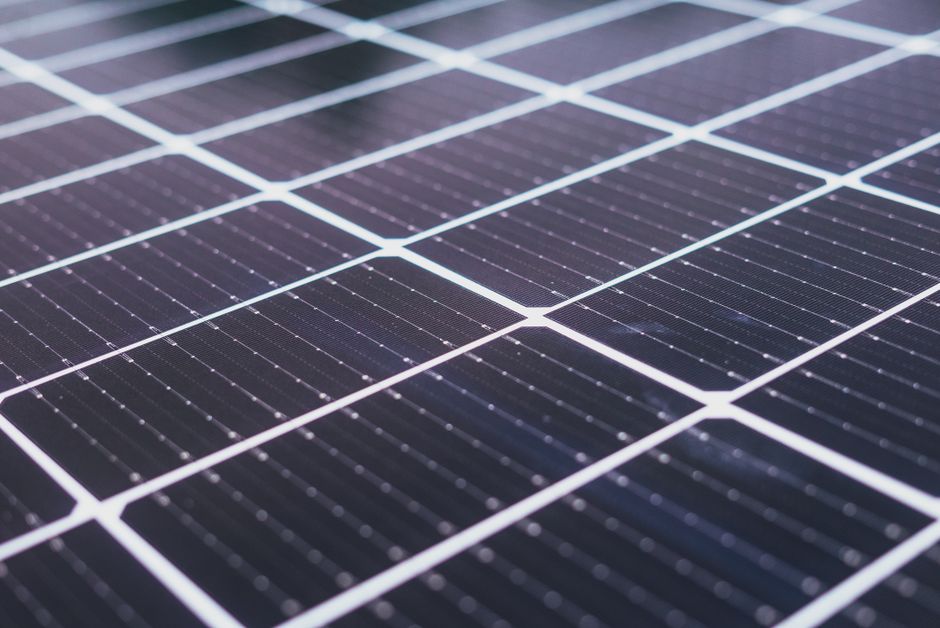
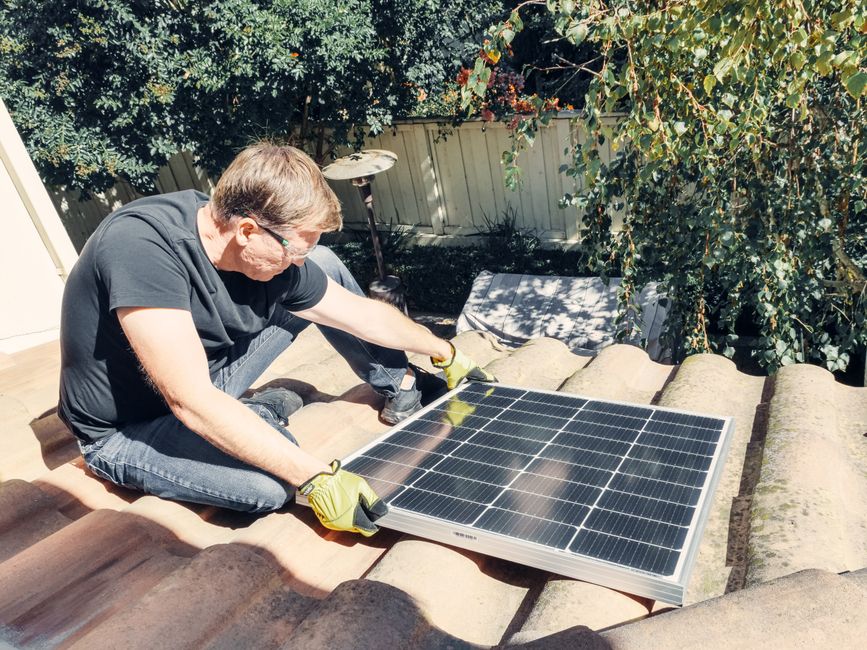
For off-grid, monocrystalline panels are the standard recommendation. They’re more efficient per square foot, which matters when you’re limited on roof or ground space. Current prices from reputable manufacturers run $0.70 to $1.10 per watt for the panels themselves. A 10 kW system needs roughly 25 to 30 panels depending on wattage per panel.
Charge Controller
The charge controller manages the flow of power from your panels into your battery bank. You’ll hear about two types: PWM (pulse-width modulation) and MPPT (maximum power point tracking). For any serious off-grid system, MPPT is the right choice. It’s more expensive but captures 20 to 30% more energy from your panels, and that gain compounds every single day.
Battery Bank
LiFePO4 has largely replaced lead-acid as the recommended chemistry for off-grid because of its deeper usable depth of discharge, longer cycle life (3,000 to 6,000 cycles versus 300 to 1,000 for lead-acid), and lower long-term cost per kWh stored. Brands like Battle Born, Signature Solar’s EG4, and Victron-compatible lithium options are popular in the DIY community. If you want to monitor your battery state of charge and consumption in real time, a home energy monitor like the Emporia Vue is a practical addition that pays for itself in better system management. (This site may earn a commission on qualifying purchases.)
Inverter/Charger
This converts DC power from your batteries into AC power your appliances use. For off-grid, an inverter/charger combo is the standard choice because it also handles charging your batteries from a backup generator when needed. Victron MultiPlus and Schneider Electric XW+ are industry standards that installers and DIYers both trust. Size your inverter to handle your peak surge load, not just your running load. A well pump starting up can pull 3x its running wattage for a fraction of a second, and your inverter has to handle that without tripping.
Permits, Codes, and the Part Nobody Talks About Enough
Off-grid doesn’t mean unregulated. Most jurisdictions still require permits for solar installations, especially when the system powers a permitted dwelling. The National Electrical Code (NEC) applies, specifically Articles 690 for solar and 702 for optional standby systems.
Here’s what I’ve seen trip people up repeatedly: they assume that because they’re not connecting to the utility, they don’t need to involve their local building department. Wrong. If you’re building a home or installing electrical systems in one, local code enforcement applies. A system installed without permits can create problems with your homeowner’s insurance, your ability to sell the property, and in some cases, your Certificate of Occupancy.
EnergySage’s market data shows that permitted systems also tend to be better-installed systems, which isn’t surprising. The permit process forces documentation of system design, and that documentation protects you.
Pull the permits. File the drawings. It’s a modest cost and a genuine protection.
Generators, Backup Plans, and Living With the Reality of Variability
Every experienced off-grid homeowner I know has a backup generator. Not because their solar system failed, but because December happens, and so does two weeks of overcast weather in the Pacific Northwest, and so does the first winter when you realize your load estimates were optimistic.
A propane or diesel generator sized at roughly 20 to 30% of your peak inverter capacity is a common pairing. You’re not running it constantly. You might run it for a few hours a few times a year during a stretch of bad weather to top off your batteries. A 6 kW to 10 kW generator paired with a 15 to 20 kWh daily load system is a reasonable starting point.
A few honest things about off-grid living:
You will become aware of your power consumption in a way grid-connected people never are. Running high-draw appliances like electric dryers, electric water heaters, and central AC becomes something you’ll think about deliberately. Most off-grid homes shift to propane for cooking, water heating, and space heating because thermal energy from propane is far cheaper than thermal energy from electricity stored in batteries. Solar panel cleaning matters more in off-grid systems because dirty panels mean reduced output, and reduced output has direct consequences on your battery state of charge. A good solar panel cleaning kit is a small investment that protects a large one. (This site may earn a commission on qualifying purchases.)
What a Complete Off-Grid System Costs in 2024
The Solar Energy Industries Association (SEIA) tracks installed solar costs across system types, and the numbers for off-grid reflect a meaningful premium over grid-tied systems because of battery storage. Here’s a realistic breakdown for a properly sized small home system:
| Component | Estimated Cost |
|---|---|
| Solar panels (8 kW) | $5,600 to $9,000 |
| MPPT charge controllers | $800 to $1,800 |
| LiFePO4 battery bank (20 kWh) | $10,000 to $18,000 |
| Inverter/charger (5 kW) | $1,500 to $3,500 |
| Racking, wiring, combiner boxes | $1,500 to $3,000 |
| Backup generator | $2,000 to $4,500 |
| Installation labor (if hired) | $5,000 to $12,000 |
| Permits and engineering | $500 to $2,000 |
| Total installed estimate | $26,900 to $53,800 |
The range is wide because system size, battery capacity, and whether you DIY any portion of the work make a massive difference. Many off-grid homeowners handle the design and sourcing themselves but hire a licensed electrician for the final connections and inspection sign-off. That hybrid approach can save $5,000 to $8,000 while keeping the system code-compliant and insurable.
If you’re ready to start educating yourself on the installation side, a DIY solar installation guide tailored to off-grid systems is worth having in hand before you start ordering equipment. (This site may earn a commission on qualifying purchases.)
Going off-grid isn’t for everyone, and there’s no shame in deciding that a grid-tied system with battery backup better fits your life and budget. But if independence, rural land, or genuine energy security is what you’re after, off-grid solar is a proven path. The technology has matured, the costs have come down substantially, and the community of people doing this well is larger than ever. Do the load math honestly, buy quality components, pull the permits, and you’ll be running your home on sunlight for decades.
Sources
- Emporia Vue
- solar panel cleaning kit
- DIY solar installation guide
- Solar Panel Cleaning Brush Kit with Extension Handle
- Emporia Smart Outlet with Energy Monitoring
Disclosure: As an Amazon Associate, we earn a small commission from qualifying purchases at no extra cost to you. We only recommend products that genuinely support the topics covered in this article.
- Renogy 200W Solar Starter Kit + 30A Charge Controller (~$169), Complete beginner solar kit, 200W monocrystalline panel, charge controller, and mounting hardware included.
- Renogy 2×100W Monocrystalline Solar Panels (~$99), Expandable 200W panel set from the most trusted DIY solar brand, used widely in off-grid and home backup systems.
Recommended Resources
Disclosure: As an Amazon Associate, we earn a small commission from qualifying purchases at no extra cost to you. We only recommend products that genuinely support the topics covered in this article.
- Renogy 200W Solar Starter Kit + 30A Charge Controller (~$169), Complete beginner solar kit, 200W monocrystalline panel, charge controller, and mounting hardware included.
- Renogy 2×100W Monocrystalline Solar Panels (~$99), Expandable 200W panel set from the most trusted DIY solar brand, used widely in off-grid and home backup systems.