 Morgan Johnson
You’re sitting at your kitchen table with two quotes in front of you. One is from a company pushing a grid-tied system with a shiny app and a promise of a $0 electric bill. The other is from a guy who specializes in off-grid builds and keeps talking about “energy independence” like it’s a constitutional right. Both of them made it sound simple. Neither of them actually explained the real tradeoffs. I’ve been in this exact conversation dozens of times, and what most people don’t realize is that choosing between off-grid and grid-tied solar isn’t just a technical decision. It’s a lifestyle decision, a budget decision, and depending on where you live, sometimes a legal one.
Let me break this down the way I wish someone had broken it down for me when I first started installing these systems.
What Grid-Tied Solar Actually Means (And What It Doesn’t)
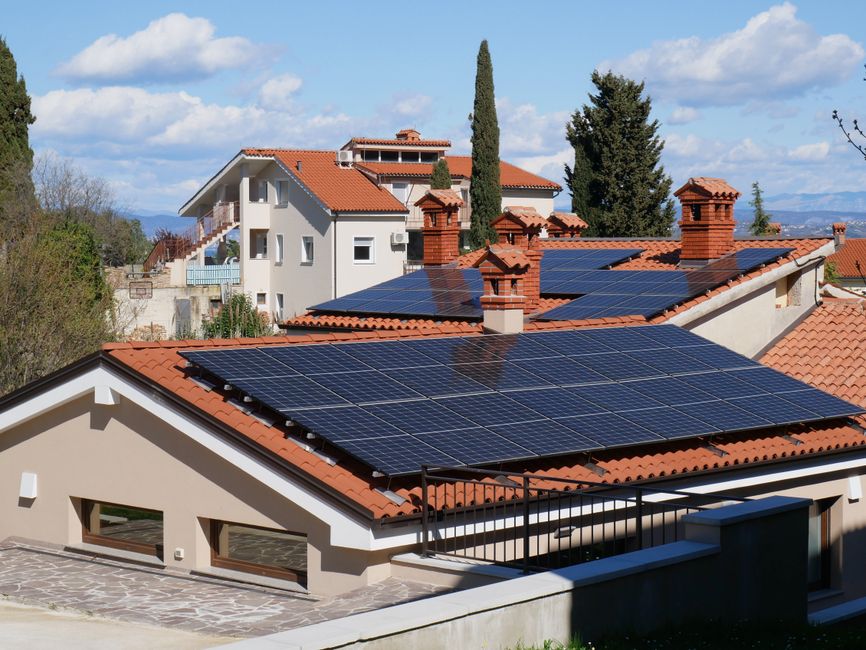
Grid-tied means your solar panels are connected to your local utility grid through a grid-tie inverter. Your home runs on solar when the sun is out. When production exceeds your usage, that excess gets pushed back to the utility and you earn credit for it through net metering. When the sun goes down or clouds roll in, you pull power from the grid like normal.
Here’s the part installers gloss over: a standard grid-tied system shuts off during a power outage. This is not a glitch. It’s a safety requirement under IEEE 1547, designed to protect lineworkers from backfed electricity while they’re repairing downed lines. So if you’re in a region that loses power a few times a year and you go grid-tied without battery backup, your panels will sit there doing nothing while your neighbor’s generator hums. I’ve watched homeowners in Florida hurricane country learn this the hard way.
The workaround is adding a battery backup, which gives you a “grid-tied with storage” hybrid system. This is increasingly popular and for most suburban households, it’s genuinely the sweet spot. You keep the economics of net metering, you get outage protection for critical loads, and you don’t have to oversize your battery bank to cover 100% of your needs. Companies like Enphase (IQ Battery) and Tesla (Powerwall 3) have made these hybrid setups cleaner and more installer-friendly than they were five years ago. A home energy monitor like the Emporia Vue or the Sense can help you understand exactly which loads to prioritize before you size your battery. (Disclosure: this site may earn a commission on purchases made through Amazon links.)
The economics of grid-tied are hard to argue with if you have decent net metering in your state. The Solar Energy Industries Association tracks net metering policies by state, and the differences are dramatic. California’s NEM 3.0 gutted export rates compared to what it used to offer. States like Texas have almost no mandated net metering at all. Know your state’s policy before you fall in love with any payback period estimate a salesperson hands you.
What Off-Grid Solar Actually Requires
Off-grid means exactly what it sounds like: no utility connection. Your solar array charges a battery bank, your loads run from that battery bank, and your inverter manages the flow. If your batteries run low and the sun doesn’t cooperate for a few days, you either have a generator backup or you start shedding loads.
I respect the appeal. There’s something deeply satisfying about knowing your home runs entirely on what falls on your roof. And for rural properties where the utility wants $15,000 to $50,000 to run a line to your land, off-grid isn’t just romantic. It’s financially obvious.
But here’s what the off-grid lifestyle actually demands. You need to size your system for your worst-case scenario, not your average usage. In most of the continental U.S., that worst case is a cloudy December week with short days and high heating loads. That requirement drives battery bank sizing up significantly. A household that uses 30 kWh per day might be perfectly served by 10 kWh of storage on a grid-tied hybrid, but going fully off-grid might require 20 to 40 kWh of usable battery capacity depending on your autonomy goals and climate.
Battery technology is genuinely changing this calculus. Lithium iron phosphate (LiFePO4) batteries have become the standard for serious off-grid builds because of their cycle life (often 3,000 to 6,000 cycles), thermal stability, and depth of discharge. Brands like Battle Born, Victron, and EG4 dominate the installer market right now. A solid off-grid battery bank is still a significant investment. Expect $8,000 to $20,000 or more just on storage for a full household system, before you count panels, charge controllers, inverters, and racking.
You’ll also need to think about your loads differently than you ever have before. Resistive heating loads like electric water heaters, electric baseboard heat, and clothes dryers are battery killers. Most serious off-grid homeowners either switch to propane for cooking and water heating or invest in a heat pump water heater to cut electricity draw.
Side-by-Side: Grid-Tied vs. Off-Grid vs. Hybrid
EASIEST Grid-Tied Solar Battery Back Up System | Anker SOLIX E10 · Martin Johnson - Off Grid Living on YouTube
| Factor | Grid-Tied (No Battery) | Hybrid (Grid-Tied + Battery) | Off-Grid |
|---|---|---|---|
| Upfront Cost | Lowest | Moderate to High | Highest |
| Payback Period | Fastest (5-10 years typical) | 8-14 years typical | Longer or N/A (no utility bill baseline) |
| Outage Protection | None | Yes, critical loads | Yes, full system |
| Dependence on Net Metering | High | Moderate | None |
| Monthly Utility Bill | Reduced or near-zero | Reduced or near-zero | $0 (no connection) |
| Generator Requirement | No | Optional | Strongly recommended |
| System Complexity | Low | Moderate | High |
| Best For | Grid-connected suburbs, good net metering | Most suburban/semi-rural homeowners | Rural land, no grid access, strong DIY mindset |
Here’s a direct comparison across the factors that actually matter to most homeowners:
| Factor | Grid-Tied (No Battery) | Hybrid (Grid-Tied + Battery) | Off-Grid |
|---|---|---|---|
| Upfront Cost | Lowest | Moderate to High | Highest |
| Payback Period | Fastest (5-10 years typical) | 8-14 years typical | Longer or N/A (no utility bill baseline) |
| Outage Protection | None | Yes, critical loads | Yes, full system |
| Dependence on Net Metering | High | Moderate | None |
| Monthly Utility Bill | Reduced or near-zero | Reduced or near-zero | $0 (no connection) |
| Generator Requirement | No | Optional | Strongly recommended |
| System Complexity | Low | Moderate | High |
| Best For | Grid-connected suburbs, good net metering | Most suburban/semi-rural homeowners | Rural land, no grid access, strong DIY mindset |
| Permit Complexity | Moderate | Moderate to High | Varies (often simpler in rural areas) |
If you’re in a suburb with a good net metering policy and your main concerns are reducing your bill and having backup power during outages, a hybrid system is almost always the most rational choice. If you’re on 10 rural acres with no utility line anywhere close, off-grid is the right conversation to be having.
The Permit and Utility Interconnection Reality
Grid-tied and hybrid systems require utility interconnection approval. Full stop. This isn’t optional, and it isn’t just bureaucratic nonsense. You’ll submit an interconnection application to your utility, they’ll review your system specs, and they’ll require a utility-grade isolation device (usually an external disconnect) before they approve your Permission to Operate. The timeline for PTO can be anywhere from three weeks to six months depending on your utility’s backlog and your local AHJ (Authority Having Jurisdiction).
The U.S. Department of Energy has a solid homeowner’s guide to the solar installation process that explains what to expect from interconnection and permitting without drowning you in jargon. I recommend reading it before you sign anything.
Off-grid systems don’t need utility interconnection by definition, which can streamline the permit process. In many rural jurisdictions, the permit requirements are lighter than what you’d face for a grid-tied system in a suburb. That said, don’t assume no interconnection means no permit. Most jurisdictions still require an electrical permit for any system with a battery bank above a certain size, and your inverter installation will likely need to pass inspection. HOA rules can also complicate off-grid installs if you’re in a planned community, which is rare but worth checking.
Red Flags to Watch For in Contractor Quotes
Whether you’re going grid-tied or off-grid, some installer behaviors should make you pump the brakes.
A contractor who doesn’t ask about your utility’s net metering policy before quoting you a payback period is guessing at best and misleading you at worst. Net metering rates completely change the return on investment math for grid-tied systems.
For off-grid quotes, be suspicious of any system sized based on your average monthly kWh without a conversation about your worst-case consumption and your location’s December solar hours. Sizing off average means you’ll be reaching for your generator every cloudy week.
Watch out for quotes that use string inverters only on a shaded roof. Microinverters or DC optimizers exist specifically to prevent one shaded panel from dragging down the output of your entire array. On a roof with any trees nearby, this matters a lot.
And if a solar company is pushing a 25-year loan with an interest rate above 9% while telling you the system pays for itself quickly, do the actual math before you sign. I’ve seen homeowners pay more in loan interest than they would have in electricity costs over the same period.
The right choice between grid-tied and off-grid isn’t about which one sounds more satisfying on paper. It’s about your location, your utility’s policies, your realistic budget, and how much hands-on involvement you actually want with your energy system. I’ve seen grid-tied systems with modest battery backup transform how families think about energy, and I’ve seen beautifully engineered off-grid systems give rural homeowners something no utility could offer them. Both paths work. The key is being honest about which one fits your actual life, not the idealized version of it.
Sources
- tracks net metering policies by state
- solid homeowner’s guide to the solar installation process
- Lutron Caséta Wireless Smart Dimmer Kit
- Solar Panel Cleaning Brush Kit with Extension Handle
- Emporia Smart Outlet with Energy Monitoring
Disclosure: As an Amazon Associate, we earn a small commission from qualifying purchases at no extra cost to you. We only recommend products that genuinely support the topics covered in this article.
- Renogy 200W Solar Starter Kit + 30A Charge Controller (~$169), Complete beginner solar kit, 200W monocrystalline panel, charge controller, and mounting hardware included.
- Renogy 2×100W Monocrystalline Solar Panels (~$99), Expandable 200W panel set from the most trusted DIY solar brand, used widely in off-grid and home backup systems.
Recommended Resources
Disclosure: As an Amazon Associate, we earn a small commission from qualifying purchases at no extra cost to you. We only recommend products that genuinely support the topics covered in this article.
- Renogy 200W Solar Starter Kit + 30A Charge Controller (~$169), Complete beginner solar kit, 200W monocrystalline panel, charge controller, and mounting hardware included.
- Renogy 2×100W Monocrystalline Solar Panels (~$99), Expandable 200W panel set from the most trusted DIY solar brand, used widely in off-grid and home backup systems.