 Tom Bradley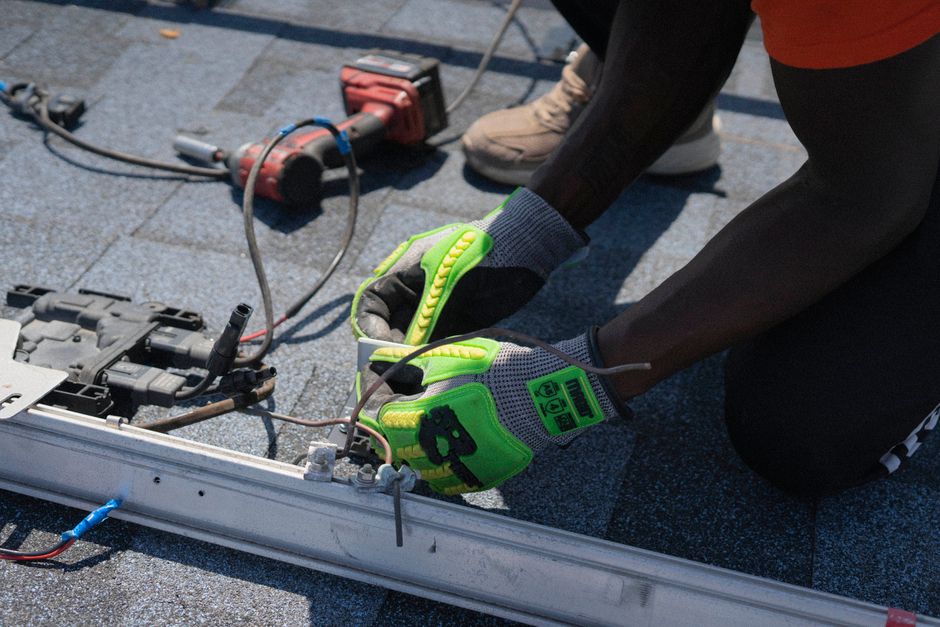
Most solar buyers don’t know that microinverters and power optimizers solve the same core problem in completely different ways, and the price difference will run you $1,500 to $3,000 on a typical residential install. That gap is real money, and the industry isn’t exactly rushing to help you understand when one is genuinely worth it versus when you’re paying for something that won’t move your needle.
Let me be direct about where I stand: power optimizers are the right call in a specific set of circumstances, and a waste in others. The problem is that installers often quote optimizer systems as a default because the margins are better and the pitch is easy. “More production, more monitoring, more safety” sounds great. It’s also sometimes just true. Knowing which situation you’re in is the whole game.
- Power optimizers add $0.20–$0.40/watt to system cost, totaling $1,500–$3,200 on a 7–8 kW system.
- They're worth it for shaded or multi-orientation roofs; overkill on clean south-facing installs.
- SolarEdge HD-Wave systems with optimizers outperform string inverters by 8–25% in partial shade, per NREL data.
- Optimizers carry 25-year warranties but add a component that can fail; microinverters eliminate the single-point inverter failure.
- Monitoring granularity (panel-level) is real value; don't dismiss it.
What a Power Optimizer Actually Does
A standard string inverter treats your entire array like a chain of Christmas lights: one underperforming panel drags down every panel behind it on the string. If you’ve got a 9 a.m. shadow from a chimney hitting two panels on a 12-panel string, your whole string dips to that shadow’s performance level until the shadow clears.
A power optimizer, like the SolarEdge P370 or P404, sits on the back of each panel and does DC-to-DC conversion before the power ever leaves the roof. Each panel is independently maximized via maximum power point tracking (MPPT). The optimized DC power then runs down to a single central inverter, which handles the DC-to-AC conversion. The result: that shadowed panel takes its own hit and nothing else.
This is meaningfully different from a microinverter (Enphase IQ8, for example), which does the full DC-to-AC conversion right at the panel. Microinverters eliminate the central inverter entirely. Both solve the string problem; they just do it at different points in the circuit and at different price points.
The Numbers That Should Drive Your Decision
Helpful resource: Govee WiFi Smart Plug with Energy Monitoring is a top-rated option for this. (As an Amazon Associate this site earns from qualifying purchases.)
EnergySage’s market data currently puts the national average optimizer system cost at about $3.20–$3.50/watt installed, versus $2.70–$3.10/watt for a comparable string system without optimizers. On a 8 kW install, that’s a $1,600–$3,200 premium. You’re going to need a real production gain, or a real risk factor, to justify that.
Here’s where it gets interesting. The National Renewable Energy Laboratory (NREL) has published modeling showing that in partial-shade scenarios, module-level power electronics (MLPEs, which include both optimizers and microinverters) can recover 8 to 25% of annual production compared to a string inverter without any shade mitigation. On an 8 kW system producing around 10,000 kWh/year at $0.15/kWh, that’s $120 to $375 back in your pocket annually. At the low end of that shade impact, your optimizer premium pays back in roughly 8 years. At the high end, under 5 years.
The wrinkle: that 8–25% range is wide because it depends entirely on your specific shading profile. I’ve seen systems in Phoenix where a palm tree hits one panel for about 40 minutes each morning. Optimizers made almost no measurable difference in annual production there. A house in suburban Atlanta with a mature oak creating intermittent coverage across three panels for four hours a day? Different story entirely.
Optimizer vs. Microinverter vs. String: Side by Side
Is Solar worth it? My Experience 2 Years Later · Smart Home Solver on YouTube
People ask me this constantly. Here’s the honest comparison, current as of August 2026.
| Feature | String Inverter Only | String + Optimizers (SolarEdge) | Microinverters (Enphase IQ8) |
|---|---|---|---|
| Typical installed cost (8 kW) | $21,600–$24,800 | $23,200–$28,000 | $25,600–$30,400 |
| Module-level monitoring | No | Yes | Yes |
| Shade tolerance | Low | High | High |
| Single point of failure | Yes (inverter) | Yes (inverter) | No |
| Inverter warranty | 10–12 years | 12 years (HD-Wave) | 25 years (IQ8) |
| Optimizer/microinverter warranty | N/A | 25 years | 25 years |
| Good for complex rooflines | No | Yes | Yes |
| Best suited for | Unshaded, simple roofs | Partial shade, budget-conscious | Max redundancy, heavy shade |
The microinverter premium over an optimizer system runs roughly $2,400 on an 8 kW install. For that price, you eliminate the single-point inverter failure risk and get a 25-year warranty on everything on your roof. If you’re planning to own the house for 20+ years, that math gets tighter than people realize.
When Optimizers Are Not Worth It
I’ll be direct: if you have a clean, unshaded south-facing roof with a simple rectangular layout, the case for optimizers is thin. You’re paying for insurance on a problem you don’t have.
A reader emailed me last year, right after getting quotes on a new build in central Colorado. His roof was nearly ideal: 6/12 pitch, true south, zero shade sources within 100 feet. One installer quoted him a SolarEdge system at $29,400; another quoted a Fronius Primo string inverter setup at $25,800. The installers couldn’t give him a concrete production difference estimate that held up to scrutiny because there wasn’t one worth showing. He went with the Fronius. Correct call.
Three scenarios where optimizers don’t pencil:
- Unshaded, single-orientation arrays. String inverters with a Fronius, SMA, or SolarEdge string option perform within 1–2% of optimizer systems here. That difference is within measurement uncertainty.
- Short ownership horizons. If you’re selling in 4 years, you won’t see payback on the premium.
- Budget-constrained systems where the alternative is fewer panels. More panels at lower cost-per-watt beats fewer optimized panels almost every time in terms of total production value.
The Monitoring Argument
One angle installers don’t lean into enough: panel-level monitoring has real diagnostic value regardless of shading. With a SolarEdge or Enphase system, you can log into your monitoring portal and see which panel is underperforming, which often means a loose connection, a failing diode, or early degradation. With a string inverter and no optimizers, you only see total system output. Finding a bad panel means dragging out a clamp meter.
I’ve caught a failing bypass diode on a three-year-old panel through monitoring before the homeowner noticed any production drop. The panel showed 11% below expected output consistently for two weeks while everything around it was fine. That’s genuinely useful. Whether it’s worth $2,000 to you is a personal call, but don’t dismiss it as just a marketing feature.
Sources
- National Renewable Energy Laboratory (NREL): Partial shade impact modeling on residential PV arrays; MLPE production gain data
- EnergySage Solar Marketplace: 2025–2026 installer quote data; average system cost by technology type
- SolarEdge Technologies HD-Wave Inverter Technical Specifications (2025): Optimizer compatibility, warranty terms, efficiency ratings
- Enphase Energy IQ8 Microinverter Data Sheet (2025): 25-year warranty documentation, shade tolerance specs
- Lawrence Berkeley National Laboratory “Tracking the Sun” report (2025): Installed cost benchmarks by system type and state
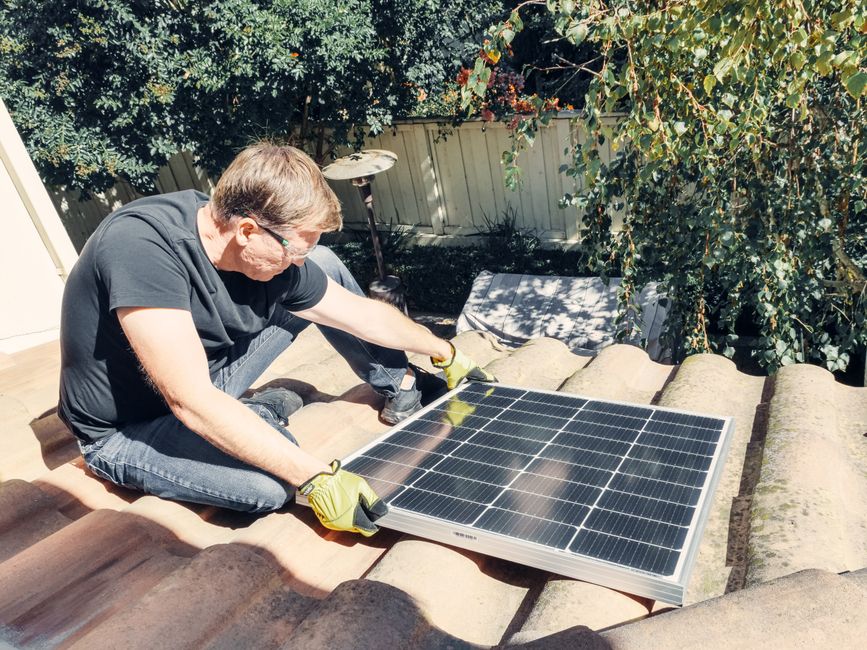
Photo: Florida Solar Fix via Pexels
Recommended Resources
Disclosure: As an Amazon Associate, we earn a small commission from qualifying purchases at no extra cost to you. We only recommend products that genuinely support the topics covered in this article.
- Renogy 200W Solar Starter Kit + 30A Charge Controller (~$169), Complete beginner solar kit, 200W monocrystalline panel, charge controller, and mounting hardware included.
- Renogy 2×100W Monocrystalline Solar Panels (~$99), Expandable 200W panel set from the most trusted DIY solar brand, used widely in off-grid and home backup systems.