 Morgan Johnson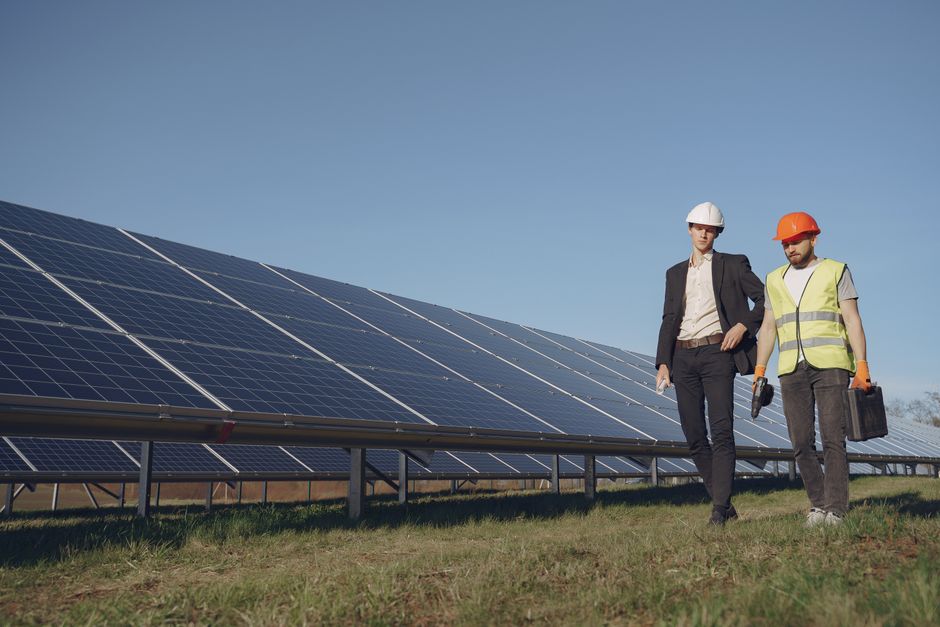
Forty-three percent of American households can’t put solar panels on their roof. That’s not a rounding error. That’s nearly half the country locked out of the most accessible residential energy technology in a generation, because they rent, live under a restrictive HOA, have too much shade, or own a roof that structurally won’t support a rack system. I used to think community solar was a consolation prize for people who couldn’t do the “real” thing. I was wrong, and the numbers changed my mind.
Shared solar, also called community solar, lets you subscribe to a share of an off-site solar array and receive credits on your utility bill for your portion of the power it generates. No panels. No roof work. No $25,000 upfront. And as of July 2026, the U.S. Department of Energy reports that community solar programs are now available in 43 states, up from just 19 states in 2018. That’s a massive shift in access, and most people signing up for electricity service have no idea these programs exist.
What “shared solar” actually means (and what you’re paying for)
Your subscription isn’t buying electricity directly. You’re buying the output of a certain number of panels, measured in kilowatts, at a project that might be 30 miles away. The solar farm sells power to the grid; your utility applies a credit to your bill based on what “your” panels produced that month.
The National Renewable Energy Laboratory found that community solar subscribers save between 5% and 15% on their electricity bills annually, depending on the state and the program structure. That’s not life-changing money on a $120 bill, but it’s real. On a $250/month bill in a high-rate state like Massachusetts or Connecticut, 10% savings is $300 a year without touching your house.
What most people don’t realize is that there are two basic pricing models:
Subscription/capacity model: You pay a fixed monthly fee for a set share of the array, and credits fluctuate with actual solar production. Great if production consistently covers or beats your fee.
Bill credit model: You pay nothing upfront; the program takes a discount off your utility credits (say, you receive credits worth $1.00 in utility value and pay $0.90 for them). This one’s simpler and more common for low-to-moderate income programs.
The devil is in the contract terms. I’ve reviewed a dozen of these agreements over the past few years, and the things that sting people are: automatic rollover clauses, exit penalties (sometimes as high as $250-$300), and caps on how many credits can apply per billing cycle. Read the term length. A 20-year contract for a renter is a bad deal regardless of the savings rate.
State-by-state availability changes everything
Helpful resource: Jackery Explorer 300 Portable Power Station is a top-rated option for this. (As an Amazon Associate this site earns from qualifying purchases.)
Minnesota was actually the first state to pass a community solar statute, back in 2013, and its program is still one of the best-run in the country. New York’s NY-Sun program has the highest subscriber count largely because utilities there are mandated to facilitate enrollment. Illinois launched its Community Renewable Energy Act (CREA) program in 2022 and has been playing catch-up fast.
If you’re in a state without a formal shared solar program, it doesn’t mean you have no options. Some utilities run their own opt-in green tariff programs that function similarly. Xcel Energy’s Renewable*Connect is one example. They’re usually less savings-focused and more about matching your consumption with renewable generation on paper, but they exist and they’re real.
| State | Typical savings | Average contract length | Exit penalty | Income-targeted program? |
|---|---|---|---|---|
| New York | 10–15% | 25 years (transferable) | None (NY-Sun) | Yes (Con Edison LMI) |
| Minnesota | 5–10% | 1–25 years | Varies by developer | Yes |
| Massachusetts | 10–15% | 20 years | $0–$300 | Yes (SREC-II LMI) |
| Illinois | 15–20% (LMI) | 10–20 years | Varies | Yes (designated blocks) |
| Colorado | 5–12% | 1–20 years | $0–$200 | Yes (income-qualified) |
| Maryland | 5–10% | 10–25 years | Varies | Yes (MCCSC) |
Low-to-moderate income (LMI) programs often offer steeper discounts, sometimes 20% or more off electricity costs, because federal and state incentives subsidize developer participation. If your household income is at or below 80% of area median income, always ask specifically about LMI blocks before signing a standard subscription. The savings gap is significant.
How the actual sign-up works
This is where I want to be specific, because the process varies by state and it trips people up.
Step one: Confirm your utility is a participating provider. Not every utility in a community solar state works with every project. Go to your state’s Public Utilities Commission website or the NREL’s community solar directory (nrel.gov) and search by zip code. This takes about 4 minutes and saves you from filling out an application for a program your utility won’t honor.
Step two: Check waitlists. Popular projects, especially in Massachusetts and New York, have waitlists running 6-18 months. A reader named Sandra from Rochester emailed me last spring to say she’d been on a waitlist for 14 months before getting her enrollment confirmation. That’s frustrating but not unusual. Sign up anyway. The credits are worth waiting for.
Step three: Compare developers, not just programs. The state program is the framework; the developer is who you’re actually contracting with. Developers like Ampion, Nexamp, Arcadia, and Solstice all operate in multiple states. Their contract terms, exit flexibility, and customer service quality differ considerably. Nexamp has a reputation for cleaner exit terms. Arcadia’s platform is slick and useful for tracking credits. I’d read reviews on the Better Business Bureau and Google before signing with anyone.
Step four: Submit your utility account number and recent bills. Most developers want 12 months of billing history to size your subscription correctly. Over-subscribing (buying more capacity than you use) is a problem in states that don’t allow credit banking or rollover. You’ll generate credits you can’t use. A good developer will flag this for you. If they’re pushing you toward the largest subscription without asking about your usage, that’s a red flag.
Step five: Wait for the interconnection and first credit. After you sign, there’s typically a 30–90 day gap before you see your first bill credit. This is normal. The utility has to link your account to the project’s output data. Don’t panic if month one looks the same as always.
Scenario: A Chicago renter, single-family apartment, $140/month electric bill in summer, $80 in winter. Subscribes to a 4 kW share through an Illinois CREA LMI block. Credits average $18/month, paid at a 20% discount. Net savings: roughly $216 annually. Not retirement money, but real. And she can cancel with 30 days’ notice under Illinois LMI terms.
Scenario: A homeowner in suburban Boston with a north-facing roof that made traditional solar impractical. Subscribed to a 6 kW share through Nexamp. Annual credits: $380. Annual cost of subscription: $325. Net gain: $55 the first year, expected to improve as her utility rate (currently $0.28/kWh with Eversource) continues climbing. Over a 20-year transferable contract, that spread is likely to widen.
Red flags worth taking seriously
I’ve seen a few patterns in problematic community solar contracts, and I don’t want to skip over this.
Watch for any developer who can’t clearly explain how credits appear on your bill. Ask them: “If I move, what happens?” A good answer is specific (transfer to new address if same utility, or cancel with X days notice). A bad answer is vague or redirected.
The U.S. Department of Energy explicitly warns on its homeowner solar resources page that subscription contracts binding you longer than 20 years with no transfer or exit provisions are worth having an attorney review before signing. That advice is good. Most developers have cleaned up their contracts as state regulators have pushed back, but long-term lock-ins with high exit penalties still exist.
Also: if someone is cold-calling you about community solar and creating urgency (“this block closes Friday”), slow down. Legitimate programs don’t expire over a weekend. The urgency is a sales tactic.
Sources
- National Renewable Energy Laboratory (NREL): Community solar market data and state program directory, 2025 update
- U.S. Department of Energy, Homeowner’s Guide to Going Solar: Program explainers and consumer protections overview
- Solar Energy Industries Association (SEIA): State community solar subscriber surveys, 2025 data
- Clean Energy States Alliance: State-by-state community solar program tracking report, 2025
- Illinois Power Agency, Community Renewable Energy Act program documentation, 2026 enrollment data
Recommended Resources
Disclosure: As an Amazon Associate, we earn a small commission from qualifying purchases at no extra cost to you. We only recommend products that genuinely support the topics covered in this article.
- Renogy 200W Solar Starter Kit + 30A Charge Controller (~$169), Complete beginner solar kit, 200W monocrystalline panel, charge controller, and mounting hardware included.
- Renogy 2×100W Monocrystalline Solar Panels (~$99), Expandable 200W panel set from the most trusted DIY solar brand, used widely in off-grid and home backup systems.