 Tom Bradley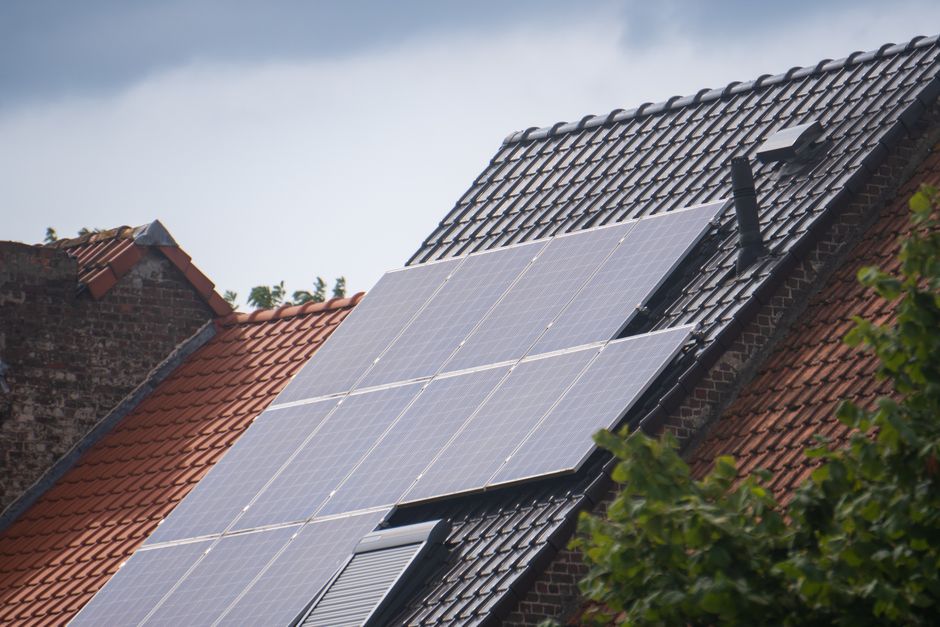
Thirty-eight states have some form of solar access protection on the books, and most homeowners have never heard of any of them.
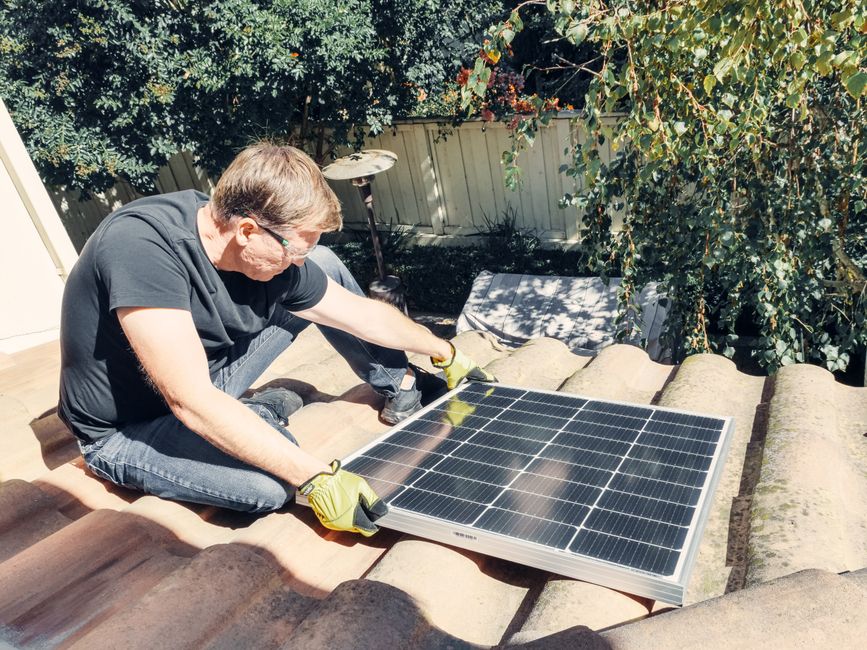
That number should matter to you before you sign a single contract. I’ve watched people spend $28,000 on a rooftop system, get it permitted and installed, and then spend two years fighting a neighbor whose oak tree slowly swallowed their south-facing array. A solar easement, properly recorded, could have prevented the whole mess. Most people don’t realize these laws exist at all, let alone that they vary so wildly from state to state that what protects you in California might do absolutely nothing in, say, Mississippi.
Let me walk you through what’s actually on the books, what the gaps are, and how to use this information before you write a check to any installer.
- 38 states have some solar access or easement law, but only a handful make protection automatic.
- Most states require you to separately record a solar easement deed , it doesn't attach to your property automatically.
- California and a handful of others limit HOA authority to block solar; most states do not.
- A shading loss of just 10% can cut annual output by up to 20% depending on your inverter type.
- Solar easement recording fees typically run $15–$75 at the county recorder's office, making it one of the cheapest protections you can buy.
The Difference Between “Solar Access Rights” and a Solar Easement
These two terms get conflated constantly, even by contractors who should know better. I made this mistake myself when I first transitioned from electrical work into solar consulting. I told a client in Arizona that her state’s solar access law “protected” her. Technically true, but practically misleading.
A solar access right is a statutory protection, usually meaning the state limits what local governments or HOAs can do to restrict your system. It doesn’t automatically stop your neighbor from planting a 60-foot sycamore. A solar easement is a recorded legal instrument, like a deed restriction, that grants you the right to receive unobstructed sunlight across your neighbor’s property. You negotiate it, you pay to record it, and it runs with the land.
The critical distinction: solar access rights are passive (they protect you from rules), solar easements are active (they protect you from physical obstructions). You often need both.
State-by-State: What You’re Actually Working With
Helpful resource: EG4 Battery Monitor Shunt for Solar Systems is a top-rated option for this. (As an Amazon Associate this site earns from qualifying purchases.)
Here’s where I’ll be blunt. The patchwork of state law here is genuinely maddening. EnergySage’s market data confirms that solar adoption correlates strongly with the strength of state-level access protections, which makes sense when you think about it from a risk perspective.
The states that tend to have the strongest frameworks share a few traits: they enable (not just permit) solar easements by statute, they limit HOA veto power over solar installations, and they provide a clear recording process at the county level.
| State | Easement Statute? | HOA Restriction Limited? | Automatic Protection? | Notes |
|---|---|---|---|---|
| California | Yes (Civil Code §714) | Yes, strong | No (must record) | HOAs can’t “effectively prohibit” solar |
| Colorado | Yes (C.R.S. 38-32.5-100) | Yes | No | Requires neighbor agreement and recording |
| Florida | Yes (§163.04) | Yes | No | Local gov’t can’t restrict; HOAs limited |
| Texas | Yes (Prop. Code §182) | Partial | No | HOAs can regulate aesthetics, not outright ban |
| New York | Yes (RPL §335-b) | Partial | No | Easement must be negotiated separately |
| Arizona | Yes (A.R.S. §33-439) | Yes | No | One of the earlier adopters, solid framework |
| Georgia | Yes (O.C.G.A. §44-9-20) | No | No | Easement available but HOA power is broad |
| Oregon | Yes (ORS 105.880) | Partial | No | Solar shade control districts exist in some areas |
| Illinois | Yes (765 ILCS 165) | Partial | No | Solar easements available; HOA law is murky |
| Mississippi | No | No | No | No statutory framework as of July 2026 |
| Alabama | No | No | No | Common law only; legally risky |
That “Automatic Protection?” column being “No” across the board is the thing that catches people off guard. Even in California, which has some of the strongest solar law in the country, you still have to go record an easement yourself if you want legal protection against a neighbor’s future landscaping decisions.
How to Actually Record a Solar Easement
The process is more straightforward than most attorneys will lead you to believe (and yes, I’ve had clients pay $800 in legal fees for something their county recorder’s office would have processed for $35).
The general steps, current as of July 2026:
1. Check your state’s enabling statute first. Pull the actual code. Most state statutes specify what an easement document must contain to be enforceable. California’s Civil Code §714 is relatively permissive; Colorado’s is more prescriptive about the solar “envelope” you need to define geometrically.
2. Survey your solar window. You need to define the angles. Think of it as a cone or wedge of sky your panels need access to, typically between 9am and 3pm solar time during the winter solstice (the lowest sun angle of the year). If you skip this step, the easement is nearly impossible to enforce because “sunlight” isn’t specific enough.
3. Negotiate with the affected neighbor(s). This is the part everyone dreads and usually isn’t that bad. In my experience, most neighbors agree once they understand (a) it doesn’t restrict their use of their property much and (b) there’s sometimes a small payment involved, usually $200–$500 as a goodwill gesture. I’ve seen it fail exactly once, with a neighbor who had plans to build a second story addition. That’s a legitimate conflict and no easement was going to happen there.
4. Draft and record the document. Use your state’s statutory requirements as a checklist. Get it notarized. Record it at the county recorder’s office. Fees typically run $15–$75 depending on the county.
Worked example: A homeowner in Fort Collins, Colorado installed a 9.6 kW system in spring 2025. Her neighbor’s lot to the south had two mature evergreens that weren’t yet tall enough to cause shading, but would be within eight years. She negotiated a solar easement covering a defined sky window, paid her neighbor $300, and recorded it for $42 at the Larimer County Clerk’s office. Total cost: $342. The trees are now restricted from growing past 14 feet within that defined arc.
Worked example: A client in metro Atlanta assumed Georgia’s solar easement statute protected him automatically. It does not. His neighbor planted a row of Leyland cypresses (which grow up to 3 feet per year, for the record) that began shading his array within two seasons. Because no easement was recorded, he had no legal remedy beyond a neighbor dispute. His estimated annual generation loss: 1,400 kWh, worth roughly $168/year at Georgia Power’s current rate, and accumulating every year going forward.
The HOA Problem Is Separate From the Easement Problem
I want to be clear about this because it’s where the most confusion lives. Solar easements protect you from neighbor obstructions. HOA restrictions are a different fight, governed by a different set of statutes.
California’s Civil Code §714 is the gold standard here: HOAs “shall not prohibit or restrict” solar energy systems, and any restriction that has “the effect of increasing the cost” by more than $1,000 or decreasing efficiency by more than 10% is unenforceable. Florida and Colorado have similar teeth. Texas is weaker on this, allowing HOAs to impose “reasonable” restrictions on placement. In states with no HOA solar protection statute (Mississippi, Alabama, and several others), your HOA’s CC&Rs are essentially the final word.
What most people don’t realize: even in strong-protection states, you usually have to formally submit your plans to the HOA and get written acknowledgment of their limitations before you install. An installer who says “don’t worry about your HOA, the state protects you” and tells you to skip that step is doing you a disservice. Document everything in writing.
A Note on “Solar Shade Control” Districts
Oregon pioneered this concept, and a few other states have followed in limited ways. Instead of individual easement negotiations, some municipalities designate solar shade control districts where local ordinances actively manage tree height and building height near established solar installations. Portland has used this framework since the early 1980s.
The U.S. Department of Energy’s Homeowner’s Guide to Going Solar mentions solar access as a key consideration before installation, though it stops short of the state-by-state legal detail you actually need. For that, the National Renewable Energy Laboratory’s state policy database is more useful, even if it requires a bit of digging.
Worked example: A homeowner in Portland’s Eastside Solar Shade Control District had a neighbor apply for a permit to build a second-story addition. Because the homeowner’s solar installation was registered with the city, the permit review automatically flagged the shading conflict. The addition was redesigned to preserve the solar window. No attorney required, no separate easement negotiation. That’s what a properly functioning solar shade ordinance looks like in practice.
Sources
- NREL State Solar Policy Database: National Renewable Energy Laboratory’s tracking of state-level solar access and easement statutes
- U.S. Department of Energy Homeowner’s Guide to Going Solar: Federal overview of solar considerations including access rights
- EnergySage Solar Market Intelligence Report: Market data on solar adoption by state and the policy factors that drive it
- California Civil Code §714: California’s solar easement and HOA restriction statute, the most-cited model in the country
- National Conference of State Legislatures (NCSL) Solar Rights Compilation: State-by-state legislative summary of solar access laws, updated periodically
Photo: Budget Bizar via Pexels
Recommended Resources
Disclosure: As an Amazon Associate, we earn a small commission from qualifying purchases at no extra cost to you. We only recommend products that genuinely support the topics covered in this article.
- Renogy 200W Solar Starter Kit + 30A Charge Controller (~$169), Complete beginner solar kit, 200W monocrystalline panel, charge controller, and mounting hardware included.
- Renogy 2×100W Monocrystalline Solar Panels (~$99), Expandable 200W panel set from the most trusted DIY solar brand, used widely in off-grid and home backup systems.