 Rachel Kim
Most solar advice assumes you’re sizing a system for a 2,400-square-foot house with a three-car garage, a hot tub, and two teenage kids who leave every light on. If you live in a small house, a cottage, a bungalow under 1,000 square feet, that advice is actively misleading. The numbers don’t scale down the way you’d expect, and some things actually get harder, not easier, when your roof is small.
I’ll be honest: I used to tell people that going solar on a small home was almost always worth it. I believed that. Then I started doing more consultations on sub-1,000-square-foot homes and kept finding the same uncomfortable pattern: payback periods stretched out longer than expected, roof space was the binding constraint rather than budget, and a surprising number of homeowners ended up oversized because contractors defaulted to their standard three-bedroom system package. So I went deep on this. What I found challenges a lot of what’s floating around out there.
- A small house typically needs 3-6 panels (1.2–2.4 kW) to cover most of its load, not the 10-panel systems often quoted.
- Roof size and shading matter more than budget on sub-1,000 sq ft homes , many have less than 300 sq ft of usable south-facing space.
- Payback period on a properly sized small system runs 6–9 years today, longer if the contractor oversizes you.
- The 30% federal tax credit applies regardless of system size , a $6,000 install still earns an $1,800 credit.
- Renters and those with HOA restrictions have viable options: community solar subscriptions can cut bills 10–15% with zero installation.
How Much Power Does a Small House Actually Use?
This is where most calculators fail you. The average U.S. household uses roughly 900 kWh per month, according to the U.S. Energy Information Administration. But a well-insulated 800-square-foot house with one or two occupants? My clients typically land between 300 and 550 kWh per month, sometimes lower if they’ve done basic efficiency upgrades. That’s less than half the national average.
Run that through the math. At 400 kWh/month in, say, central Texas with about 5.5 peak sun hours per day, you need roughly 2.4 kW of installed capacity to cover your usage. That’s six standard 400-watt panels. Six. Not sixteen.
What surprised me was how rarely installers actually do this calculation with the homeowner present. When I sit down with someone and pull up their last 12 months of utility bills (you can download these as a PDF from most utility portals), the usage number is almost always lower than what the installer quoted against. I’ve seen proposals for 8 kW systems on homes pulling 380 kWh a month. That’s not solar, that’s oversizing for profit margin.
The Roof Problem Nobody Talks About
Helpful resource: P3 Kill A Watt Electricity Usage Monitor is a top-rated option for this. (As an Amazon Associate this site earns from qualifying purchases.)
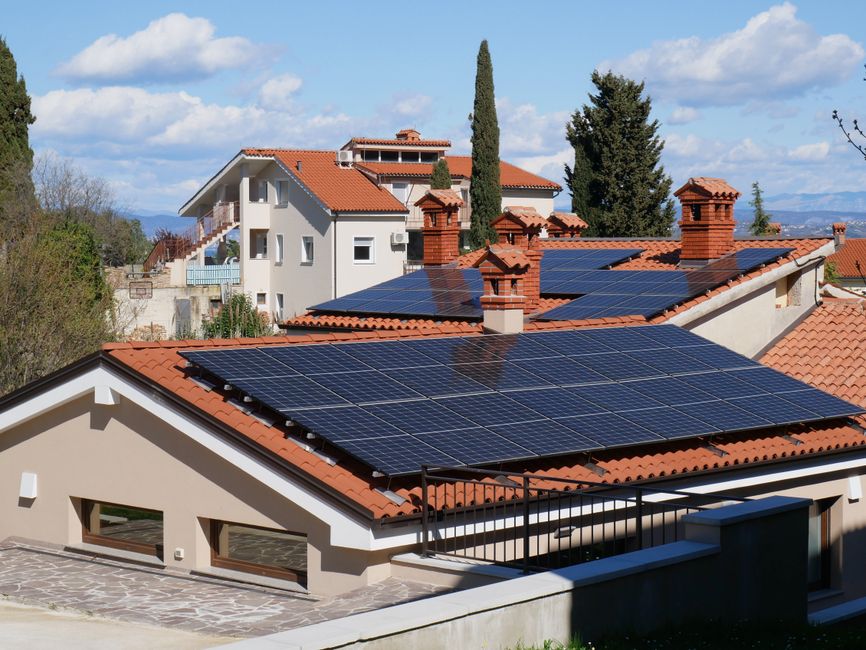
Here’s the constraint that bites small homeowners hardest. You might have only 400 square feet of total roof area, and after accounting for setbacks (most jurisdictions require 18 inches minimum from the ridge line and rakes, and that’s a real rule the inspector enforces during final), shading from neighboring trees or a chimney, and suboptimal orientation, your usable south-facing space might be 150–220 square feet.
A standard 400-watt panel runs about 22 square feet. Six panels need roughly 132 square feet. That’s workable. But if you need eight panels and only have 160 square feet, you’re suddenly in a conversation about high-efficiency panels.
Panels like the Maxeon 6 (430W, ~$480/panel retail) or LG’s NEON R line before LG exited the U.S. market pack more watts per square foot. Currently, Maxeon and REC Alpha panels are the two I’d seriously consider for constrained roofs. You’ll pay a 20–30% premium over standard Tier 1 panels, but the math can work out if roof space is truly your bottleneck. If it’s not, save the money.
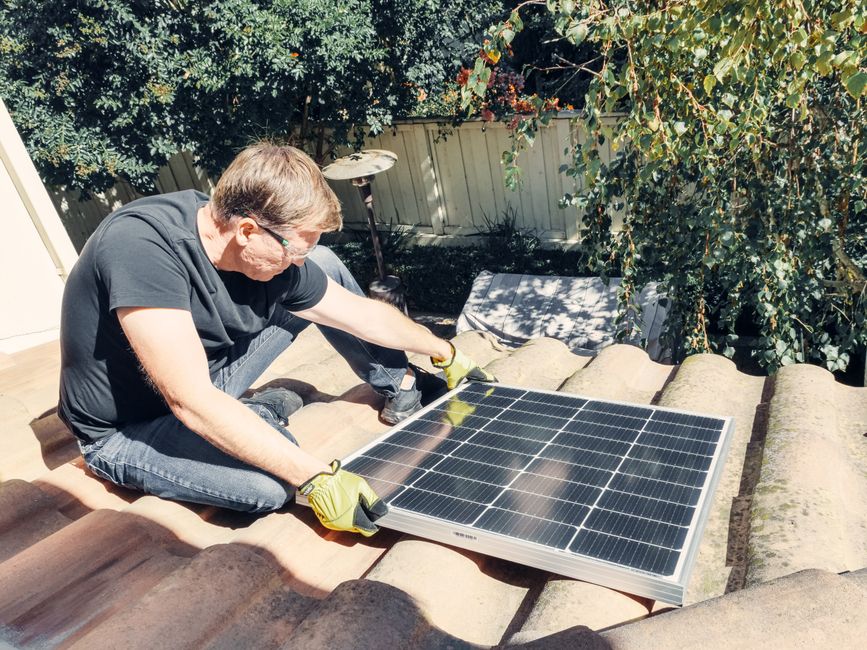
One thing I learned the hard way during my first solo commercial inspection: when you’re on the roof counting usable space, measure twice. The first time I estimated a client’s usable area from the ground using Google Earth, I was off by about 40 square feet because the dormer threw a shadow I didn’t account for. Use a tool like PVWatts or Aurora Solar for a sanity check, but nothing beats actually getting up there.
What a System Actually Costs at This Scale
As of August 2026, installed residential solar in the U.S. runs roughly $2.80–$3.40 per watt before any incentives, depending on your region and whether you’re dealing with a direct installer or a national sales company (which adds a margin). Here’s how that breaks down for small-home scenarios:
| System Size | Panels Needed | Gross Cost | After 30% Federal Credit | Approx. Annual Production | Est. Annual Savings |
|---|---|---|---|---|---|
| 1.6 kW (minimal) | 4 x 400W | $4,480–$5,440 | $3,136–$3,808 | 2,000–2,400 kWh | $240–$360 |
| 2.4 kW (typical small home) | 6 x 400W | $6,720–$8,160 | $4,704–$5,712 | 3,000–3,600 kWh | $360–$540 |
| 3.2 kW (larger or EV-charging) | 8 x 400W | $8,960–$10,880 | $6,272–$7,616 | 4,000–4,800 kWh | $480–$720 |
Savings assume $0.16–$0.18/kWh blended rate, net metering available. These figures are estimates based on industry averages and will vary by location, utility, and actual consumption.
A worked example that sticks with me: Maria in Austin, 912-square-foot bungalow, using 420 kWh/month average. Her installer quoted a 6.4 kW system at $19,200. I helped her reframe the scope, she went with a 2.8 kW system at $7,840, got the federal credit down to $5,488 out of pocket, and her system now covers about 82% of her usage. Payback is on track for 8.1 years. The 6.4 kW system would’ve sat generating excess power she’d sell back at roughly 4 cents/kWh (Austin Energy’s current buyback rate) rather than offset at 13 cents. The math was obviously wrong and the installer knew it.
Battery Storage: Tempting, But Do the Numbers First
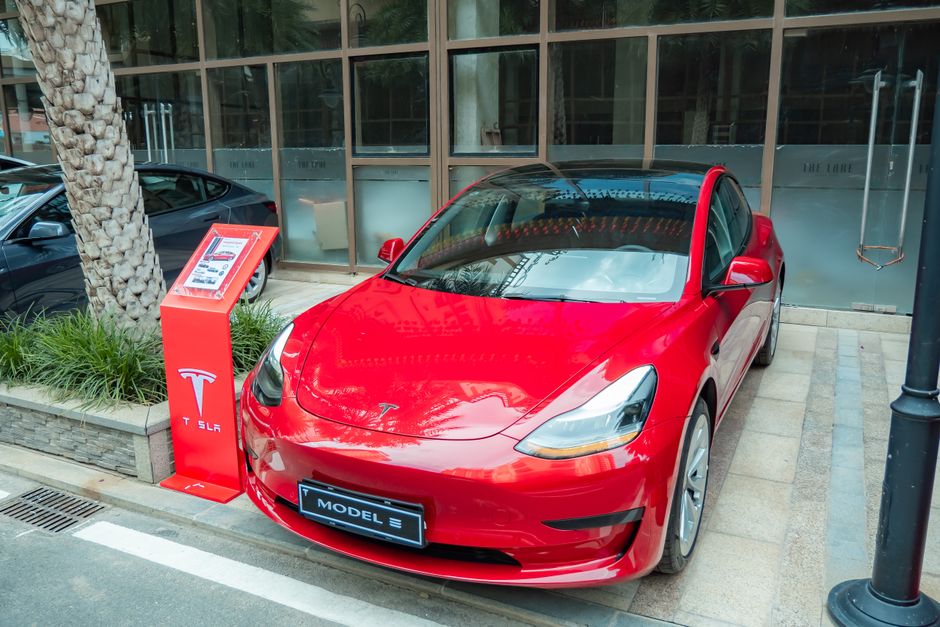
I get asked about batteries constantly for small homes, and I’ll give you the honest take: for most sub-1,000-square-foot homes that don’t experience frequent outages, a battery adds cost that’s genuinely hard to justify today. A Tesla Powerwall 3 runs about $9,500 installed. A Enphase IQ Battery 5P is closer to $7,000–$8,000 installed. For a home using 400 kWh a month, that’s roughly 13 kWh per day. One Powerwall stores 13.5 kWh. That covers you for maybe one night.
If you lose power twice a year for 12 hours each time, the math on $7,500 in battery hardware is rough. You’re essentially paying $3,750 per outage event for a few years until the calculus changes.
Where batteries do make sense on small homes: if you’re in a state like California or Nevada where net metering has been significantly reduced (California’s NEM 3.0 pays exported power at roughly 25–75% less than the retail rate, depending on time of day), then self-consuming your solar via a battery starts penciling out. The Solar Energy Industries Association (SEIA) has been tracking this shift state by state, and it’s genuinely changed the math in a handful of markets.
Permits, HOAs, and the Paperwork Nobody Warns You About
Small home doesn’t mean small bureaucracy. Every grid-tied system in the U.S. requires a permit, an inspection, and utility interconnection approval. The U.S. Department of Energy’s homeowner solar guide lays out the general framework, but the real variation is local.
In my experience, jurisdictions with online permit portals (most cities with populations over 100,000 now have these) run 2–4 weeks from application to approval. Rural counties can take 6–10 weeks, and a few still require paper applications submitted in person. I’ve had a project stall 11 weeks in rural East Texas because the county assessor’s office processed permits on Thursdays only, and two of those Thursdays fell on holidays. Knowing that ahead of time would have changed the project timeline completely.
HOA rules are their own thing. Since 2024, 26 states have solar access laws that limit (or outright prohibit) HOAs from blocking solar installations, though they can still regulate placement and aesthetics. If you’re in one of the remaining states without protections, you need to get HOA approval in writing before you spend a dollar with a contractor. I’ve seen two homeowners in Arizona get stuck mid-project because they assumed their HOA would approve and didn’t get it confirmed first.
For a home energy monitor (the site may earn a commission), the Emporia Vue 2 at around $79 is the one I recommend to small-home owners who want to baseline their actual consumption before sizing a solar system. Knowing your real usage pattern, not just your average kWh, can save you from a badly sized system.
Sources
- U.S. Energy Information Administration, Residential Energy Consumption Survey: Average household electricity use data, updated through 2025.
- Solar Energy Industries Association (SEIA): State-by-state net metering policy tracking and installation cost trends.
- U.S. Department of Energy, Homeowner’s Guide to Going Solar: Permitting, interconnection, and federal incentive overviews.
- NREL PVWatts Calculator: Used for production estimates based on location and system configuration.
- Lawrence Berkeley National Laboratory, Tracking the Sun report: Annual dataset on installed solar system costs by state, system size, and sector.
Photo: Ollie Craig via Pexels
Recommended Resources
Disclosure: As an Amazon Associate, we earn a small commission from qualifying purchases at no extra cost to you. We only recommend products that genuinely support the topics covered in this article.
- Renogy 200W Solar Starter Kit + 30A Charge Controller (~$169), Complete beginner solar kit, 200W monocrystalline panel, charge controller, and mounting hardware included.
- Renogy 2×100W Monocrystalline Solar Panels (~$99), Expandable 200W panel set from the most trusted DIY solar brand, used widely in off-grid and home backup systems.