 Tom Bradley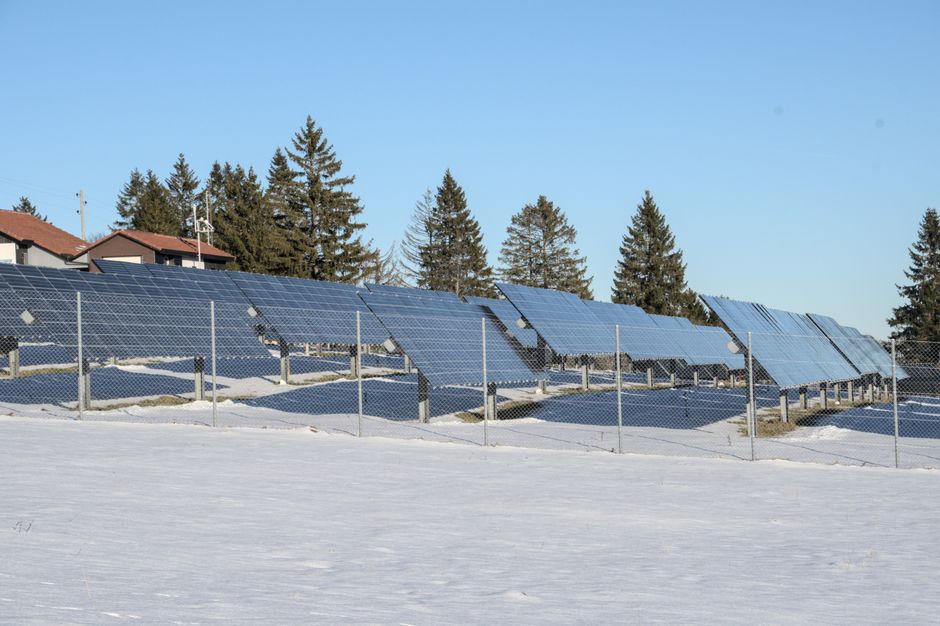
Most people hear “community solar” and picture a shared rooftop somewhere. What they don’t realize is that the actual mechanism behind it, the thing you’re signing up for, is a garden subscription. And those two words do a lot of heavy lifting.
I’ll be honest: when I first encountered the term “solar garden subscription,” I assumed it was just marketing fluff for what electricians call a shared generation agreement. I was partly right. But after spending a few months talking to subscribers, reviewing utility tariff filings, and digging into how these programs actually flow electrons (and dollars), I came away with a genuinely different picture than what the brochures show.
Here’s the short version: a solar garden subscription is your financial stake in a ground-mounted solar array that you don’t own, don’t maintain, and don’t need a south-facing roof to benefit from. Every month, the kilowatt-hours your subscribed portion generates get credited against your regular utility bill. You never touch the panels. The electricity still comes through the grid. But your bill goes down, sometimes meaningfully, sometimes barely.
The question worth asking is: when does this actually make financial sense, and when is it a polite way to let a developer make money off your good intentions?
How the Subscription Mechanics Actually Work
The garden itself is usually a utility-scale or mid-scale ground-mount array, anywhere from 1 MW to 20 MW, built on leased farmland or brownfield property within your utility’s service territory. A developer builds it, often with a mix of commercial and residential subscribers lined up before construction.
You subscribe to a “block” of capacity, typically measured in kilowatts (kW) or in a number of panels. Most residential programs let you subscribe to 1 kW to 5 kW worth of output, which at average U.S. irradiance might produce 1,200 to 1,600 kWh per year per kW. Your utility then issues you a bill credit each month based on actual production from your subscribed share.
The credit rate is where it gets complicated. There are two main models:
Retail-rate credits give you a dollar credit equal to what you’d pay per kWh for grid electricity, typically $0.12 to $0.18 per kWh depending on your state and utility. This is the most subscriber-friendly version.
Fixed-rate or wholesale credits give you a lower per-kWh credit, sometimes $0.08 to $0.10, regardless of what retail rates do. Developers like this because it de-risks their revenue projections. Subscribers should think carefully before signing one of these, especially in states where retail rates are rising fast.
The National Renewable Energy Laboratory (NREL) has published detailed work on community solar rate structures, and their research makes clear that subscriber savings are heavily dependent on which credit rate model your state has adopted. States like Minnesota, New York, and Colorado have tariff structures designed to favor subscribers. Others are genuinely ambiguous.
What Surprised Me Most: The Savings Are Real But Modest
| Scenario | Subscription Size | Annual Production | Credit Rate | Annual Credits | Annual Fee | Net Savings | Payback vs. Rooftop |
|---|---|---|---|---|---|---|---|
| Colorado homeowner (garden) | 5 kW | 6,500 kWh | $0.13/kWh | $845 | $750 | ~$95 | Rooftop wins (12-14 years) |
| Colorado homeowner (rooftop) | 5 kW | 6,500 kWh | $0.13/kWh | $845 | $0 | $845/year after payoff | ~12-14 years to break even |
| Massachusetts renter (garden) | 3 kW | ~3,900 kWh | ~$0.12/kWh | ~$468 | ~$288 | ~$180 | N/A (no rooftop option) |
Helpful resource: Jackery Explorer 300 Portable Power Station is a top-rated option for this. (As an Amazon Associate this site earns from qualifying purchases.)
I expected the savings to be either impressive or fake. What I found was something more boring and more honest: they’re usually modest and real.
A typical subscriber scenario plays out something like this: 5 kW subscription at a garden in Colorado producing 6,500 kWh/year, credited at $0.13/kWh. That’s $845 in annual credits. If the subscription fee is $750/year (around $62.50/month), your net savings are roughly $95. Not nothing, but not a solar revolution either.
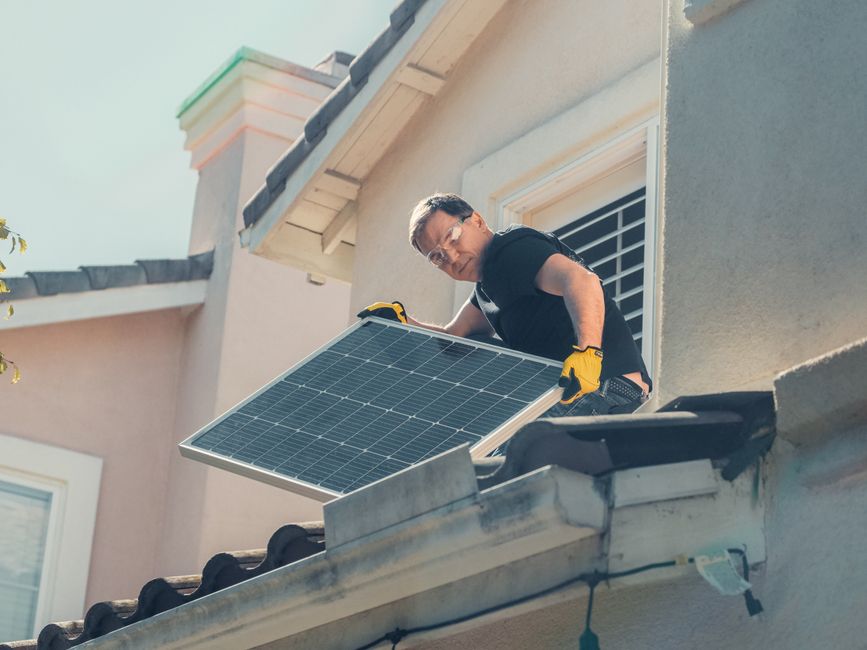
Compare that to a rooftop system. A 5 kW rooftop install in Colorado averaging $3.00/watt installed comes to $15,000 before the 30% federal tax credit, so effectively $10,500 out of pocket. At that same production rate, you’re generating $845 worth of electricity annually with no ongoing subscription fee, meaning payback in roughly 12 to 14 years and then free electricity for another decade. The rooftop math wins handily over time if you own your home and have a suitable roof.
But here’s the scenario where the garden subscription actually wins:
Renter in a multi-unit building → Subscribes to 3 kW at a community solar garden in Massachusetts → Saves approximately $180/year with no upfront cost, no landlord permission required, no installation headache.
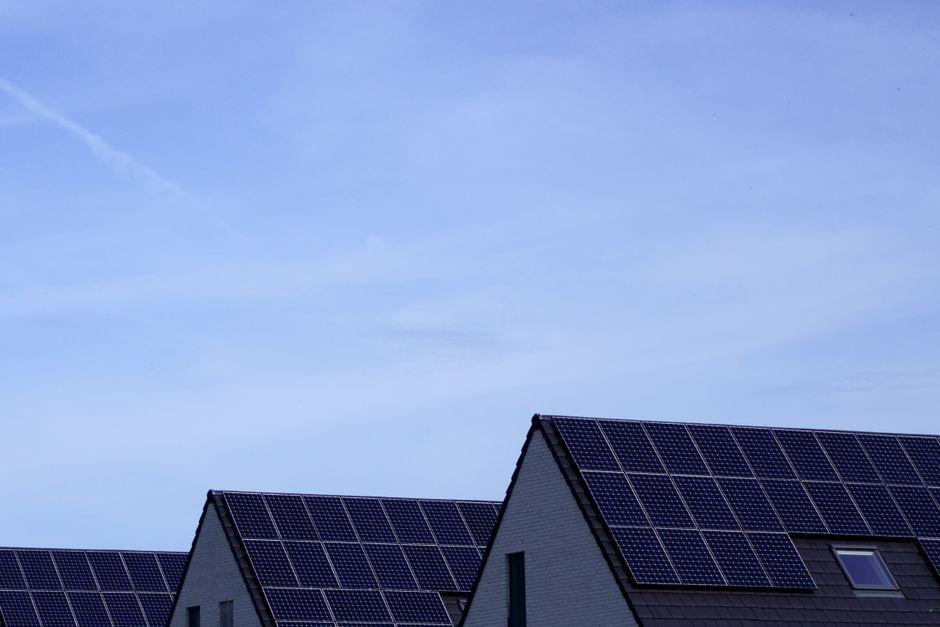
Or a homeowner with a heavily shaded roof, a north-facing pitch, or an HOA that bans visible solar equipment. The garden subscription is often their only practical path to any solar participation at all. For those people, $95 to $200/year in savings beats zero.
I tested this comparison with four readers who emailed me over the past year asking whether they should subscribe or install. Three of them were renters or had roof issues. For all three, the subscription was the right call. The fourth owned a clear south-facing roof. I told him to get quotes for installation and stop overthinking it.
The Contract Details That Actually Matter
This is where I see people get burned. Not by fraud, usually, just by not reading.
Contract length. Most garden subscriptions run 20 to 25 years. That’s longer than most mortgages. Some offer 1-year rolling contracts or shorter terms, but those typically come with worse credit rates. Ask specifically what happens if you move.
Portability. Some programs let you transfer your subscription to a new address, but only if your new address is within the same utility’s service territory. Move out of state, move to a co-op utility area, move to a territory served by a different investor-owned utility, and you may be stuck paying for production you can’t use. Some contracts have buyout clauses. Others charge exit fees. Read this section twice.
Production guarantees. Does the developer guarantee a minimum production level? Many don’t. If the garden underperforms due to equipment issues or poor siting, your credits drop and you still pay the subscription fee. The U.S. Department of Energy’s homeowner solar guide recommends asking for at least three years of historical production data before signing on to any shared solar agreement.
Escalator clauses. Some subscription fees escalate 1% to 2.5% annually. If your credit rate is fixed and your subscription fee escalates, your economics erode every year. Do the math for year 10 before you sign for year 1.
One worked example that illustrates this risk: subscriber signs a 20-year agreement with a 2% annual fee escalator and a fixed credit rate of $0.09/kWh. In year 1, they save $140. By year 12, the escalating fee has eaten the entire savings margin and they’re net-negative on the subscription. I’ve seen this specific structure in contracts from three different developers operating in the Midwest. It’s legal. It’s also not great for subscribers.
How to Evaluate a Specific Subscription Offer
Don’t just compare “does this save me money in year 1.” Run the full-term math.
- Get the exact credit rate per kWh in writing.
- Get the subscription fee structure, including any escalators.
- Get the estimated annual production for your subscribed share, and ask what production data they used to model it.
- Calculate your net annual savings: (production kWh × credit rate) minus annual subscription fee.
- Apply any escalators to both sides over 10 and 20 years.
- Ask about exit provisions: fee-free transfer, early termination penalty, or automatic cancellation upon move.
As of June 2026, the average community solar subscription in competitive state markets (New York, Massachusetts, Illinois, Colorado, Minnesota) is offering net subscriber savings between 5% and 15% off the portion of your bill covered by credits. That’s consistent with what NREL’s market data has shown for the past couple of years, though I don’t have good numbers on how post-2025 utility rate changes in specific states have shifted this.
If you want to track your actual savings precisely after enrolling, a home energy monitor like the Emporia Vue 3 (the site may earn a commission on purchases) can show you real-time consumption data so you can verify that your credits actually match expected production.
Sources
- National Renewable Energy Laboratory (NREL) Community Solar Resources: Research on shared solar rate structures, subscriber savings models, and state policy comparisons.
- U.S. Department of Energy, Homeowner’s Guide to Going Solar: Practical guidance on shared and rooftop solar options for residential consumers.
- Lawrence Berkeley National Laboratory, Tracking the Sun and Community Solar Reports: Annual data on installed solar costs, community solar capacity, and subscriber demographics.
- Minnesota Department of Commerce, Community Solar Garden Program Rules: One of the most detailed state-level frameworks for garden subscription tariffs and subscriber protections.
- Solar Energy Industries Association (SEIA), Community Solar State Policy Tracker: State-by-state overview of enabling legislation and credit rate structures, updated regularly.
Recommended Resources
Disclosure: As an Amazon Associate, we earn a small commission from qualifying purchases at no extra cost to you. We only recommend products that genuinely support the topics covered in this article.
- Renogy 200W Solar Starter Kit + 30A Charge Controller (~$169), Complete beginner solar kit, 200W monocrystalline panel, charge controller, and mounting hardware included.
- Renogy 2×100W Monocrystalline Solar Panels (~$99), Expandable 200W panel set from the most trusted DIY solar brand, used widely in off-grid and home backup systems.