 David Torres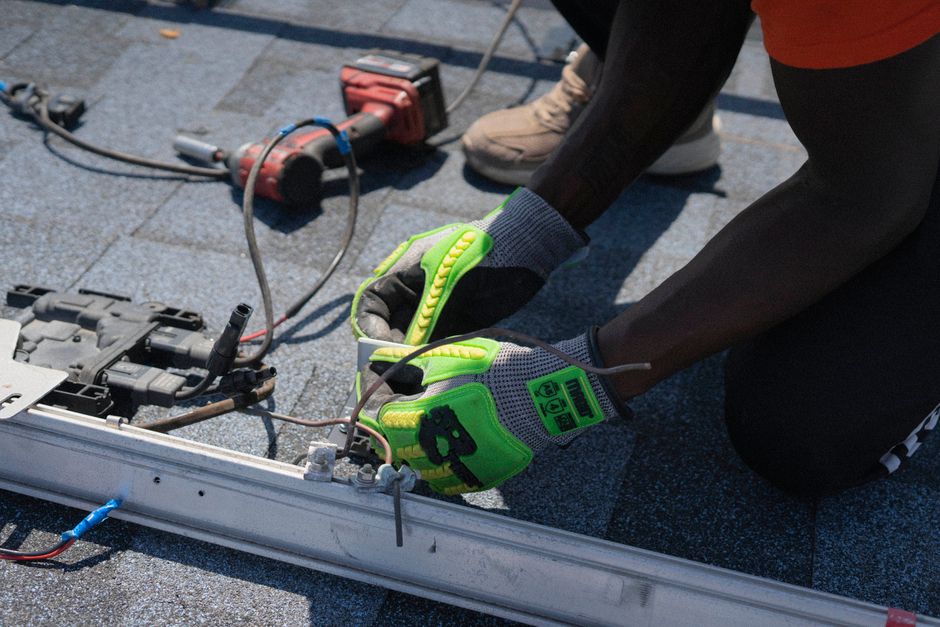
Most solar articles tell you to “check reviews” and “get three quotes.” That’s not wrong, it’s just uselessly vague. The homeowner who gets burned by a bad installer isn’t the one who skipped the reviews. It’s the one who didn’t know what to look for after the reviews.
Here’s what I wish someone had told me before I saw my first nightmare installation: the solar industry has almost no meaningful barrier to entry. In most states, a general electrical contractor’s license is technically sufficient to pull a solar permit. That’s a problem, because pulling wire in a panel and designing a grid-tied 10 kW system with optimizers and a battery backup are not the same skill set.
- NABCEP PV Installation Professional certification is the single most reliable credential to require from your installer.
- A solar contractor should carry at least $1,000,000 in general liability and $1,000,000 in workers' comp, verify directly with their insurer, not just their word.
- Pulling a permit history for a contractor takes about 10 minutes at your county building department and is one of the highest-signal checks you can do.
- Salespeople and installers are often different companies; get the full legal name of the entity that will physically install and the entity that will warranty the work.
- Complaints filed with your state contractor's licensing board are public record and rarely show up in Google reviews.
The Only Credential That Actually Matters
The North American Board of Certified Energy Practitioners (NABCEP) PV Installation Professional credential is the industry’s gold standard. I say “the only one that matters” not because others are worthless, but because it’s the one thing I’d require before a conversation got any further. NABCEP requires documented field hours (minimum 58 hours of hands-on work), passing a proctored exam, and continuing education for renewal. It’s not a paid membership badge.
To verify: go directly to NABCEP’s website, click the “Verify a Certificate Holder” lookup, and type the installer’s name or ID number. Takes 90 seconds. If a salesperson gives you a name that doesn’t pull up, or says “our company is NABCEP certified” (companies aren’t, individuals are), that’s a tell. I’ve seen this claim used loosely enough times that I now consider it a yellow flag if they can’t produce an individual’s name to look up.
Some states layer additional requirements on top. California requires a C-46 Solar contractor license or a C-10 Electrical license. Florida requires a certified solar contractor (CMC or CVC specific to solar) or a licensed EC. Texas is one of the more permissive states: an TECL is required but solar-specific training is not. Know your state’s rules. The National Renewable Energy Laboratory (NREL) publishes a state-by-state licensing requirements summary that’s worth bookmarking.
Pulling License and Permit Records Yourself
Helpful resource: Emporia Smart Outlet with Energy Monitoring is a top-rated option for this. (As an Amazon Associate this site earns from qualifying purchases.)
This step takes maybe 20 minutes total and most homeowners skip it entirely. Don’t.
Every licensed contractor in your state has a license number. Your state’s contractor licensing board has a public lookup (search “[your state] contractor license lookup”). Enter their license number, not just their name. What you’re looking for: license status (active, suspended, expired), issue date, any disciplinary actions, and whether the license type actually covers solar electrical work.
The permit history check is separate and, honestly, more informative. Call or visit your county building department. Give them the contractor’s business name. Ask how many solar permits they’ve pulled in the past two years, and how many passed final inspection on the first attempt. Most building departments will tell you. A contractor who fails final inspection repeatedly is either cutting corners or doesn’t know the code. I’ve called building departments where the clerk volunteered “oh, we know that company, they have a lot of re-inspections” without me even asking.
One more check: the Better Business Bureau is mostly noise, but your state attorney general’s office and your state contractor licensing board both maintain complaint databases that are not reflected in Google reviews. A contractor can have 200 five-star Google reviews and a suspended license. Both things can be true.
Insurance: Don’t Trust the Certificate, Verify It
Every legitimate contractor will hand you a Certificate of Insurance (COI). Here’s what I got wrong for years: I thought receiving a COI was sufficient. It isn’t. COIs can be outdated, forged, or list coverage that has since been cancelled.
The correct move is to ask the contractor to have their insurer send the COI directly to your email, with you listed as the certificate holder. This is a standard request and a legitimate contractor will do it without hesitation. One who pushes back or claims the insurer won’t do that is not someone you should be writing a check to.
What minimums to require, as of August 2026:
| Coverage Type | Minimum I’d Require | Why |
|---|---|---|
| General Liability | $1,000,000 per occurrence | Covers property damage, roof penetration errors, falling equipment |
| Aggregate Liability | $2,000,000 | Total season/project cap; some small firms carry only $500K aggregate |
| Workers’ Compensation | $1,000,000 | If a laborer falls off your roof without it, you could be liable |
| Auto/Commercial Vehicle | $500,000 | Equipment vans, trailers, mounting racks on public roads |
| Completed Operations | Check it’s included | Covers defects discovered after installation is “done” |
A homeowner in Sacramento contacted me last year after a crew member fell from her roof during installation. The installer’s workers’ comp had lapsed two months earlier. Her homeowner’s insurance ultimately covered the medical bills, but her premium jumped $340 a year for five years. That’s a $1,700 lesson in not verifying the active status of a COI.
The Company Structure Problem
This one catches people off guard. You might sign a contract with “SunTech Solutions LLC,” but the actual installation is subcontracted to “Valley Roofing & Solar” who uses day labor hired through a staffing agency. All three entities might be unfamiliar to your local building department.
Ask these questions in writing before you sign anything:
- What is the full legal name of the company that will install the system on my roof?
- Are you using any subcontractors? If yes, what are their license numbers?
- Who holds the warranty on labor, and is that entity the same as the equipment warranty holder?
The warranty question is one of the most consequential. Panel manufacturers like Qcells (currently offering 25-year product warranties) and Enphase (10-year equipment warranty, extendable to 25) cover their hardware. But the workmanship warranty, the one covering whether someone drilled your rafters correctly, lives with the installer. If the installer goes out of business, that warranty is toilet paper. Ask directly: “If your company closes, what happens to my workmanship warranty?” Some larger installers use third-party warranty insurance. Get the name of the insurer.
EnergySage’s market data shows that installer bankruptcy or business closure is a real and recurring issue. Smaller installers who spiked in capacity during the 2020-2023 installation boom have continued exiting the market. It’s worth asking how long the company has been operating and how many systems they’ve installed in your specific county.
Red Flags in the Sales Process
A bad installer often reveals itself before you ever see a proposal. Some patterns I’ve seen reliably correlate with problems downstream:
Salespeople who can’t answer basic technical questions about your system are a warning. Not “what are your inverter options?” level basic. I mean: “Where will the conduit run from the roof to the panel?” and “How will you handle my attic insulation where the penetration goes?” If the salesperson stares blankly and promises to “have the tech follow up,” they’re selling you something they don’t understand.
High-pressure close tactics (“this pricing is only good until Friday,” “we only have two slots left in your area”) are not exclusive to bad companies, but they correlate. A contractor confident in their quality doesn’t need to manufacture urgency. I’ve had clients call me panicked over a “one-day pricing window” that, when the client called back two weeks later, was still available.
Extremely low bids deserve scrutiny, not celebration. A full 8 kW system installed in a competitive market currently runs $22,000 to $30,000 before incentives, depending on equipment tier, roof complexity, and labor costs. A bid at $16,000 for the same scope isn’t a great deal unless you understand specifically why: lower-tier panels, smaller inverter, non-NABCEP labor, or some combination. Ask. Don’t assume generosity.
Scenario: Homeowner in Phoenix gets four bids ranging from $24,400 to $28,900 and one outlier at $17,200. She asks the outlier to walk her through the equipment spec. The inverter was a lesser-known string inverter brand with no U.S. service center. The panels were Tier 3. The labor warranty was 1 year. The other bids were using Enphase IQ8 microinverters and Qcells Q.PEAK DUO panels with 10-year workmanship warranties. The outlier bid wasn’t fraud, it was a different product. She chose a mid-range bid at $25,800 and the math penciled out correctly over a 12-year payback window.
Sources
- NABCEP (North American Board of Certified Energy Practitioners): Official NABCEP credential lookup and PV Installation Professional requirements.
- National Renewable Energy Laboratory (NREL): State-by-state solar contractor licensing summary and market research.
- EnergySage Market Data: Solar installer pricing benchmarks, quote comparisons, and market trends.
- National Electrical Contractors Association (NECA): Electrical licensing standards by state relevant to solar work.
- Solar Energy Industries Association (SEIA): Industry data on installer market trends, company closures, and consumer protections.
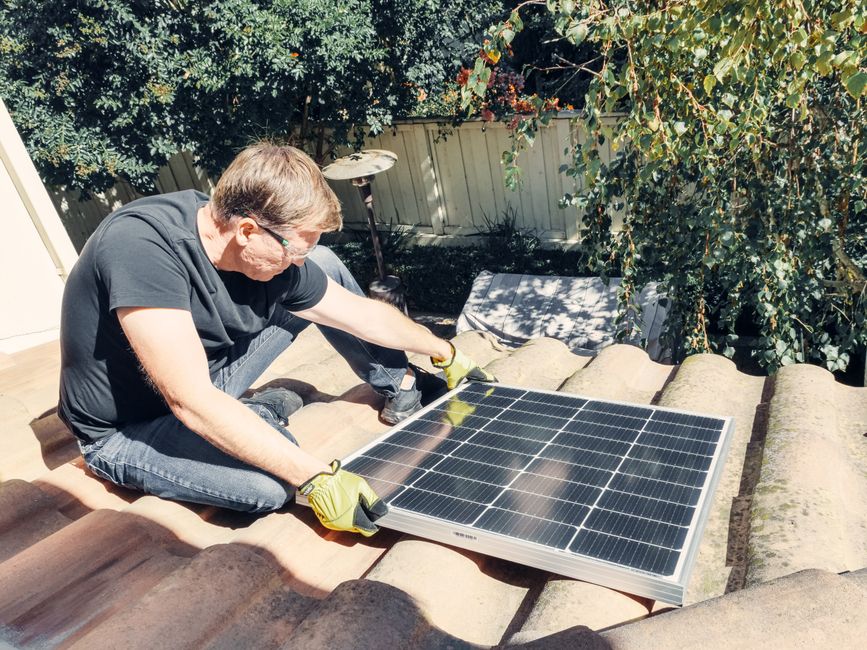
Photo: Florida Solar Fix via Pexels
Recommended Resources
Disclosure: As an Amazon Associate, we earn a small commission from qualifying purchases at no extra cost to you. We only recommend products that genuinely support the topics covered in this article.
- Renogy 200W Solar Starter Kit + 30A Charge Controller (~$169), Complete beginner solar kit, 200W monocrystalline panel, charge controller, and mounting hardware included.
- Renogy 2×100W Monocrystalline Solar Panels (~$99), Expandable 200W panel set from the most trusted DIY solar brand, used widely in off-grid and home backup systems.