 Rachel Kim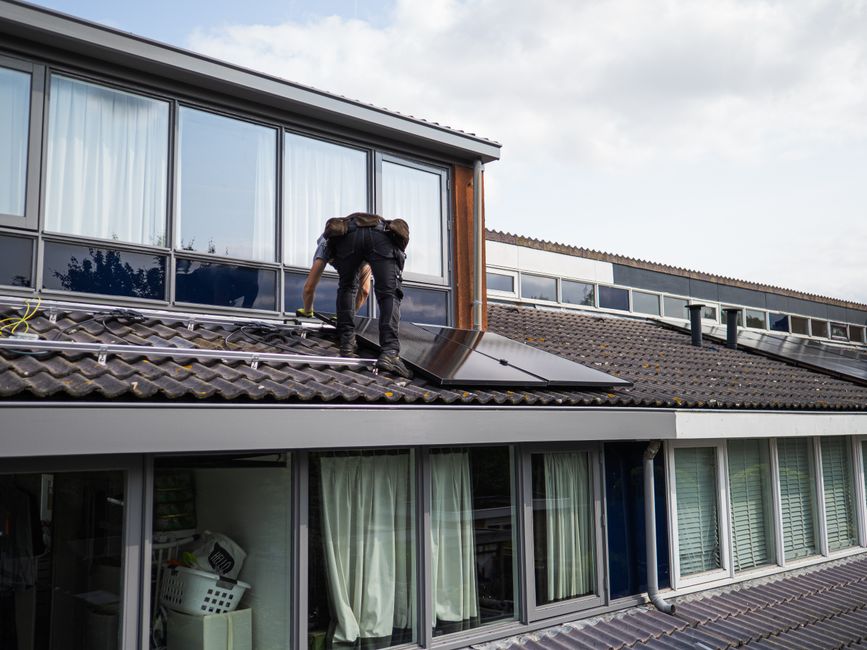
Most coverage of the post-2025 solar market treats the 30% federal tax credit like it’s simply gone. Buy a system now, get nothing. That’s wrong, and the confusion is costing homeowners real money right now.
Here’s what actually happened: the Section 25D residential tax credit expired December 31, 2025. If you buy and own your solar system outright in 2026, you get zero federal credit. That eliminated an average $7,500 savings for owner-purchasers. But the Section 48E commercial Clean Electricity Investment Credit, which applies when a solar company owns the equipment and leases it to you, is still alive. The company claims the 30%, and competition requires them to pass most of it to you through lower monthly rates or reduced buyout prices. Same sunshine, different tax code.
The catch is timing. As Electrek reported on June 4, 2026, the practical deadline for locking in a 48E-eligible lease was July 4, 2026, the date by which a project needed to “begin construction” to qualify, with four years to reach completion. Projects fully placed in service by end of 2027 are also eligible. If you’re reading this in mid-2026, the construction-start window is essentially closed for new shoppers, but the placed-in-service pathway is still real for deals already in motion.
- The 30% federal solar credit expired for homeowner-purchased systems on December 31, 2025.
- Leases and PPAs let solar companies claim Section 48E (30%) and pass savings to you.
- Construction had to begin by July 4, 2026; systems placed in service by end of 2027 still qualify.
- The solar-plus-battery bundle is now the default lease pitch, with storage attachment at 45% in Q1 2026.
- Wood Mackenzie projects 5% market contraction in 2026, then 12% average annual growth for four years.
Lease vs. Buy: What the Math Actually Looks Like Now
The tax credit shift genuinely reshapes the own-vs-lease comparison. Before 2026, buying almost always won on long-term cost because you captured the 25D credit yourself. Now the calculus is different.
| Factor | Purchase (2026) | Lease / PPA (2026) |
|---|---|---|
| Federal tax credit | $0 (25D expired) | ~30% passed through via 48E |
| Typical upfront cost | $18,000-$25,000 | $0-$2,000 |
| Monthly savings | Immediate full offset | Partial (lease payment nets against bill) |
| Home sale complexity | Clean title transfer | Lease assignment required |
| System ownership at end | You own it | Buyout option or removal |
| Maintenance responsibility | Yours | Installer’s |
Buying still wins over 25 years if you finance at a decent rate and your installer isn’t cutting corners. But the 25D expiration closed the gap significantly. For homeowners who can’t or won’t take on debt, the lease structure now delivers something real, not just a convenience trade-off.
The Battery Question Is No Longer Optional
Helpful resource: Jackery Explorer 300 Portable Power Station is a top-rated option for this. (As an Amazon Associate this site earns from qualifying purchases.)
Something else happened quietly in Q1 2026: batteries stopped being an add-on and became the default package. The solar-plus-storage attachment rate hit 45% in Q1 2026, up from 38% just a year prior, according to the ACP and Wood Mackenzie US Energy Storage Monitor released June 23, 2026. Residential battery installations hit 1.3 GWh in Q1 alone, up 86% year-over-year.
The lease-and-battery bundle is driving a lot of this. Under 48E, storage co-located with solar qualifies for the same credit structure, so installers are packaging them together and pitching the whole system as a single discounted product. Aurora Solar’s 2026 Solar Snapshot found that only 3% of solar-engaged homeowners have no interest in adding a battery, and nearly a third of installers expect more than 75% of their 2026 projects to include storage. When virtually nobody is saying no to batteries, the industry stops asking and just includes them.
That’s not cynical. Grid reliability concerns are real, time-of-use rates are punishing in states like California and Texas, and the lease-plus-battery combo genuinely pencils out better than it did three years ago. But watch the contract terms carefully. Some installers are bundling batteries to inflate the system value (and thus the monthly lease payment) without proportional savings. Ask for the projected annual output, the degradation guarantee, and the rate escalator percentage before you sign anything.
What the Market Contraction Means for Negotiation
The residential solar market is going to shrink in 2026. Wood Mackenzie projects a 5% contraction this year as reported by PV Tech in July 2026, a direct consequence of the 25D expiration cooling demand from purchase buyers. That’s actually a negotiating environment, not a crisis.
Installers who are hungry for volume in a softer market are more flexible on lease terms than they were in 2022 or 2023 when demand outpaced supply. Push on three things: the annual rate escalator (1.9% or lower is achievable; 2.9% is too high), the buyout price schedule at years 5, 10, and 15, and who pays for inverter replacement if it fails mid-lease.
The four-year growth projection after this dip, Wood Mackenzie’s 12% average annual pace through 2030, is real and is being driven partly by third-party ownership. Lease companies have capital and incentive to grow. You have leverage right now that you won’t have in 2028.
Red Flags That Cost You Money
A few contractor behaviors have become more common since the credit shift:
Quoting “equivalent savings” without showing you an itemized offset against your actual utility bill. Demand a month-by-month projection based on your last 12 months of usage.
Pushing a 25-year lease with a 3% escalator and calling it a savings product. Run the numbers. At 3% annual escalation, your lease payment in year 20 is nearly double year one.
Promising 48E savings without having the paperwork to back it up. The credit belongs to the company, not you. Ask them directly: “Show me how 48E is reflected in my rate structure.” If they can’t explain it in one paragraph, they either don’t understand it or it isn’t actually priced in.
The post-credit market isn’t bad for homeowners. It’s just different. The companies still making real money on installations are the ones whose business model doesn’t depend on the customer’s tax liability. Leases and PPAs fit that model. Understand the structure, read the escalator clause twice, and the 30% discount is genuinely accessible.
Sources
- Electrek: If you still want that 30% solar tax credit, the panic date is July 4 (June 4, 2026)
- Kora Power: Home Battery Boom 2026 , What the Q1 Record Means for You (late June 2026)
- PV Tech: US residential solar to see short-term pain, long-term growth (July 15, 2026)
- Utility Dive: US sees record Q1 2026 energy storage installations amid rosy outlook (late June 2026)
- Aurora Solar: Solar energy storage in 2026 , everything you need to know (May 8, 2026)
- SEIA: Solar Market Insight Report Q2 2026 (July 2026)
Photo: Stefan de Vries via Pexels
Recommended Resources
Disclosure: As an Amazon Associate, we earn a small commission from qualifying purchases at no extra cost to you. We only recommend products that genuinely support the topics covered in this article.
- Renogy 200W Solar Starter Kit + 30A Charge Controller (~$169), Complete beginner solar kit, 200W monocrystalline panel, charge controller, and mounting hardware included.
- Renogy 2×100W Monocrystalline Solar Panels (~$99), Expandable 200W panel set from the most trusted DIY solar brand, used widely in off-grid and home backup systems.