 Stephanie Walsh
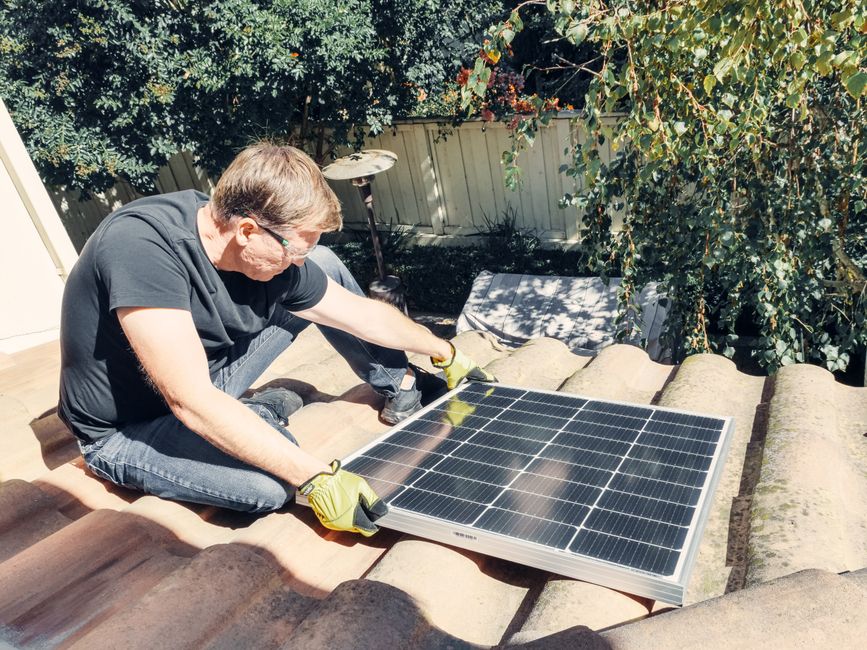
Your electric bill arrives in July, and it’s $340. Central AC running, a couple teenagers, maybe a home office humming all day. You glance at the neighbors’ roof, see those panels gleaming, and think: could I actually do that? The answer’s yes. But there’s a canyon between “thinking about solar” and “having a system that actually saves you money,” and most installers won’t walk you through it honestly. Let’s fix that.
Is Your Existing Home Actually a Good Candidate?
Nobody wants to answer this directly, because sometimes the honest answer is no. So let me be blunt about what actually matters.
Roof condition first. If your roof’s more than 15 years old, deal with that before you touch solar. Bolting a 25-year system onto a roof that needs replacing in five years means paying $3,000 to $6,000 later just to pull the panels off and reinstall them. That’s not a small hit. Get a roofer out there first. If you’re a few years away from replacement, do it now and coordinate with your solar installer. Many will schedule the work together.
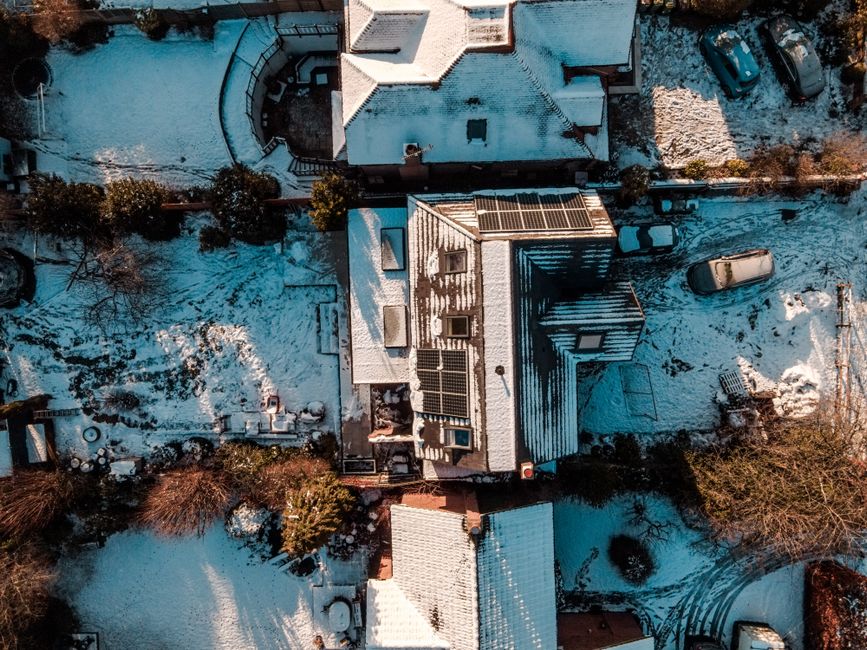
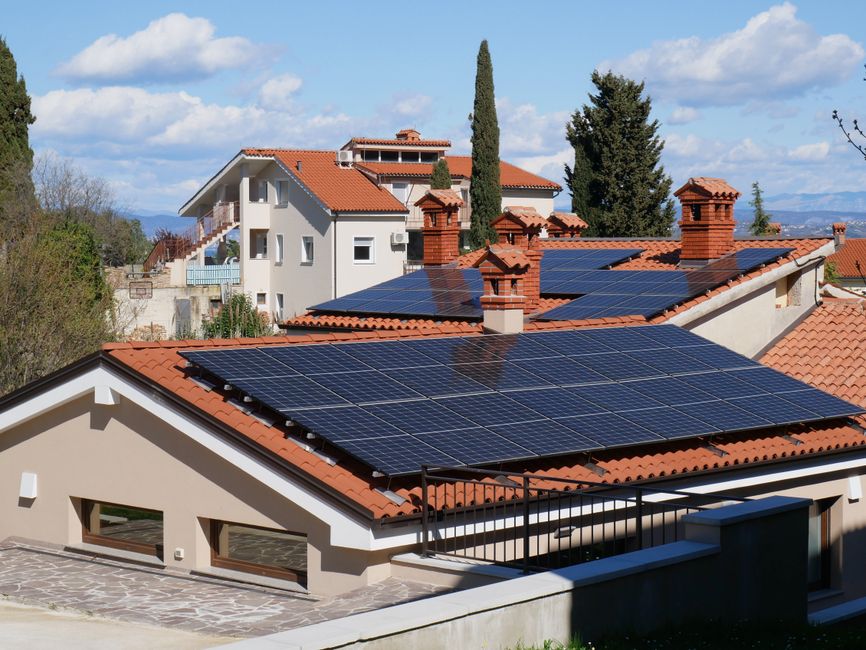
Roof orientation and shading are the technical gatekeepers. South-facing, pitched between 15 and 40 degrees: that’s the sweet spot across most of the U.S. East and west-facing still work, just producing 10 to 20 percent less than south-facing. Flat roofs work too with ballasted systems that angle the panels correctly. What actually kills production is shading. A single tree branch shadowing one panel can tank your whole string if the system doesn’t have optimizers or microinverters. Have your installer run actual shading software. Not a visual walk-around. Actual software.
Your electrical panel needs checking. Most homes built before the mid-2000s have 100 or 150 amp service. Standard residential solar typically needs 200 amps to safely interconnect. Upgrading costs $1,500 to $3,500. Some installers gloss over this or quote you a price that doesn’t include the panel upgrade. Ask directly: is electrical work in your quote or not?
How to Actually Size a System for Your Home
Bigger isn’t better. The goal is matching your system output to what you actually use, not cramming as many panels as your roof can hold.
Pull the last 12 months of electric bills. Add them up. Say you used 14,400 kWh over the year (roughly the U.S. residential average). Divide by 365. You’re at about 39 kWh per day.
Now apply a production factor. NREL maintains solar resource data across the entire country through their PVWatts calculator. You plug in your location, system size, roof tilt, and orientation, and it spits back a realistic annual production estimate based on decades of actual weather data. In Phoenix, a 1 kW system facing south might produce around 1,800 kWh yearly. In Seattle, that same 1 kW produces 1,000 kWh. These aren’t guesses.
For our 14,400 kWh household in the mid-Atlantic (roughly 1,300 kWh per kW annually), you’d need about 11 kW to cover full usage. At current panel efficiencies, that’s 550 to 650 square feet of roof.
A few things shift this number:
- Planning an EV in the next few years? Size up. Home EV charging adds 3,000 to 5,000 kWh annually.
- Your utility’s net metering policy matters. Favorable rates? Go slightly oversized. Poor rates? Match consumption more precisely.
- If you’re adding a Tesla Powerwall or Enphase IQ Battery, you can optimize for self-consumption rather than exporting power to the grid.
The Permit and Utility Interconnection Reality
Do It Yourself Solar Power? - Easy DIY Solar Panel Installation! · JerryRigEverything on YouTube
I’ve watched homeowners get blindsided here. It’s the single biggest source of project delays, and nobody talks about it until it’s too late.
Permits aren’t optional. Timeline varies wildly by jurisdiction.
Most cities and counties require a building permit and an electrical permit. Some add a structural permit if the racking needs specific roof work. Straightforward jurisdictions turn these around in one to three weeks. I’ve seen California and Northeast locations drag it to six to twelve weeks.
Your utility also needs to approve interconnection before you flip the switch. This is the Interconnection Agreement. Without it, you can’t legally export power to the grid. In most states, your installer can’t even energize the system. Utility reviews range from a few days to several months depending on the utility and how stressed the grid is in your area.
When a contractor says “we’ll have you running in three weeks,” they mean installation only. From contract signing to fully operational: realistically two to four months when you factor in design, permits, installation, and utility approval.
If you’re in an HOA, check the CC&Rs immediately. Federal law (the Solar Rights Act and various state solar access statutes) stops HOAs from banning solar outright in most states, but they can still demand aesthetic requirements about panel placement and visibility. Don’t assume your HOA won’t cause problems. Get everything in writing.
Comparing Quotes: What to Look For and What’s a Red Flag
| What to Check | Good Sign | Red Flag |
|---|---|---|
| Production estimate | Based on actual shading analysis and PVWatts data | Round number with no methodology |
| Equipment specs | Named panel brand, model, wattage, inverter type | “High-quality panels” with nothing specific |
| Panel upgrade | Included or explicitly broken out | Not mentioned |
| Warranty terms | 25-year product + 25-year production on panels | Only installation warranty |
| Timeline | Realistic 2-4 month estimate to full operation | “Done in two weeks” |
| Contract terms | Clear cancellation window (3+ days minimum) | High-pressure same-day signing bonus |
| Financing | Explains loan terms, interest rate, true cost | Focuses only on monthly payment |
EnergySage’s data is consistent on this: homeowners who grab three or more quotes save an average of 20 percent versus those who go with the first installer. On a $25,000 to $40,000 system, that’s real money.
Here’s what separates a solid quote from a concerning one:
| What to Check | Good Sign | Red Flag |
|---|---|---|
| Production estimate | Based on actual shading analysis and PVWatts data | Round number with no methodology |
| Equipment specs | Named panel brand, model, wattage, inverter type | “High-quality panels” with nothing specific |
| Panel upgrade | Included or explicitly broken out | Not mentioned |
| Warranty terms | 25-year product + 25-year production on panels | Only installation warranty |
| Timeline | Realistic 2-4 month estimate to full operation | “Done in two weeks” |
| Contract terms | Clear cancellation window (3+ days minimum) | High-pressure same-day signing bonus |
| Financing | Explains loan terms, interest rate, true cost | Focuses only on monthly payment |
On financing: a solar loan stretching 20 to 25 years at 6 to 8 percent interest can mean paying nearly double the system’s cash price over time. If cash isn’t possible, a 10 to 12 year term at a competitive rate is usually smarter. Run the math yourself, not just the installer’s payback estimate.
The federal Investment Tax Credit sits at 30 percent of total system cost right now. On a $30,000 system, that’s $9,000 back on your taxes. But it’s a credit, not a refund. You need to owe at least that much in federal taxes in the year you claim it. Carry forward the remainder if you don’t. If your typical tax liability is under $4,000 yearly, talk to a CPA before assuming you’ll capture the full credit.
After Installation: Monitoring, Maintenance, and Realistic Expectations
Once it’s running, the work isn’t finished. Monitor from day one.
Every major inverter manufacturer, Enphase, SolarEdge, SMA, offers a monitoring portal or app showing daily and lifetime production. Check it during the first month. You’re looking for output that tracks with sunny and cloudy days. If production looks low for the weather, investigate. Don’t wait six months wondering why your bill hasn’t budged.
Panel cleaning gets overstated by installers. Rain handles most of the work in most climates. In dry regions like Southern California, Arizona, or Texas, dust and bird droppings can cut output 5 to 15 percent if ignored for months. A basic solar panel cleaning kit makes this a straightforward once or twice yearly task if you’re comfortable on your roof. Use deionized or distilled water to skip mineral deposits.
A home energy monitor like the Emporia Vue or Sense adds useful visibility. These show real-time consumption by circuit, so you can see whether you’re actually using your solar production or exporting most of it and importing again at peak rates. That data helps you shift habits: run the dishwasher or EV charger during peak solar hours.
Maintenance costs stay low. The biggest lifetime expense is usually inverter replacement around year 12 to 15 for string inverters. Budget $1,500 to $2,500 for that swap. Microinverters, which sit on each panel individually, typically carry 25-year warranties and skip this problem entirely.
Retrofitting solar onto an existing home means more decisions than the marketing suggests. None of it’s beyond reach though if you ask the right questions, collect multiple quotes, and do basic math. The technology’s mature, incentives are still strong, and a well-designed system delivers. You just need to go in with your eyes open.
Sources
- basic solar panel cleaning kit
- home energy monitor
- Govee WiFi Smart Plug with Energy Monitoring
- Emporia Vue 2 Home Energy Monitor
- Renogy 100W 12V Flexible Solar Panel
Disclosure: As an Amazon Associate, we earn a small commission from qualifying purchases at no extra cost to you. We only recommend products that genuinely support the topics covered in this article.
- Renogy 200W Solar Starter Kit + 30A Charge Controller (~$169), Complete beginner solar kit, 200W monocrystalline panel, charge controller, and mounting hardware included.
- Renogy 2×100W Monocrystalline Solar Panels (~$99), Expandable 200W panel set from the most trusted DIY solar brand, used widely in off-grid and home backup systems.
Recommended Resources
Disclosure: As an Amazon Associate, we earn a small commission from qualifying purchases at no extra cost to you. We only recommend products that genuinely support the topics covered in this article.
- Renogy 200W Solar Starter Kit + 30A Charge Controller (~$169), Complete beginner solar kit, 200W monocrystalline panel, charge controller, and mounting hardware included.
- Renogy 2×100W Monocrystalline Solar Panels (~$99), Expandable 200W panel set from the most trusted DIY solar brand, used widely in off-grid and home backup systems.