 Rachel Kim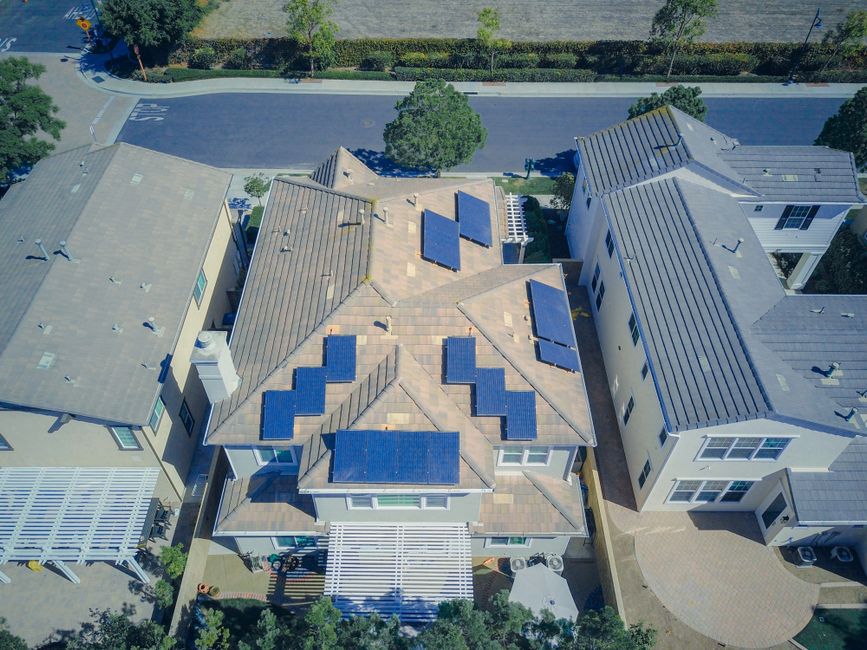
Most people who contact me about solar have already spent three weeks watching YouTube videos and gotten three wildly different quotes. You’re probably somewhere in that spiral right now, trying to figure out which number to trust and whether the salesperson who kept talking about “energy independence” actually knows what they’re doing.
Here’s what I tell people at that stage: the confusion usually isn’t about solar being complicated. It’s that most of the information out there is organized around selling you something, not around helping you understand the problem. So let’s fix that. What follows is how I actually think through a residential solar design, in the order it matters.
Good system design starts with your real electricity consumption, not your roof. It ends with a number that makes financial sense for your specific situation, not someone else’s case study. Everything in between is tradeoffs.
- Size your system to your actual 12-month kWh usage, not just last month's bill.
- South-facing roof at 15-40° tilt is ideal, but east/west splits can get you 80-85% of that output.
- A 7kW system in Phoenix costs roughly $21,000 before incentives; the same system in Seattle produces about 30% less power.
- The 30% federal tax credit (ITC) applies through 2032, but you must have sufficient tax liability to use it.
- Battery storage adds $10,000-$18,000 and only pencils out in specific grid/utility scenarios.
Start With Your Bills, Not Your Roof
Pull twelve months of electricity bills before you talk to anyone. Not just the totals. The kilowatt-hour (kWh) numbers. There’s a real difference between a household using 800 kWh in January and one using 800 kWh in August, because your solar production peaks in summer whether you need it or not, and that timing mismatch shapes how much you’ll actually offset versus export to the grid.
The average U.S. household uses around 10,500 kWh per year according to EnergySage’s market data, but I’ve worked with homes in Phoenix running 24,000 kWh because of pool pumps and two electric vehicles, and homes in Vermont at 5,800 kWh. National averages are almost useless at the individual level. Your number is your number.
One thing that trips people up here: if you’re planning to add an EV in the next two years, build that load into your design now. A Tesla Model 3 adds roughly 3,000-4,500 kWh per year depending on your commute. Undersizing your system to match today’s usage and then adding charging later means paying for two rounds of design and permitting. I’ve watched people make this mistake, including one reader from Sacramento who emailed me earlier this year after adding a Ford F-150 Lightning and realizing her 5.4kW system couldn’t cover it.
What Your Roof Actually Tells You
Helpful resource: P3 Kill A Watt Electricity Usage Monitor is a top-rated option for this. (As an Amazon Associate this site earns from qualifying purchases.)
Here’s where the design gets physical. Roof orientation, tilt, and shading aren’t abstract. They’re the numbers your installer should be pulling from a shade analysis tool like Aurora Solar or PVWatts, not estimating by eye.
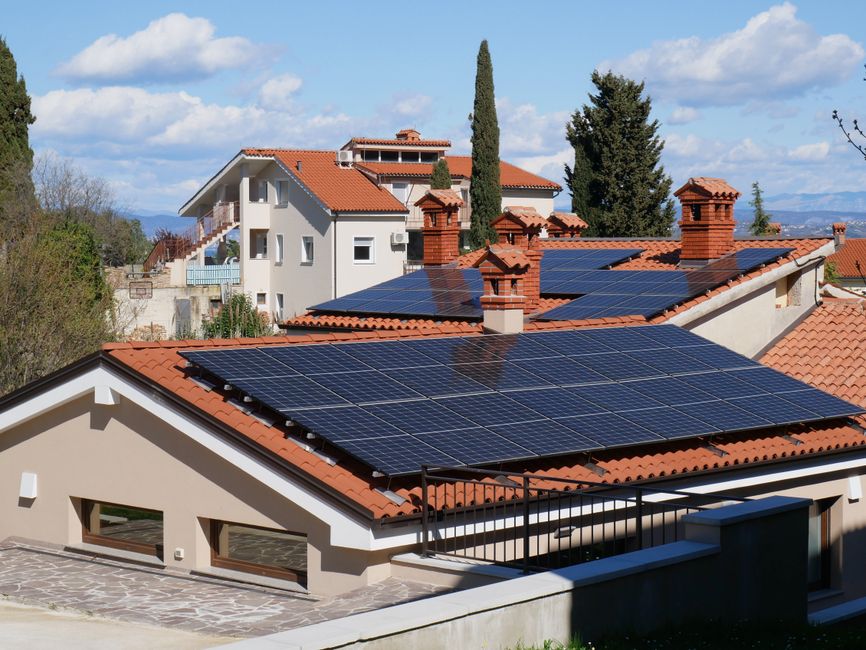
South-facing arrays at a tilt between 15° and 40° are the textbook answer. But the textbook isn’t always right for your financial situation. A true south array maximizes production. An east/west split, where you put panels on both roof faces, spreads production across more of the day and can actually align better with time-of-use utility rates that peak in late afternoon. I’ve designed east/west splits for homes in California where the homeowner was on a TOU rate and the west-facing array alone paid back faster than a south-facing array would have.
Shading is the one thing that will genuinely wreck a system if it’s ignored. A single tree branch hitting one corner of a string-wired system at 2pm can drop the output of your entire array, not just that one panel. This is why microinverters (Enphase IQ8 series, around $180-220 per unit) or DC power optimizers (SolarEdge, around $70-90 per unit plus a central inverter) matter on shaded roofs. On a completely unshaded roof, a standard string inverter from Fronius or SMA will serve you fine and cost less.
The Numbers Side: What Size Actually Costs
Offgrid Solar Beginner Crash Course: Build a 10,000W Solar System · DIY Solar Power with Will Prowse on YouTube
As of July 2026, the installed cost for residential solar in the U.S. runs $2.50-$3.80 per watt before incentives, depending on location, installer, equipment tier, and roof complexity. Here’s a rough comparison across common system sizes:
| System Size | Estimated Annual Output (Phoenix) | Estimated Annual Output (Portland) | Installed Cost (Before Incentives) | After 30% ITC |
|---|---|---|---|---|
| 5 kW | 8,000 kWh | 5,500 kWh | $13,500-$17,000 | $9,450-$11,900 |
| 7 kW | 11,200 kWh | 7,700 kWh | $18,500-$23,000 | $12,950-$16,100 |
| 10 kW | 16,000 kWh | 11,000 kWh | $25,000-$32,000 | $17,500-$22,400 |
| 13 kW | 20,800 kWh | 14,300 kWh | $31,000-$40,000 | $21,700-$28,000 |
The federal Investment Tax Credit (ITC) is currently 30% and, per the Inflation Reduction Act, holds at that rate through 2032. One thing that doesn’t get explained clearly enough: it’s a tax credit, not a deduction. If your federal tax liability is $4,000/year and your credit comes to $7,500, you can’t take the full $7,500 in year one. You carry the remainder to future years. If you’re retired on Social Security with minimal tax liability, the ITC may benefit you far less than a salesperson implies.
Many states layer additional incentives on top. Massachusetts has the Solar Massachusetts Renewable Target (SMART) program. New York has a state tax credit capped at $5,000. The U.S. Department of Energy’s homeowner guide keeps a reasonably current list of these; it’s worth checking before you sign anything.
Battery Storage: Honest Assessment
Everyone wants to know if they need a battery. My honest answer is: probably not, unless your utility has unfavorable net metering, you have frequent outages, or you’re in a time-of-use rate structure with punishing peak rates.
A Tesla Powerwall 3 runs about $11,500 installed as of this year. A Enphase IQ Battery 5P is around $10,000-$13,000 installed depending on configuration. Neither of these pencils out on pure economics in most markets with decent net metering. The payback math just doesn’t work for the average grid-tied homeowner in a stable utility territory.
Where it does make sense: California’s NEM 3.0 rate structure, which dramatically cut solar export compensation starting in 2023, genuinely changes the battery calculus. Homeowners on NEM 3.0 get about $0.05/kWh for exported power but pay $0.35-$0.55/kWh to buy it back at peak times. In that scenario, self-consumption matters enormously, and a battery can shave real money. Same story in Hawaii, where grid exports have been curtailed heavily.
Worked example: a San Diego homeowner with a 9kW system under NEM 3.0, adding one Powerwall 3, shifted enough consumption to cut her annual true-up bill from $1,840 to $340. That’s about $1,500/year saved. At $11,500 installed, that’s a ~7.7-year battery payback. Not great. Not terrible either, especially if she keeps the house 20+ years.
Permits, HOA, and the Part Nobody Reads Until It’s Too Late
Your installer should pull the permit. If they’re suggesting you skip it, or “it’s just a small system, we don’t need it,” walk away. That’s not a minor red flag. It’s a disqualifying one. An unpermitted system creates problems when you sell the house, can void your homeowner’s insurance, and may not qualify for net metering with your utility.
Permit timelines vary wildly. In San Jose, I’ve seen approvals in 72 hours through the city’s automated portal. In some rural counties, the same paperwork takes 8-12 weeks because a human reviews every submission and the department is understaffed. Ask your installer specifically what their average permit timeline is in your jurisdiction, not some general answer.
HOA restrictions are a real issue in maybe 20-30% of the neighborhoods I’ve dealt with. Here’s what most homeowners don’t know: 26 states currently have solar access laws that limit HOAs from prohibiting solar outright, though they can often regulate placement, visibility, and aesthetics. California, Florida, and Texas all have strong protections. Always request written approval in advance and document everything. I’ve seen HOA battles delay installations by four months.
Panel and Inverter Selection
I’ll be direct here: panel brand matters less than most people think, and inverter architecture matters more.
Most Tier 1 panels (REC, Panasonic, Q CELLS, Jinko Solar) will perform within a few percentage points of each other over 25 years. The differences in degradation rate between a 370W Q CELLS and a 380W REC Alpha are real but small, maybe 2-3% lifetime production difference. Where it actually matters is the warranty: specifically, whether the company will still exist in 15 years to honor it. SunPower reorganized in 2024 and its warranty situation got complicated for existing customers. That history is worth keeping in mind when you’re evaluating newer brands making big claims.
Inverters are where I’d spend the extra attention. A string inverter failure on a 10kW system kills all production until it’s replaced; a microinverter failure on one panel costs you one panel’s worth. Enphase has built a strong monitoring platform and their IQ8 series are solid. SolarEdge had some reliability issues with earlier generations of their HD-Wave inverters, though the current models have improved. Either will outperform a cheap no-name string inverter from a contractor looking to pad margin.
Sources
- U.S. Department of Energy, Homeowners Guide to Going Solar: Federal overview of incentives, net metering, and installation basics
- EnergySage Solar Market Intel Report: Quarterly data on installed costs, system sizes, and equipment trends across U.S. markets
- NREL PVWatts Calculator: Free tool for estimating solar production by location and system configuration
- Database of State Incentives for Renewables & Efficiency (DSIRE), dsireusa.org: State-by-state incentive database, updated regularly
- California Public Utilities Commission, NEM 3.0 Decision (2022): Regulatory framework for California net metering that reshaped battery economics statewide
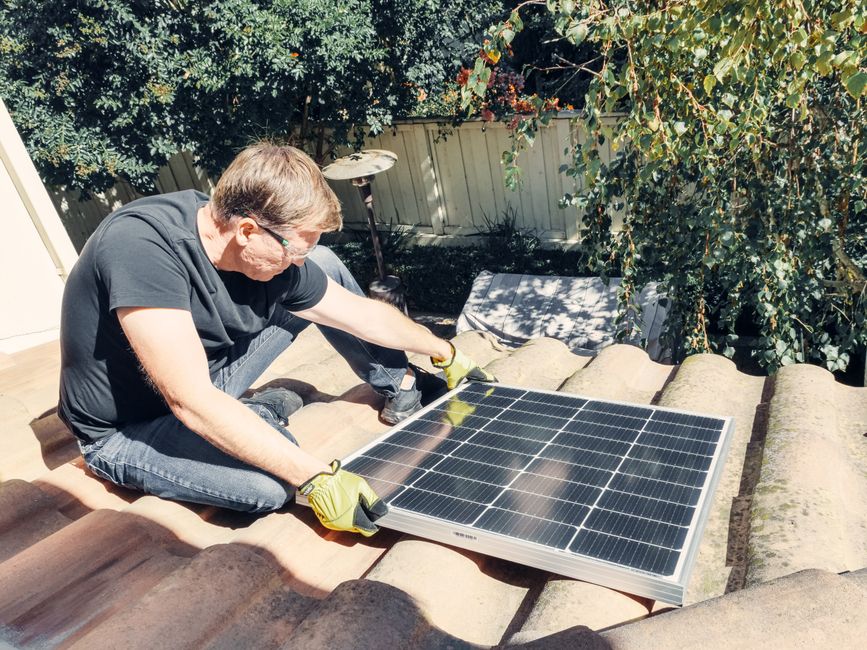
Photo: Kindel Media via Pexels
Recommended Resources
Disclosure: As an Amazon Associate, we earn a small commission from qualifying purchases at no extra cost to you. We only recommend products that genuinely support the topics covered in this article.
- Renogy 200W Solar Starter Kit + 30A Charge Controller (~$169), Complete beginner solar kit, 200W monocrystalline panel, charge controller, and mounting hardware included.
- Renogy 2×100W Monocrystalline Solar Panels (~$99), Expandable 200W panel set from the most trusted DIY solar brand, used widely in off-grid and home backup systems.