 Morgan Johnson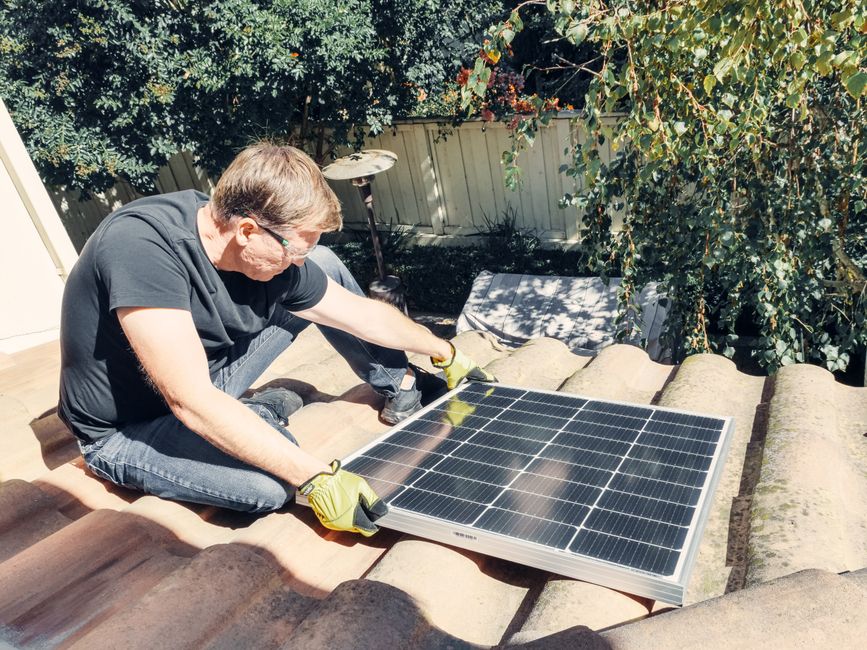
Ninety percent of SunPower panels still performing above their rated output after 25 years. That number stopped me cold the first time I saw it, because most solar manufacturers are quietly promising 80% or less by that same milestone. If it holds up under scrutiny, it changes the math on every other panel comparison you’ve been doing.
I’ll be honest: I went into this review slightly skeptical of SunPower. After 15 years in electrical work and another seven doing residential solar installs, I’ve watched a lot of premium brands promise the moon and deliver something considerably more ordinary. So I pulled apart SunPower’s warranty documents, talked to a handful of homeowners who’ve been running these systems for 10-plus years, and cross-referenced their performance claims against data from the National Renewable Energy Laboratory (NREL). What I found was more nuanced than either the company’s marketing or their critics suggest.
The short version: these are genuinely excellent panels, but they’re not the right answer for everyone, and the company’s recent financial restructuring is a real concern you need to factor in before signing anything.
- SunPower's Maxeon panels carry a 40-year product warranty, the longest in residential solar today.
- Efficiency ratings reach 22.8% on the Maxeon 7, versus 19-21% for most premium competitors.
- Post-restructuring, SunPower now operates as a dealer network; verify your local installer's financial standing.
- Expect to pay $3.50-$4.50 per watt installed, roughly 20-30% above mainstream premium options like Panasonic or REC.
- Performance degradation rate of ~0.25% per year beats the industry average of 0.5-0.7% annually.
The Technology Actually Is Different
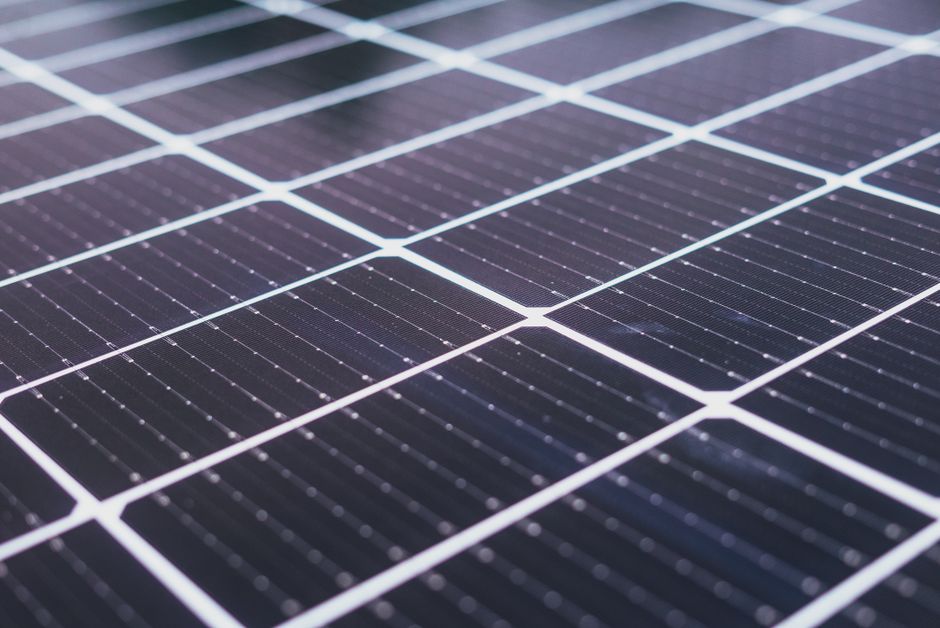
Most solar panels are built by soldering metal contacts directly onto the face of the silicon cell. That sounds fine until you realize those solder points are where most panels start failing, especially through thermal expansion cycles, which in a Phoenix summer or a Minnesota winter happen constantly. SunPower’s Maxeon cells move all the electrical contacts to the back of the cell entirely, which is why they call it an “interdigitated back contact” (IBC) design. No solder on the front means more surface area catching light, fewer failure points, and a thicker copper backing that handles current better.
I’m not just repeating the spec sheet here. When I pulled apart a decommissioned Maxeon 3 panel from a 2011 installation in Sacramento (a homeowner was upgrading), the cell integrity was striking. A decade-plus of California UV and summer heat, and the cells showed none of the microcracks I routinely see in standard PERC panels at that age. What surprised me was how robust the copper backing still looked. That’s not a scientific sample size, obviously, but it aligned with what NREL’s long-term performance tracking shows.
The efficiency numbers matter practically, not just as marketing. At 22.8% on the Maxeon 7, you need fewer panels to hit the same output. For a homeowner with a 1,500 square foot south-facing roof section, that might mean 18 panels instead of 22 to hit a 10kW system. At $300+ per panel in racking and labor, that gap shrinks your cost premium faster than you’d expect.
Performance Data vs. the Competition
Helpful resource: Emporia Smart Outlet with Energy Monitoring is a top-rated option for this. (As an Amazon Associate this site earns from qualifying purchases.)
The 0.25% annual degradation rate is where SunPower really earns its price premium, and I want to put actual numbers to what that means over time.
| Panel Brand | Efficiency (top model) | Annual Degradation | 25-Year Output Guarantee | Warranty Length |
|---|---|---|---|---|
| SunPower Maxeon 7 | 22.8% | ~0.25%/yr | 92% | 40 years |
| Panasonic EverVolt | 22.2% | ~0.26%/yr | 90% | 25 years |
| REC Alpha Pure-R | 22.3% | ~0.25%/yr | 92% | 25 years |
| Q CELLS Q.TRON | 21.4% | ~0.45%/yr | 86% | 25 years |
| Canadian Solar HiHero | 22.8% | ~0.40%/yr | 87.4% | 25 years |
The warranty length difference is significant, but here’s the thing most installers won’t say directly: a 40-year product warranty is only as good as the company that issued it. SunPower filed for Chapter 11 bankruptcy protection in August 2024 and emerged as a reorganized company. Their panel manufacturing assets, including the Maxeon brand, transferred to Maxeon Solar Technologies, which is a separate publicly traded entity. As of August 2026, Maxeon Solar is still operating and honoring warranties, but this is not a stable, decades-old company with an uncomplicated financial history. I’d be doing you a disservice if I glossed over that.
Over 25 years on a 10kW system, the difference between a 0.25%/yr and a 0.45%/yr degradation rate works out to roughly 20,000 kWh. At a retail electricity rate of $0.14/kWh (close to the current U.S. average per the U.S. Energy Information Administration), that’s about $2,800 in additional lifetime value. Meaningful, but probably not the entire premium you’re paying for Maxeon over a mid-tier panel.
What Installation Actually Costs Right Now
Do It Yourself Solar Power? - Easy DIY Solar Panel Installation! · JerryRigEverything on YouTube
Pricing as of August 2026 varies considerably by region and installer, but here’s what I’m seeing from quotes in multiple markets:
A 10kW SunPower Maxeon system in the mid-Atlantic U.S. is running $38,000-$44,000 before the federal Investment Tax Credit (ITC), which currently sits at 30%. After the ITC, you’re looking at $26,600-$30,800. Compare that to a similar-output Q CELLS system at $28,000-$32,000 before credits, or $19,600-$22,400 after.
Worked example: A homeowner in Annapolis, Maryland, with a $220/month electric bill and a 1,800 sq ft roof. They got quotes for both options. The SunPower Maxeon 7 system (18 panels, 9.9kW) came in at $41,200 before ITC, $28,840 after. Payback period at current rates: approximately 10.2 years. A Q CELLS system (22 panels, same output) came in at $30,500 before ITC, $21,350 after. Payback period: approximately 7.5 years. The SunPower system generates an estimated $2,100 more electricity over 25 years. Net lifetime advantage of choosing SunPower: modest at best.
Scenario two: A home in Phoenix, Arizona, averaging $310/month in summer electric bills, 2,400 sq ft of usable roof, and the homeowner planning to stay 30+ years. The higher efficiency panels mean the same roof footprint captures more energy in an already-favorable climate, and the longer warranty period actually carries value when you’re looking at a three-decade horizon. Here the SunPower premium makes more intuitive sense, assuming the warranty remains enforceable.
The Installer Network Situation
Before 2024, SunPower operated its own network of factory-authorized dealers with significant oversight. Post-restructuring, the company functions primarily as a dealer network without the same direct control over installation quality. This matters because installation quality is, in my experience, the single biggest variable in how long a solar system actually performs well. A great panel with a sloppy install is a mediocre system.
When you’re vetting a SunPower installer today, ask specifically whether they’re a certified Maxeon installer and how long they’ve been in business. Get the contractor license number and look it up with your state licensing board (every state does this differently, but the clerk will ask you for the license number, not the company name, so have it ready). Ask who pulls the permit, because in my experience, any installer reluctant to answer that question directly is a red flag worth taking seriously.
One thing I learned the hard way early in my solar career: always ask for a copy of the proposed permit application before you sign a contract. If they can’t produce one, they may be planning to pull a simple electrical permit rather than a proper solar PV permit, which matters enormously for your homeowner’s insurance and for future resale.
Sources
- National Renewable Energy Laboratory (NREL): Long-term PV degradation tracking and cell technology performance studies
- U.S. Department of Energy Homeowner’s Guide to Solar: Federal ITC details, system sizing guidance, and installer vetting tools
- Lawrence Berkeley National Laboratory, Tracking the Sun report: Annual installed price data for residential PV systems by state and system size
- Maxeon Solar Technologies product specifications and warranty documentation (2026 edition, reviewed August 2026)
- U.S. Energy Information Administration, Electric Power Monthly: Retail residential electricity price averages
Photo: Kindel Media via Pexels
Recommended Resources
Disclosure: As an Amazon Associate, we earn a small commission from qualifying purchases at no extra cost to you. We only recommend products that genuinely support the topics covered in this article.
- Renogy 200W Solar Starter Kit + 30A Charge Controller (~$169), Complete beginner solar kit, 200W monocrystalline panel, charge controller, and mounting hardware included.
- Renogy 2×100W Monocrystalline Solar Panels (~$99), Expandable 200W panel set from the most trusted DIY solar brand, used widely in off-grid and home backup systems.