 David Torres
If you bought solar through Freedom Forever, you already know something is wrong. Maybe your installer stopped returning calls. Maybe your system never got its final inspection. Or maybe you just saw the headlines: Freedom Forever, the company that Solar Power World ranked as the #1 residential solar contractor in the country in 2025, filed for Chapter 11 bankruptcy on April 15, 2026 (case 26-10522, D. Del.) with liabilities estimated between $500 million and $1 billion. They were operating in more than 30 states. Hundreds of thousands of homeowners are now in some version of the same situation, and the honest answer to “what do I do?” is more complicated than anyone wants to admit.
I’ll be honest: I’ve been in and around the solar industry long enough to have seen individual installer failures before. But what’s happening right now is categorically different. Freedom Forever is just the latest in a collapse wave that includes SunPower (August 2024), Sunnova (June 2025), Titan Solar Power, and solar lender Mosaic, which had financed over $15 billion in home energy loans before it unraveled. Solar Insure has logged over 100 solar bankruptcies to date, a number their analysts describe as “unseen before” in nearly 20 years in the sector. The California Solar & Storage Association has counted more than 17,000 industry layoffs and thousands of stalled installations in California alone. This isn’t a blip.
What You Actually Lose When Your Installer Goes Under
This is the part nobody in the sales process ever explained clearly. When an installer files for bankruptcy, the workmanship warranty and the performance guarantee they sold you become, functionally, worthless. You become an unsecured creditor in the bankruptcy estate. According to Solar Insure’s analysis of installer bankruptcies, unsecured creditors typically recover little to nothing in these proceedings. You can file a claim. You almost certainly won’t see a meaningful payout.
What survives is the manufacturer warranty on the equipment itself: the panels, the inverter, the battery if you have one. Most tier-one panel manufacturers (think Qcells, REC, Canadian Solar) offer 25-year product warranties that travel with the equipment regardless of who installed it. Enphase and SolarEdge both have inverter warranties that don’t require your installer to be alive to honor them. So if a panel fails, the manufacturer will likely send a replacement.
Here’s the gap that surprises people: that manufacturer warranty covers the equipment, not the labor to swap it out. If your inverter fails two years from now and the manufacturer ships you a new one, you’re paying a licensed electrician out of pocket to install it. That can run $300 to $800 for an inverter swap, more if the wiring situation is complicated. Nobody told you that during the pitch because it wasn’t a great sales line.
If Your Installation Is Incomplete, Move Immediately
Helpful resource: P3 Kill A Watt Electricity Usage Monitor is a top-rated option for this. (As an Amazon Associate this site earns from qualifying purchases.)
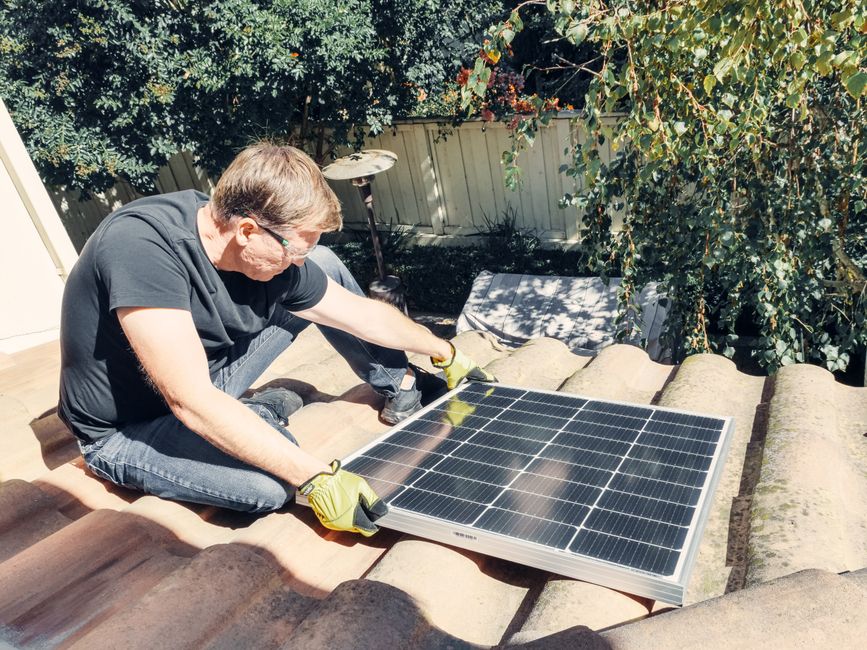
A stalled installation is a different and more urgent problem than a warranty gap. If Freedom Forever or another bankrupt installer left your project mid-stream, you may have panels on your roof that aren’t connected, wiring in conduit that hasn’t been terminated, or a permit that’s open and expiring. An open permit is a serious issue. Many jurisdictions will require a full re-inspection or even a tear-down and restart if work stalls too long without a final inspection sign-off.
The first call you need to make is to your local building department, not a new solar company. Find out the status of your permit, how long you have before it expires, and whether the inspection record shows any outstanding violations. Get that in writing or at least documented with a name and date. Then you can start talking to a new installer about finishing the work, but you need to know exactly what the permit situation is before anyone touches your system.
What surprised me was how many homeowners don’t even know their permit number. Your installer should have given it to you. If they didn’t, your building department can look it up by address.
Understanding Where You Stand: A Quick Reference
The situation varies a lot depending on where your project is in the process. Here’s how the risk breaks down by stage:
| Project Stage | Main Risk | Most Urgent Action |
|---|---|---|
| Contract signed, no work started | Down payment loss, financing may be active | File a claim with the bankruptcy court; contact lender to pause or cancel financing |
| Installation started, not complete | Open permit, unfinished wiring, no PTO | Call building department immediately; find a licensed contractor to assess and complete |
| Installed, no Permission to Operate | System can’t legally run; utility interconnect stalled | Contact your utility directly; find a new EPC to push the interconnection application |
| Fully operational, warranty concern | Workmanship warranty void | Document everything; check manufacturer warranties; consider a third-party warranty product |
| Financed through Mosaic or Sunnova | Loan still active even if installer is gone | Contact loan servicer directly; do not stop payments without legal advice |
That last row matters especially right now. Mosaic’s bankruptcy does not cancel your loan obligation. The loan will be transferred to a servicer or acquired through the bankruptcy proceedings. Stopping payments because “the company went bankrupt” is a fast track to a collections problem and a credit hit.
Who Can Actually Help You
The 8MSolar breakdown of the Freedom Forever situation makes a practical point worth repeating: regional and local installers are your best resource right now, not another national company. A local licensed electrical contractor who also does solar can assess your system, complete a stalled installation, and deal with your building department in a way a distant call center cannot. The NABCEP (North American Board of Certified Energy Practitioners) installer directory is a reasonable starting point for finding credentialed people in your area.
If you have a genuine financial loss, meaning you paid a deposit, financed a system that was never completed, or have documented damages, you should also consult a consumer protection attorney. Many states have contractor licensing boards with recovery funds specifically for situations where a licensed contractor defaults or goes out of business. California’s Contractors State License Board recovery fund is one example. Check your state’s equivalent. It won’t make you whole, but it can cover some losses that bankruptcy proceedings won’t touch.
For the warranty gap on equipment labor, a handful of companies now sell third-party solar warranty products designed exactly for this scenario. Solar Insure is one. It’s worth pricing before something actually breaks, because you can’t buy insurance after the claim.
The Bigger Picture Nobody Wants to Say Out Loud
The SEIA’s Q2 2026 market report cited the Freedom Forever bankruptcy as a key factor in downgrading the five-year residential solar outlook, forecasting a decline in residential installations through 2026 before a slow recovery in 2027. That’s a remarkable statement about an industry that was posting record numbers just two years ago.
The consolidation happening right now will eventually shake out. Stronger regional installers, better warranty products, and more scrutiny on installer financial health will make this a more stable market. But that doesn’t help you today. If your system is stuck in limbo, the time to act is now, not after the permit expires or the financing goes into default.
Get your permit status. Read your manufacturer warranty documents. Know who holds your loan. Those three things, handled this week, put you in a dramatically better position than most people in your situation.
Sources
- What the Freedom Forever Bankruptcy Means for Your Solar System , 8MSolar (May 1, 2026)
- Complete List of Solar Company Bankruptcies (2024-2026) , SolarPanelExit (March 28, 2026)
- What Happens to Solar Warranties After an Installer Bankruptcy , Solar Insure (June 4, 2026)
- The Complete List of Solar Bankruptcies and Business Closures , Solar Insure (July 2, 2026)
- Solar Market Insight Report Q2 2026 , SEIA (June 2026)
- What’s Behind Solar Company Bankruptcies and Closures , GreenLancer (March 2, 2026)
Recommended Resources
Disclosure: As an Amazon Associate, we earn a small commission from qualifying purchases at no extra cost to you. We only recommend products that genuinely support the topics covered in this article.
- Renogy 200W Solar Starter Kit + 30A Charge Controller (~$169), Complete beginner solar kit, 200W monocrystalline panel, charge controller, and mounting hardware included.
- Renogy 2×100W Monocrystalline Solar Panels (~$99), Expandable 200W panel set from the most trusted DIY solar brand, used widely in off-grid and home backup systems.